(The Guardian) Barbados’s prime minister, Mia Mottley, has announced a new manifesto from Caribbean leaders asserting the “moral, ethical and legal case” for reparations over damage caused by hundreds of years of enslavement.
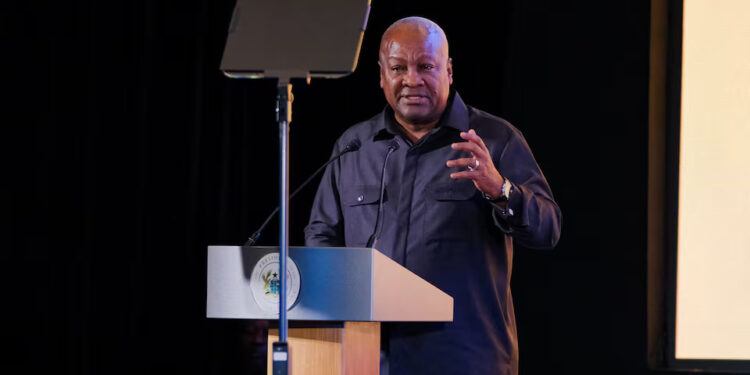
Mottley was speaking at a “historic” conference in Ghana to advance the push for reparatory justice after the United Nations adopted a landmark resolution declaring the trafficking of enslaved Africans as the gravest crime against humanity.
The manifesto, which she distributed at the conference, is an update of the Caribbean Community (Caricom) 10-point plan for reparations from former colonial powers. It introduces new issues including the disproportionate impact of slavery on girls and women.
The plan includes a new specific call for compensation for gender-based violence, referencing data that suggests “women represented approximately 30% of the estimated 20 million Africans forcefully transported across the Atlantic Ocean”. It also mentions estimates that at least 1.2 million enslaved women experienced sexual violence.
Highlighting the update, Mottley said that “the compensation for gender-based violence and assault on family” is “no different from the compensation that has been awarded to other nationalities such as the Japanese”.
The draft, which has been seen by the Guardian, asserts that climate justice and slavery reparations are “inextricably linked”, and stresses the need for a plan to support Indigenous people who were in the Caribbean when Europeans arrived and were the subject of genocides.
The document, which is still to be rubber-stamped by Caribbean governments, makes it clear that Caricom is demanding monetary compensation, in addition to other forms of repair such as a full and formal apology, from Britain and other European countries, and education and training.
“Caricom demands monetary compensation as reparations from enslaving nations, monarchies, churches, institutions, corporations and families, for loss of life and uncompensated labour, loss of liberty, personal injury, mental pain and anguish and gender-based violence, for the victims of Indigenous genocide, the transatlantic trafficking of enslaved Africans and chattel enslavement of Africans, which constitute grave crimes against humanity,” the document says.
But it does not specify an amount that Caribbean countries are demanding, describing the plan instead as a “a collective vision for an approach to the pursuit of reparatory justice”.
Describing the conference as a “historic moment”, Mottley said: “We live in a world today where people call out people for everything, for misogyny, for sexual assault, for all kinds of behaviour. But yet we have not found the moral courage to state unanimously across humanity that this grave crime against humanity that persisted for centuries ought to be declared so by all.
“That others choose to remain silent is a reflection of them, not of us. We have equally come to say that there should be no retreat on repair. The language used from this platform this morning is not one of aggression, is not one of violence but it is one of the necessities for healing for humanity.”
Since 2013, Caribbean governments have repeatedly called for recognition of the lasting legacy of colonialism and enslavement, and for reparative justice from former colonisers.
In March, the UK was one of several European countries that abstained from voting for the UN general assembly resolution that described chattel slavery as the gravest crime against humanity. The resolution was passed after an overwhelming majority of 123 nations voted in its favour, with only the US, Israel and Argentina voting against it.
Caricom’s 52-page document, which the Caribbean Reparations Commission previously said was revised to include emerging scientific and historical evidence, has more explicit legal arguments, framing reparations as a global human rights imperative.
It stresses that crimes against humanity “are not subject to a statute of limitations”, meaning no matter how much time has passed since the crime happened “legal proceedings for accountability and justice can still be initiated”.
It backs this up with a reference to international laws such as the convention on the non-applicability of statutory limitations to war crimes and crimes against humanity, adopted by the United Nations in 1968.
The second update since the original 10-point plan was produced in 2014, the manifesto uses strong language, highlighting the “failure of former colonial powers to apologise and make amends for their racist actions against Indigenous and African ancestors and their descendants”.