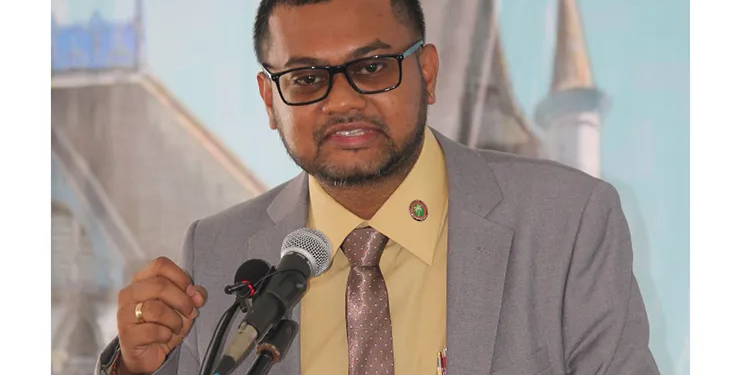
Former People’s Progressive Party (PPP) minister and political scientist Dr. Henry Jeffrey has argued that Guyana remains an ethnically divided society six decades after Independence and warned that meaningful national unity may never be achieved without sweeping constitutional and governance reforms.
Writing in his Future Notes column on May 24, 2026, Jeffrey reflected on Guyana’s 60th Independence anniversary and revisited a warning issued by the British Guiana Constitutional Commission in 1954.
“We do not altogether share the confidence …that a comprehensive loyalty to British Guiana can be stimulated among peoples of such diverse (cultural) origins,” the Commission stated.
“So far, the pessimism of the British Guiana Constitutional Commission has been correct,” Jeffrey wrote, arguing that Guyana’s post-independence political development has failed to overcome deep ethnic divisions.
Jeffrey’s comments come amid renewed debate about governance and democracy, following calls by opposition figures including Dr. David Hinds and Dr. Terrence Campbell for the creation of a mass movement to pressure the government into operating in a more transparent, accountable and democratic manner.
While supporting the need for reform, Jeffrey questioned whether a truly cross-ethnic movement could emerge in Guyana’s political environment.
“Guyana is an ethnically divided society in which a united public opinion, the foundation upon which a mass movement that cuts across ethnic lines is established, does not exist,” he wrote.
The political scientist contended that governance in Guyana is now “much more autocratic today than at any time since independence,” despite regular elections and democratic institutions.
He also criticised what he described as contradictions in the government’s national unity message, arguing that efforts to promote the “One Guyana” initiative are undermined by policies he believes are divisive.
“The effort is doomed if, as the PPP is doing, the top is shouting ‘One Guyana’ and simultaneously dictatorially making and implementing divisive policies,” Jeffrey stated.
A central theme of Jeffrey’s column was the argument that Guyana’s constitutional system is poorly designed for a society divided along ethnic lines. Citing international scholarship on governance in plural societies, he noted that experts generally caution against majoritarian, or winner-take-all, systems where large ethnic groups compete for political power.
“The most important choice facing constitution writers is that of a legislative electoral system,” Jeffrey wrote, citing research that argues “majoritarian systems are ill-advised for countries with deep ethnic, regional, religious, or other emotional and polarising divisions.”
According to Jeffrey, decades of constitutional reform efforts have failed to adequately address these realities. He further claimed that “on almost every serious international indicator the Guyana government is closer to being an autocratic than a democratic government.”
To address what he sees as systemic weaknesses, Jeffrey republished portions of a policy memorandum he said he shared with Hinds ahead of the 2020 General and Regional Elections.
The proposals include curbing executive power through constitutional power-sharing arrangements, stronger parliamentary oversight, supermajority voting requirements on key issues, and greater decentralization of government authority.
He also called for truly independent public commissions, the appointment of an independent ethical ombudsman to review the conduct of public officials, annual ethnic audits to identify disparities, and reforms to ensure greater accountability in government.
Among the more specific recommendations were increasing the number of directly elected Members of Parliament, granting constituents the power to recall MPs, guaranteeing a larger Indigenous presence in Parliament, constitutionally allocating a portion of the national budget to local government bodies, and implementing electoral reforms, including the creation of new voters’ lists when requested by a significant parliamentary minority.
Jeffrey also advocated reforms to the Guyana Elections Commission (GECOM), campaign financing rules and the state media sector.
He concluded that Guyana’s long-term stability and development depend on addressing structural political problems rather than relying solely on elections as proof of democracy.
“The executive authority of the state must be curtailed by direct power-sharing, veto, supermajorities, devolution, civil society enhancements, etc.,” Jeffrey wrote.
His intervention adds to a growing national conversation over whether Guyana’s political institutions are equipped to manage the challenges of rapid economic growth, ethnic polarization and democratic accountability as the country enters its seventh decade of independence.