(WiredJA)- As Cuba runs out of fuel and its people endure 22-hour blackouts, the Trump administration moves to indict and potentially rendition a retired nonagenarian over a 30-year-old aerial incident — raising urgent questions about imperial overreach, sovereignty, and Caribbean security.
There is something breathtaking — and something deeply revealing — about a government that holds the most powerful military in human history, controls the world’s reserve currency, and has just assumed dominion over Venezuela’s oil industry, yet finds it necessary to threaten the indictment of a 94-year-old retiree for an aerial confrontation that took place three decades ago.
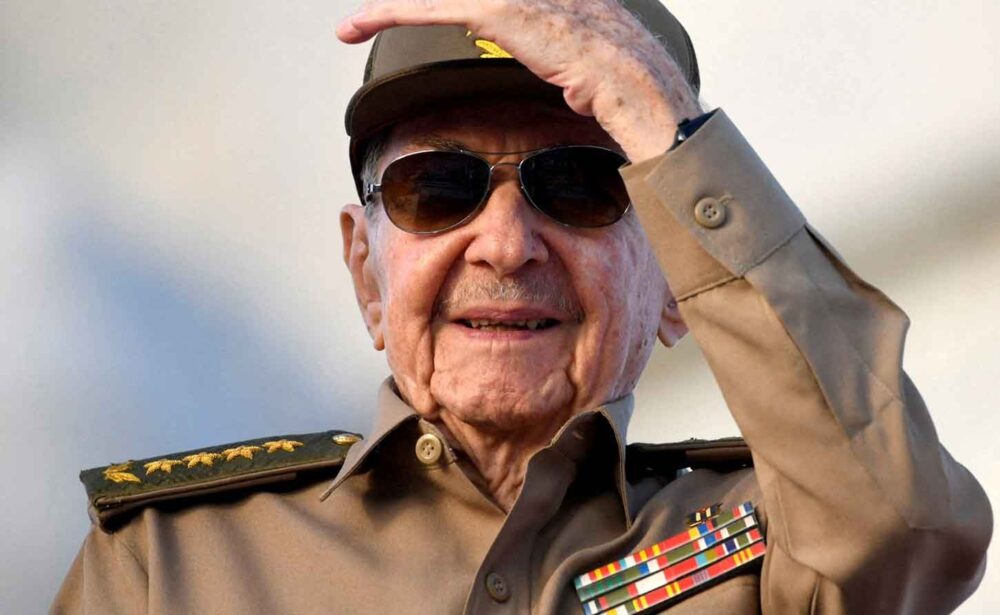
That is precisely where the United States government finds itself this week, as reports confirm that the Trump administration is moving to indict Raúl Castro — Cuba’s former president, officially retired, and by most medical accounts near the end of his natural life — for his role in the 1996 downing of two small aircraft belonging to the Cuban exile group Brothers to the Rescue.
Let that sink in. Not an active head of government. Not a sitting commander. A nonagenarian who has not held formal power in years. Washington wants him in an American courtroom — or worse, delivered to one the same way Nicolás Maduro was: by force.
“You can get a grand jury to indict a ham sandwich.” — Pedro Freyre, leading Cuban-American attorney, Miami
A 30-Year Pretext
The Brothers to the Rescue incident of February 1996 has long been a flashpoint in US-Cuba relations, weaponised repeatedly by the Cuban exile political lobby. The group’s aircraft had flown into Cuban airspace — dropping leaflets over Havana — when Cuban jet fighters intercepted and shot them down, killing four men.
Cuba maintains the planes violated its sovereign airspace. The US, which counts several Cuban-American hardliners — Secretary of State Marco Rubio among them — as key political actors, has nursed the grievance for thirty years.
That this incident is now being resurrected as legal grounds for indicting a 94-year-old is not about justice. Justice does not wait three decades to knock. This is about leverage — naked, transactional, imperial leverage.
An Island on Its Knees
To understand why Washington is making its move now, look not to the courts — look to the energy grid. Cuba’s minister of energy, Vicente de la O Levy, has admitted with chilling bluntness: “We have absolutely nothing.”
The island is out of fuel oil. Temperatures are climbing into the low 30s Celsius as the Caribbean summer approaches. Citizens are enduring blackouts of up to 22 hours a day, unable to run fans, refrigerate food, or sleep in any basic comfort.
Cuba’s 9.5 million people are not collateral damage — they are the instrument. For four months, the Trump administration has maintained a strict oil blockade, allowing only a single Russian crude carrier to dock, and only after Trump declared it a humanitarian gesture.
This is the context in which the indictment threat lands: a population already brought to its knees, a government cornered, and Washington tightening the vise with every available tool — legal, military, and economic simultaneously.
The Maduro Template
Reports of the possible Castro indictment emerged the day after CIA Director John Ratcliffe flew to Havana for talks — not with the Cuban president, Miguel Díaz-Canel, but with Raúl’s own grandson, Raúl Guillermo Rodríguez Castro, a man with no official government portfolio.
That choice of interlocutor — deliberate, calculated, destabilising — signals a US strategy aimed at fracturing the Cuban leadership from within. Divide the family. Isolate the institution. Then indict the patriarch.
The template is Venezuelan. Maduro was indicted. Then Maduro was taken. Then Washington assumed control of Venezuela’s oil. The sequencing is not coincidental. And Rubio, who has made regime change in Havana a career obsession, has been explicit: “I don’t think we’re going to be able to change the trajectory of Cuba as long as these people are in charge.”
Trump himself has spoken openly about wanting to “take over” Cuba, and has mused publicly about positioning the USS Abraham Lincoln a hundred yards off the Cuban coastline.
“Trump has spoken openly of wanting to “take over” Cuba — and has mused about parking an aircraft carrier one hundred yards off its shore.”
What the Caribbean Must Recognise
For the Caribbean, the Castro indictment threat cannot be read in isolation. It is part of an archipelago of aggression — from the deployment of US surveillance drones over Cuban territory, to the strangling of the island’s fuel supply, to the weaponisation of international legal instruments against leaders Washington dislikes.
If Maduro could be abducted from Venezuela, and if a 94-year-old Cuban former leader can now be threatened with rendition on the basis of a 1996 sovereign defence decision, then no Caribbean government that runs afoul of Washington’s interests can consider itself truly secure.
CARICOM has been largely silent. That silence will not protect the region. The moment for a unified, principled declaration of Caribbean sovereignty is not tomorrow — it is now, before the precedent calcifies into policy.
Meanwhile, in Havana, ordinary Cubans bang pots in the sweltering dark — not out of ideology, not as political protest, but out of desperation. “We started banging pots to see if they would give us just three hours of electricity,” one resident told Reuters. “That’s all we want.”
That human reality — people sweating through another powerless night, too exhausted to be revolutionary — is the true face of what Washington’s maximum pressure policy has produced.
An empire that must threaten to indict a 94-year-old to hold its ground is not demonstrating strength. It is demonstrating the limits of every tool that isn’t a weapon — and its willingness to reach for the next one.
The Caribbean has seen this story before. It never ends well for those who thought distance or smallness would protect them.