The We Invest in Nationhood (WIN) party, led by Opposition Leader Azruddin Mohamed, has raised serious allegations of corruption in the procurement of drugs and medical supplies in Region Three, calling for an immediate investigation into what it describes as “excessive profiteering” within the public health system.
In a statement and accompanying recording, Mohamed accused Regional Health Officer Dr. Fiaaz Hassan of presiding over procurement practices that allegedly result in markups far beyond industry norms, warning that taxpayers are being exploited and critical healthcare resources mismanaged.
Addressing Vice President Bharrat Jagdeo directly, the WIN leader said: “Vice President Jagdeo, you have been noticeably silent, but we need to address the level of corruption taking place right under your nose regarding procurement practices in Region 3.”
He contrasted typical pharmaceutical markups—estimated at 20% to 50%—with what he described as extreme inflation of prices in the region’s health procurement system.
According to the claims, methyldopa tablets allegedly purchased at approximately $20 per unit are being supplied to the region for $250 each. Tranexamic acid injections, reportedly wholesaled at around $695, are said to be billed at $3,000, while flumazenil injections costing under $2,000 are allegedly invoiced at $12,500.
“These are not ordinary markups; this is excessive profiteering at the expense of taxpayers and the healthcare system,” Mohamed stated.
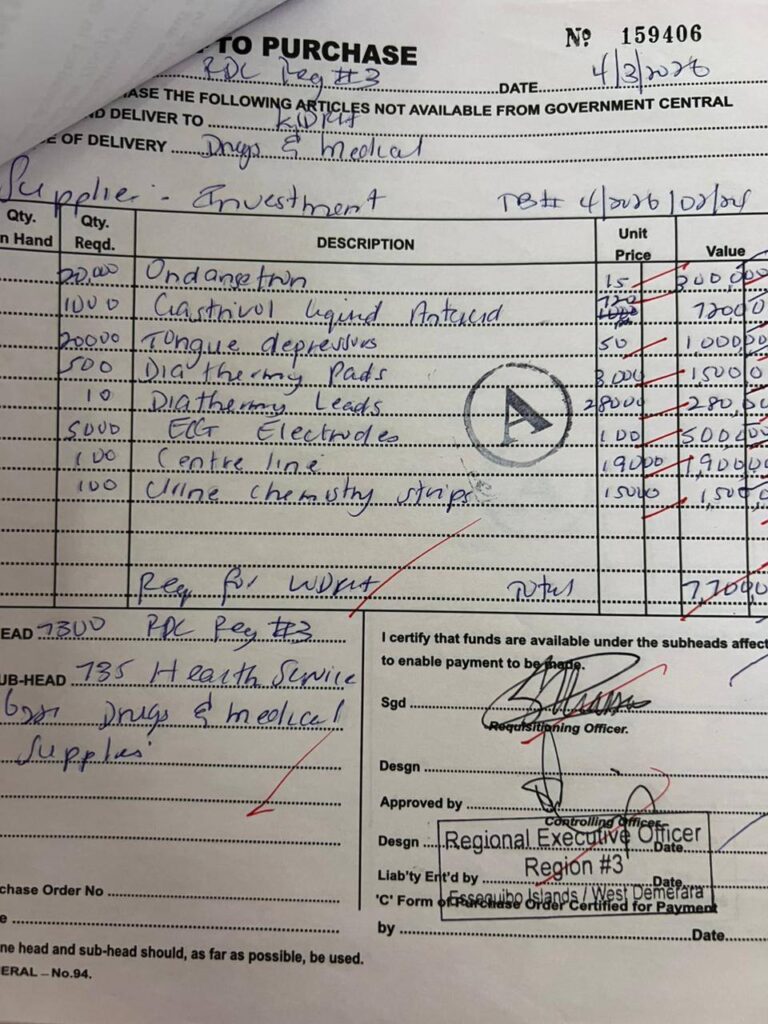
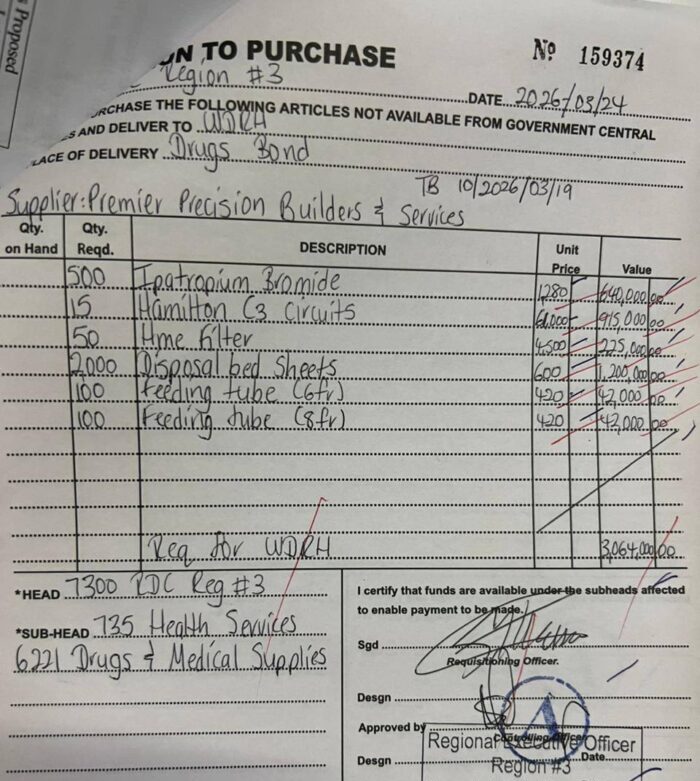
The opposition party further alleged that procurement processes are being circumvented altogether. Mohamed claimed that companies linked to Dr. Hassan’s family, along with associates, are benefiting from contracts.
“Reports reaching us are that Dr. Hassan not only has companies under his family names, but there are friends who he allows to supply goods and services too, including We Care Health Supplies, Khans Consultancy, and New Doctors. Many of these purchases bypass the Regional Tender Board entirely,” he said.
WIN argued that such practices, if proven, undermine established procurement laws designed to ensure transparency and fairness in the use of public funds. Guyana’s procurement system is governed by the Procurement Act of 2003, which requires competitive tendering and oversight through bodies such as the National Procurement and Tender Administration Board (NPTAB) and regional tender boards.
The allegations also raise broader concerns about accountability within the health sector, which has seen increased spending in recent years amid efforts to expand services and infrastructure.
Mohamed contended that the financial losses from alleged overpricing could have been redirected to improve working conditions for healthcare professionals and expand access to essential medicines.
“The monies being wasted here could be used to pay our health care workers better or supply more drugs,” he said.
The WIN leader called on Vice President Jagdeo and Minister of Health Frank Anthony to intervene.
“We are calling on President Bharrat Jagdeo and the Minister of Health Hon. Frank Anthony to investigate and ensure that tendering procedures are being followed to put an immediate stop to any abuse of the system for personal gain,” Mohamed added.
The controversy is further heightened by the political visibility of Dr. Hassan. During the 2025 General and Regional Elections, video footage circulated by Mohamed showed the doctor wearing a shirt associated with the ruling People’s Progressive Party and appearing on a political platform, raising questions from critics about the intersection of public service and political affiliation.
To date, there has been no official response from the government or the Ministry of Health addressing the specific allegations.
The claims come at a time when scrutiny over public procurement and governance continues to intensify, with civil society groups and opposition figures repeatedly calling for stronger enforcement of transparency measures.
If substantiated, the allegations could have significant implications for public trust in the healthcare system and the administration of state resources.