Sunday, November 29, 2026
Village Voice News
ADVERTISEMENT
  • Home
  • News
  • Sports
  • Editorial
  • Letters
  • Global
  • Columns
    • Eye On Guyana
    • Hindsight
    • Lincoln Lewis Speaks
    • Future Notes
    • Blackout
    • From The Desk of Roysdale Forde SC
    • Diplomatic Speak
    • Mark’s Take
    • In the village
    • Mind Your Business
    • Bad & Bold
    • The Voice of Labour
    • The Herbal Section
    • Politics 101 with Dr. David Hinds
    • Talking Dollars & Making Sense
    • Book Review 
  • Education & Technology
  • E-Paper
  • Contact Us
No Result
View All Result
Village Voice News
No Result
View All Result
Home News

Sixteen Years On, Sex Offences Law Faces Test of Enforcement and Impact

Admin by Admin
April 24, 2026
in News
STOP GENDER-BASED VIOLENCE

STOP GENDER-BASED VIOLENCE

0
SHARES
0
VIEWS
Share on FacebookShare on Twitter

Sixteen years after the passage of Guyana’s Sex Offences Act, data suggests that while legal reforms have strengthened the framework for addressing sexual crimes, the country continues to face persistent challenges in reporting, prosecution, and conviction—placing it broadly in line with troubling regional trends across the Caribbean.

The Act is intended to strengthen the legal framework for preventing and prosecuting sexual crimes, while providing greater protection and support for victims. It defines a wide range of offences—including rape, sexual assault, and abuse of minors—and establishes clearer penalties for perpetrators. The Act also seeks to improve how cases are handled by introducing victim-sensitive procedures, reducing trauma during investigations and trials, and promoting access to justice. Overall, it aims to deter sexual violence, ensure accountability, and safeguard the rights and dignity of victims.

READ ALSO

KKCC celebrates 34 graduates, expands access to community-based education

SOLIDARITY FOR A LIVING WAGE: CIVIL SOCIETY AND THE PUBLIC URGED TO STAND WITH GUYANA’S PUBLIC SERVANTS

At the time the law was introduced in 2010, then minister Priya Manickchand had argued that the legislation would replace “a hundred-year old… backward legislation” that contributed to “ridiculously low conviction rates.” Historical data underscores that concern: a Guyana Human Rights Association study found that only about 1% of reported rape cases resulted in conviction in the early 2000s, highlighting a near-total breakdown in justice delivery at the time.

Since then, there has been some measurable progress, particularly with the establishment of specialised Sexual Offences Courts in 2017. Judiciary data shows that 61 convictions were secured out of 131 sexual offence cases tried between 2017 and 2020—a conviction rate of roughly 46% for cases that reached trial. However, this figure reflects only cases that made it through the system, not the full volume of reported offences.

The broader picture remains concerning. Reports indicate that more than 300 sexual assault cases are recorded monthly in Guyana, suggesting a high incidence of sexual violence relative to the country’s population. Additionally, judicial data reveals that sexual offences account for more than half of indictable criminal cases, with a significant majority involving minors—up to 75% in some regions. These figures point to both the scale of the problem and the strain on the justice system.

Regionally, Guyana’s experience mirrors wider Caribbean patterns. According to UN Women, the Caribbean has some of the highest recorded rape rates globally, with multiple countries ranking among the top ten worldwide. Studies also show that across the region, fewer than 1 in 8 rape victims report incidents to the police, underscoring a pervasive culture of underreporting driven by stigma, fear, and lack of confidence in the justice system.

Despite legislative advances, structural weaknesses remain a major obstacle. Analyses indicate that Guyana has one of the lowest numbers of judges and magistrates in the Caribbean, contributing to delays, backlogs, and ultimately lower overall conviction outcomes. These systemic constraints continue to limit the full impact of the 2010 reforms.

Sixteen years since the passage of the legislation, the data paints a troubling and unsettling picture. While the law modernised the legal framework, the persistence of high case numbers, the disproportionate impact on children, and chronic systemic delays reveal a justice system still struggling to deliver meaningful protection and accountability. The gap between promise and reality remains wide—underscoring that legislative reform alone is not enough. Without decisive action to strengthen enforcement, expand support for victims, and address institutional weaknesses, the very protections the law sought to guarantee risk being undermined in practice.


ShareTweetSendShareSend

Related Posts

Feature

KKCC celebrates 34 graduates, expands access to community-based education

by Admin
November 28, 2026

The Kuru Kuru Cooperative College (KKCC) hosted its Graduation and Prize Giving Ceremony for the Secondary Education Diploma Programme at...

Read moreDetails
News

SOLIDARITY FOR A LIVING WAGE: CIVIL SOCIETY AND THE PUBLIC URGED TO STAND WITH GUYANA’S PUBLIC SERVANTS

by Admin
November 28, 2026

An urgent call is being issued today to civil society organizations, religious bodies, and the general public to stand in...

Read moreDetails
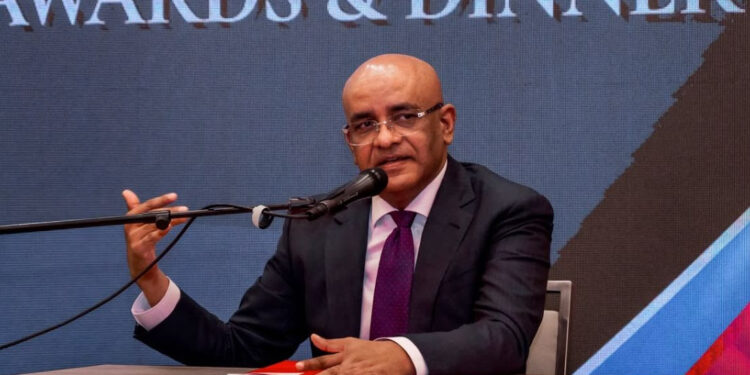
Vice President Dr Bharrat Jagdeo speaking at the GMSA 31st Annual Presentation Awards Ceremony at the Guyana Marriott Hotel
News

Government laying groundwork for an economy that can thrive beyond oil and gas – VP Jagdeo

by Admin
November 28, 2026

Vice President Dr Bharrat Jagdeo has outlined the government’s strategy to build a resilient, diversified economy that can thrive long...

Read moreDetails
Next Post
Adrianna Younge

PNCR/APNU Marks Anniversary of Adrianna Young’s Death


EDITOR'S PICK

IMAGE COPYRIGHTEPA: Monica Calazans, a 54-year-old nurse in São Paulo, was given a Chinese-developed vaccine

Brazil approves and rolls out AstraZeneca and Sinovac vaccines

January 18, 2021
Former President David Granger

Granger Condemns Rape of Guyana’s Virgin Lands

April 6, 2025
Communications Director of the International Energy Conference and Expo Guyana 2022, Alex Graham and its Chief Executive Officer, Angenie Abel

ExxonMobil returns as title sponsor for Guyana Energy Conference & Supply Chain Expo

December 21, 2023

A Colossal Abuse of Power–Senior Government Official’s SWAT Team Order Set a Dangerous Precedent

October 24, 2024

© 2024 Village Voice

No Result
View All Result
  • Home
  • News
  • Sports
  • Editorial
  • Letters
  • Global
  • Columns
    • Eye On Guyana
    • Hindsight
    • Lincoln Lewis Speaks
    • Future Notes
    • Blackout
    • From The Desk of Roysdale Forde SC
    • Diplomatic Speak
    • Mark’s Take
    • In the village
    • Mind Your Business
    • Bad & Bold
    • The Voice of Labour
    • The Herbal Section
    • Politics 101 with Dr. David Hinds
    • Talking Dollars & Making Sense
    • Book Review 
  • Education & Technology
  • E-Paper
  • Contact Us

© 2024 Village Voice