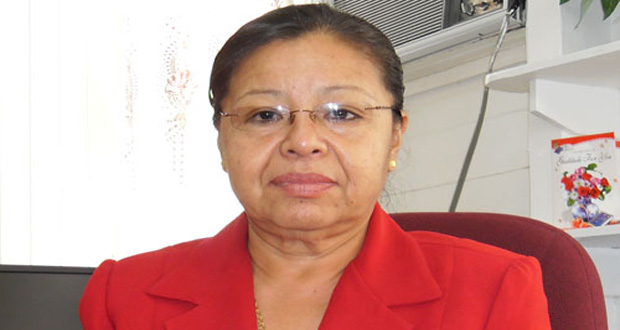
As Guyana observes Women’s History Month, the life of Dr. Desrey Clementine Fox stands as a powerful testament to the resilience, intellect and quiet determination of Indigenous women who have shaped the nation from its margins. Born in the remote village of Waramadong, she rose to become not only a distinguished scholar and government minister, but a vital bridge between worlds often divided by language, geography and power.
Her journey—cut short on December 11, 2009, at age 54—was marked by an unwavering commitment to ensuring that Amerindian voices, particularly those of women, were recognised, respected and woven into the fabric of Guyana’s national identity.
A Childhood Between Cultures
Born Desrey Clementine Caesar on January 2, 1955, in Waramadong Village, Fox was the eldest of seven children in a deeply religious Seventh-day Adventist household. Her parents—among the earliest schoolteachers in the community—insisted on English at home, embedding in her the tools of formal education.
Yet it was her grandmother, an Akawaio speaker, who anchored her to her ancestral identity. From her, Fox absorbed language, tradition and worldview—elements she would later spend a lifetime studying, defending and preserving.
“I lived in two worlds,” she would later reflect—a phrase that became central to understanding both her scholarship and her public life.
From Nursing to Knowledge
Fox’s early adulthood followed a practical path. In 1973, she entered the Georgetown Hospital School of Nursing, training as a midwife and working for several years. But the decision to leave nursing—and not return to serve her home village—haunted her.
That sense of unfinished duty would later resurface, shaping her commitment to Indigenous development and public service.
Her turning point came in 1977, when she joined the University of Guyana as a junior researcher in the Amerindian Languages Project. Initially tasked with documenting the Akawaio language—her own—Fox quickly distinguished herself, rising to become a lead research assistant.
What began as employment became vocation.
The Scholar Who Looked Inward
Fox’s academic journey was unconventional but relentless. While working, she enrolled at the University of Guyana, earning a degree in sociology. She later secured a European Union scholarship to pursue a Master’s in Environmental Anthropology at the University of Kent, and then a PhD in Linguistics from Rice University in 2003.
Her doctoral work—Zauro’nodok Agawayo Yau: Variants of Akawaio Spoken at Waramadong—was not simply linguistic analysis; it was cultural preservation.
Her research spanned demography, spirituality, kinship, language and Indigenous women’s experiences. Works such as Caught within the Cracks: the Case of the Amerindian Women of Guyana and Five Hundred Years After: Indigenous Women in the Caribbean Revisited revealed the layered marginalisation of Indigenous women—caught between traditional expectations and modern exclusion.
Fox did not romanticise Indigenous life. Instead, she interrogated it.
The Dilemma of Identity
At the heart of Fox’s work was a question that remains unresolved in many Indigenous societies: how to exist within two cultural systems without being erased by either.
She argued that modern education often pulled Indigenous people toward the “dominant culture,” leaving them alienated from their roots while never fully accepted into mainstream society.
“They were neither here nor there,” she observed.
Her own life embodied that tension. At university, she became acutely aware of her difference. That awareness did not diminish her—it sharpened her purpose.
“I realised that there is an Amerindian culture. I ought to be proud about it.”
Faith, Belief and Intellectual Conflict
Fox’s research was not without personal cost. While studying environmental anthropology, she examined Kanaima—an Indigenous belief system often dismissed as folklore.
Her findings challenged her deeply held Christian beliefs.
Raised in a strict Adventist tradition, she found herself confronting the possibility that Kanaima was not merely myth, but a lived reality within her community. The intellectual and spiritual conflict was profound—yet she did not retreat from it.
Instead, she allowed contradiction to exist—an approach that defined both her scholarship and her humanity.
From Academia to Cabinet
Nothing in Fox’s early life suggested a political future. Yet, following the 2006 general elections, she was appointed Minister within the Ministry of Education.
At age 50, she entered government—bringing with her decades of research and lived experience.
Her portfolio was extensive: technical and vocational education, health and family life education, school welfare, sports and cultural development. She worked to rebuild institutional links and revive national programmes, including the National Schools Choir and Steel Orchestra.
But her most significant contribution lay elsewhere.
Making Policy Speak Indigenous Languages
Fox understood that policy, no matter how well-intentioned, fails if it cannot be understood by the people it targets.
In one of her most symbolic acts, she translated elements of Guyana’s Low Carbon Development Strategy into Akawaio—ensuring that older, non-English-speaking community members could engage with national policy.
It was a small but transformative act: governance made accessible.
In 2008, she represented Guyana at the International Conference of Education in Geneva, presenting on inclusive education as a rights-based approach. For Fox, inclusion was not theoretical—it was essential to national cohesion.
A Historic Sisterhood
Fox’s appointment coincided with a historic moment. Alongside Carolyn Rodrigues-Birkett and Pauline Sukhai, she became one of three Indigenous women serving simultaneously as government ministers—the first such occurrence in the Caribbean.
Together, they were expected to form a powerful bloc advocating for hinterland communities, translating policy into lived reality and reshaping the presence of Indigenous women in governance.
Recognition, Loss and Legacy
On December 11, 2009, Fox’s life ended abruptly in a vehicular accident. At the time, she was involved in translating Guyana’s National Anthem into nine Indigenous languages—yet another effort to embed Indigenous identity into the national fabric.
Her death cut short a career still unfolding.
In 2015, her legacy was formally recognised when the Waramadong Secondary School was renamed in her honour. Addressing Indigenous leaders, President David Granger described her as someone who left “an indelible mark” on education and Indigenous advancement.
Her son, Mensah Fox, called the tribute a source of pride for both family and community—an acknowledgment of work that was far from complete.
A Life That Still Speaks
Dr. Desrey Clementine Fox’s story is not one of linear success. It is a story of tension—between coast and hinterland, Christianity and Indigenous belief, academia and community, policy and lived experience.
That tension did not weaken her. It defined her.
As an Amerindian woman, she refused erasure. As a scholar, she refused simplification. As a minister, she refused exclusion.
And in the context of Women’s History Month, her legacy endures as both inspiration and instruction: that the true measure of progress lies not only in who rises, but in how they carry their people, their culture and their identity with them—and ensure that none are left behind.
———
Sources
Desrey Fox, January 2, 1955 – December 11, 2009- Stabroek News
Waramadong Secondary School to be Renamed After Late Minister Desrey Fox- Guyana Graphic
World Wide Web