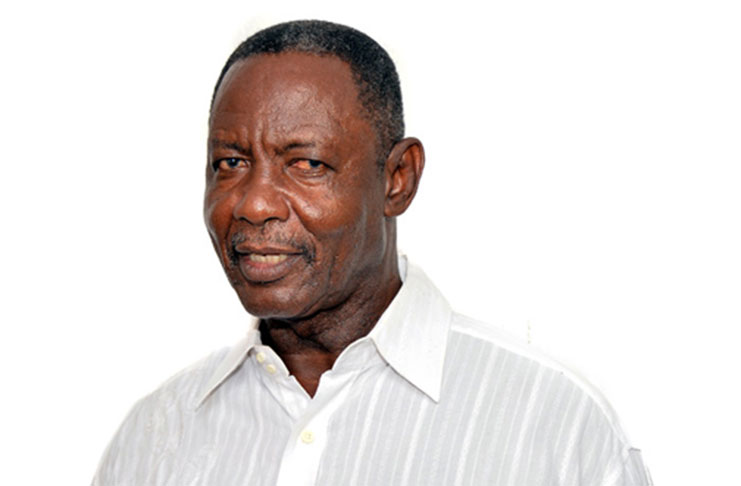
By Mark DaCosta- Lincoln Lewis, General Secretary of the Guyana Trades Union Congress, has raised serious concerns about what he describes as the persistent exclusion of sections of society from meaningful collaboration with successive People’s Progressive Party administrations. Lewis argued that such exclusion represents a disregard for the constitutional requirement for inclusionary democracy, as outlined in Article 13 of the Constitution, which mandates the involvement of groups and individuals in the management and decision-making processes on matters that impact their well-being. He said the issue reflects a broader call for equitable representation as Guyana navigates a rapidly changing national landscape shaped by its emerging oil wealth.
Highlighting the ongoing sidelining of some trade unions, Lewis pointed to the constitutional rights of workers in our country, which guarantee the freedom to join unions and engage in collective bargaining. “Yet the PPP continues to sideline some unions and undermine both unions’ and workers’ right to self-determination,” he said. This disregard, he argues, strikes at the very core of workers’ rights and integrity.
The GTUC has actively endorsed critical proposals, such as that put forward by Professor Clive Thomas in 2018, advocating for the transformation of oil revenues into cash grants to benefit the populace directly. In 2019, the union expanded upon Thomas’ vision, crafting a comprehensive 19-point agenda aimed at improving various sectors in society. Lewis noted, “Today, we see many of these very initiatives being implemented by the PPP — albeit in a discriminatory manner in some instances — yet labour is nowhere part of the process.”
In his critique, Lewis elaborated on how the GTUC’s comprehensive proposals encompassed necessary changes across multiple fields, including healthcare, education, and infrastructure. He lamented that while the PPP has begun to implement some of these proposals, the exclusion of those who conceived the ideas fundamentally undermines their effectiveness. He passionately remarked, “Anyone can examine labour’s 19-point agenda and see the clear parallels,” suggesting that the intellectual efforts of the union are evident in the government’s initiatives, yet they remain unacknowledged.
Lewis urged that the ideas put forth by the GTUC should not only be acknowledged but that those who devised these plans must also play an integral role in their execution. “If we are good enough to have our ideas copied by the PPP without acknowledgment or credit,” he insisted, “then we are certainly within our right to publicly tell our stories.” His assertion calls for recognition of the rights of workers, advocates, and thinkers whose contributions are being overlooked.
He further elaborated on the historical context, recounting instances where the PPP benefited from ideas and policies originating from others. Drawing particular attention to the Economic Recovery Programme initiated under the Desmond Hoyte government, Lewis remarked that the PPP had condemned the programme while in opposition, only to take credit for the growth it fostered once in power. “Even then, Desmond Hoyte and the People’s National Congress (PNC), while in opposition, were excluded from meaningful participation in national decision-making,” he added, exemplifying a troubling pattern of exclusion.
The sentiments expressed by Lewis resonate deeply with concerns surrounding equitable inclusion in national discourse. He passionately called attention to the more recent developments in education, where initiatives by individuals like Karen Abrams, who contributed substantially to STEM education, went unrecognised. “There is nothing wrong with expanding such a programme nationally, but excluding the pioneer while attempting to replicate her work is fundamentally wrong,” Lewis asserted, emphasising the ethical implications of excluding the originators of innovative ideas.
Furthermore, Lewis highlighted instances in which proposals made by the GTUC for community development have been appropriated without credit, noting the stark contrast between the government’s actions and the principles of collaboration and respect. “Over the years, we have seen the PPP benefit from ideas, policies, and programmes that were not theirs,” he stated, reflecting on the systemic nature of this issue.
As our nation continues to navigate the complexities brought about by burgeoning oil wealth, the voices of the GTUC and advocates like Lincoln Lewis demand more than mere acknowledgment; they call for a paradigm shift in governance that embodies the principles of inclusion and shared ownership of national resources. “The oil wealth now being administered does not belong to the PPP; it belongs to all the people of Guyana,” Lewis proclaimed. This message rings emphatically as a reminder to the government and society alike about the need for collaborative engagement moving forward.
Lewis, urging solidarity among citizens, called for collective action: “Society must take note of this conduct and condemn it.” In doing so, he champions a vision of empowerment and equitable representation that echoes the heart and soul of our nation’s democratic ideals. If we are to build a future that reflects our shared aspirations, it is imperative that every voice is heard, valued, and included in the journey ahead.