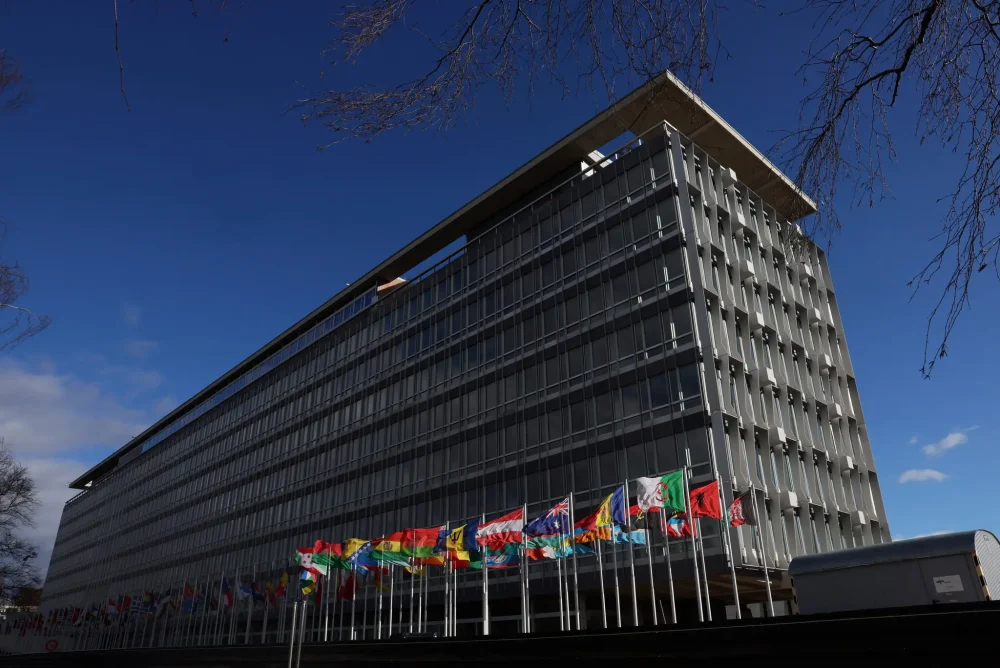
The United States has officially completed its withdrawal from the World Health Organisation (WHO), citing the agency’s handling of the COVID-19 pandemic, failure to implement reforms, and susceptibility to political influence.
The announcement was made jointly by Health and Human Services Secretary Robert F. Kennedy, Jr. and Secretary of State Marco Rubio. In a statement, they said the U.S. is ending its membership due to the WHO’s “mishandling of the COVID-19 pandemic that arose out of Wuhan, China,” its inability to adopt urgently needed reforms, and its failure to demonstrate independence from “inappropriate political influence of WHO member states.”
President Donald Trump first announced plans to withdraw the U.S. from the WHO on January 20, 2025. Over the past year, the U.S. halted all funding to the organisation, withdrew its personnel, and redirected activities previously conducted with WHO to bilateral engagements with other countries and organisations. According to the statement, the U.S. will continue to coordinate with the WHO in a limited capacity only to complete the withdrawal process.
The White House statement criticised WHO’s early response to COVID-19, saying the agency delayed declaring a global public health emergency and pandemic, which “cost the world critical weeks as the virus spread.” WHO leadership, the statement added, “echoed and praised China’s response despite evidence of early underreporting, suppression of information, and delays in confirming human-to-human transmission.” The organisation also allegedly downplayed risks of asymptomatic transmission and was slow to acknowledge airborne spread.
Following the pandemic, the WHO reportedly did not adopt meaningful reforms to address governance weaknesses, political influence, or coordination gaps, undermining global trust in the agency. Its report evaluating the origins of COVID-19 rejected the possibility that scientists created the virus, even though Chinese authorities did not provide genetic sequences from early patients or information on Wuhan laboratories’ activities and biosafety conditions.
The U.S. said it remains committed to global health leadership. Future efforts will focus on emergency response, biosecurity coordination, and health innovation through direct engagement with other countries, private sector partners, non-governmental organizations, and faith-based entities, prioritizing protection of the American public while supporting global health.