By Mark DaCosta-The need for a Leader of the Opposition in Guyana has never been more pressing. British High Commissioner Jane Miller has highlighted this urgent requirement, emphasising that the functioning of our Parliament relies fundamentally on the active participation of all elected representatives. As concerns grow domestically and internationally about the government’s apparent attempts to stifle opposition, it is vital to recognise the integral role that an Opposition Leader plays within our democratic framework.
The absence of a Leader of the Opposition undermines not just the principles of democracy, but the very mechanisms designed to hold the ruling party accountable. This critical position, established since the Constitution’s inception in 1966, ensures a necessary check on executive power. The Leader of the Opposition is not merely a figurehead; their role serves to uphold transparency and accountability within the government, thereby representing the diverse voices of our citizenry.
Guyana currently does not have a Leader of the Opposition in the 13th Parliament due to the failure of People’s Progressive Party (PPP)-elected Speaker Manzoor Nadir to convene a meeting under Article 184(1) of the Constitution, which would have allowed non-governmental members of the House to elect an Opposition leader. This procedural delay has left the position vacant since the new Parliament was sworn in.
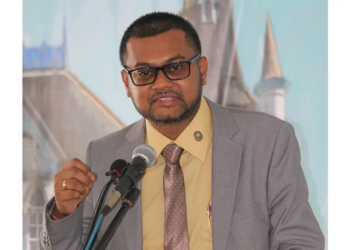
The We Invest In Nationhood (WIN) party Leader Azruddin Mohamed, whose party holds 16 seats — the largest in the opposition — is widely regarded as the presumptive Leader of the Opposition. Observers say that without action to formally recognise a leader, parliamentary oversight and the functioning of democratic checks and balances remain hampered.
Currently, the lack of an Opposition Leader raises alarms about governance and legislative integrity. Miller’s assertion that both government and opposition parliamentarians occupy a “critical role” in the legislative process resonates deeply in a country where the political landscape is deeply divided. With the government seemingly intent on preventing certain individuals from assuming leadership roles, the implications for our democracy are troubling. It is crucial that the election of a Leader of the Opposition takes place “without delay,” as Miller urged, to restore functionality and uphold the constitutionally mandated balance of power.
Central to the responsibilities of a Leader of the Opposition is the oversight of executive actions. This figure leads a “shadow cabinet” tasked with scrutinising government policies, budgets, and legislative proposals. Their role is vital for ensuring fiscal responsibility — holding the ruling party accountable during budget debates to safeguard taxpayers’ funds from misuse. Moreover, by offering alternative perspectives during policy discussions, the Opposition Leader can illuminate potential pitfalls or unintended consequences before legislation is enacted.
Ensuring public transparency is another critical component of the Opposition’s work. Through mechanisms such as “Question Time,” the Opposition Leader compels government ministers to address pressing issues related to national security, healthcare, and economic management. Without such scrutiny, decisions could be made that do not reflect the will or needs of the populace, fuelling discontent among the citizens who feel sidelined.
Perhaps one of the most significant roles of the Opposition Leader is giving voice to minority perspectives within a deeply divided political context. The existence of parties like WIN or the A Partnership for Nationhood (APNU) underscores a reality in our country where numerous citizens feel their interests and concerns are overlooked. The Opposition Leader ensures these views are represented during parliamentary proceedings, allowing grievances regarding land rights, infrastructure, and ethnic equity to remain on the national agenda.
Moreover, an established Opposition Leader contributes to political stability. By providing a credible alternative to the ruling party, they help maintain a peaceful transition of power, which is essential for preventing unrest. The Leader of the Opposition serves as a “Government-in-Waiting,” offering an avenue for citizens to express their frustrations through legitimate channels, rather than through extrajudicial means.
In the current climate where there is an evident attempt to undermine this role, it is paramount that we call upon our leaders to facilitate the swift appointment of an Opposition Leader. As Miller expressed, the link between a robust legislature and a flourishing democracy is clear. For our nation’s parliament to function effectively, and for all citizens to feel represented, the legislative process must include a vibrant opposition.
An effective Leader of the Opposition embodies the concept of “loyal opposition”—loyal not just to their party but to the state and its Constitution. In a nation richly endowed with natural resources and a diverse populace, this role acts as a safeguard against the “tyranny of the majority.” It ensures that the interests of all citizens are considered, and the government remains a true representative of the nation’s collective will.
According to one analyst, it is time has come for our nation to reject any attempts to diminish the significance of the Opposition’s role. For democracy to thrive, it must empower all voices, not just those in power. The call for the election of a Leader of the Opposition is not merely a political one; it is a demand for accountability, representation, and the safeguarding of our democratic values. As the chorus for this essential appointment grows louder, we must echo it—our democracy deserves no less.