Dear Editor,
In 1958, as Venezuela transitioned to democracy after the fall of Marcos Pérez Jiménez, it ranked among the top four nations in the world in GDP per capita — ahead of Spain, Italy, and Japan — powered by its booming oil industry and one of the world’s strongest currencies, the Bolívar. By the early 1970s, Venezuela had become a founding member of OPEC and nationalized its oil in 1976, asserting sovereignty over its most valuable resource. But each assertion of independence drew growing resistance from the very powers dependent on its oil.
Beginning with U.S. hostility toward Caracas’s partnerships with non-aligned countries in the 1980s, through sanctions imposed under President Obama in 2015 and expanded aggressively by Washington between 2017 and 2019, Venezuela’s economy was systematically strangled. The cumulative effect — freezing of assets abroad, denial of access to credit and spare parts, restricted oil exports — crippled the nation’s fiscal system and triggered what the UN describes as the largest mass migration in Latin America’s modern history. Venezuela did not simply “choose” collapse; it was driven, step by step, through the machinery of economic warfare — a 21st-century expression of imperial discipline meant to make the assertion of sovereignty itself look like a crime.
As the world celebrates the fall of Nicolás Maduro, I ask not for allegiance, only perspective. Look closer — Afghanistan, Iraq, Sudan, Libya, Cuba, North Korea, Iran, Syria, Venezuela, Russia. Different ideologies, timelines, and continents, but the same outcome: collapse by design. Each dared to step outside the global financial order, and each was punished through “sanctions” that masquerade as moral diplomacy.Modern warfare seldom needs bombs. It operates through the flow of money — or the denial of it.
A nation disconnected from global payment systems, credit access, spare parts, and shipping lifelines is effectively besieged. The suffering that follows isn’t evidence of failure; it is proof of strangulation. Libya once had no debt and provided free healthcare — until sanctioned and bombed. Iraq sought to trade oil in euros and was sanctioned into poverty before being invaded.
Venezuela’s Bolívar, once among the strongest currencies globally, collapsed under blockade. In every case, the method was the same: isolate, destabilize, exploit.Sanctions are not diplomacy; they are economic siege warfare by another name. They target civilians as much as governments, hollowing entire societies under the guise of reform. Yet while these tactics devastate the Global South, they also prepare the ground for corporate plunder — a new frontier of economic colonization.
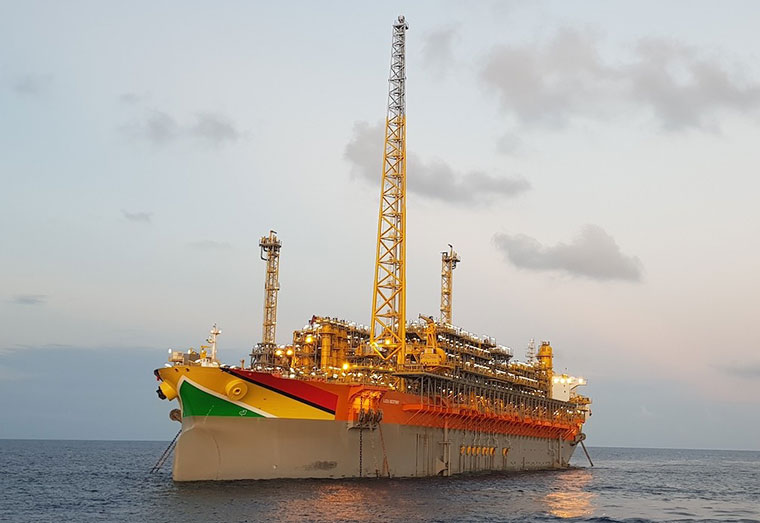
And now that brings us home to Guyana.Today, oil majors chart our economic course. They dictate production levels, override environmental safeguards, and exploit legal loopholes designed to protect them at the expense of the state. Government agencies meant to defend national interest — from the Environmental Protection Agency to the judiciary — bend to corporate will. When court rulings threaten those interests, the cases are stayed, appealed by the state, or quietly buried. Each concession is sold as pragmatism, but what it really signals is surrender.
Guyana now faces the same old empire in a modern disguise: power without accountability, extraction without sovereignty. Our young oil economy is being engineered to ensure dependency. The profits flow outward; the liability — inflation, pollution, debt — remains ours. This is how economic occupation begins, without armies, flags, or invasions.The lesson from Venezuela and others is clear: the moment a country becomes financially dependent on foreign systems, it forfeits the right to policy independence.
Today they call it “foreign investment.” Tomorrow, it will be “fiscal crisis” when profits vanish offshore and courts are told to stand down.The real test of sovereignty is not how much oil we can pump, but whether we can govern it without fear or permission. The question is no longer whether Guyana will be another headline in the long list of sanctioned and subdued nations — but whether we will recognize the pattern in time to break it.Because if we do nothing, the next flag raised over our oil fields will not belong to our nation — it will belong to a corporation.
Sincerely
Hemdutt Kumar