KINGSTON, Jamaica – The scene at V.C. Bird International Airport should have been unremarkable—a former prime minister making a routine stopover. Instead, Dr. Keith Rowley’s July detention by Antiguan police, his name flagged on an Interpol watch list for alleged criminal activity, revealed something more sinister than domestic political score-settling.

It exposed how vulnerable the Caribbean has become to the weaponization of international systems, both by its own governments and foreign powers.
And nowhere is this vulnerability more stark than in the waters now being bombed by the United States in what President Donald Trump has declared an “armed conflict” with drug cartels—a war most Caribbean nations never asked for and explicitly oppose.
The bitter irony is inescapable. As Trinidad and Tobago’s new administration uses international law enforcement mechanisms to pursue a former head of government without transparent due process, the region’s waters have become a theatre for American military strikes that similarly bypass the niceties of sovereignty and consent.
Both represent profound threats to Caribbean autonomy, yet they’re being met with a troubling silence from those who should be its loudest defenders.
When International Systems Become Weapons
Rowley’s case reads like a cautionary tale about the abuse of international cooperation mechanisms. A volcanologist turned politician, he was traveling to Montserrat to mark 30 years since the Soufrière Hills eruption—a return to his scientific roots after leaving office in May 2025.
Instead, he found himself confronted by local police, his name on an Interpol database as someone “allegedly involved in criminal activity.”
The current Trinidad administration—Prime Minister Kamla Persad-Bissessar, Attorney General John Jeremie, and Police Commissioner Allister Guevarro—has offered no public explanation. No charges. No transparency. Just silence.
This opacity matters because it demonstrates how easily international systems designed for cooperation can be perverted into tools of political retribution. If a former prime minister can be listed without due process, what protection exists for ordinary citizens?
But Rowley’s humiliation pales beside what’s happening in Caribbean waters.
A War Nobody Voted For
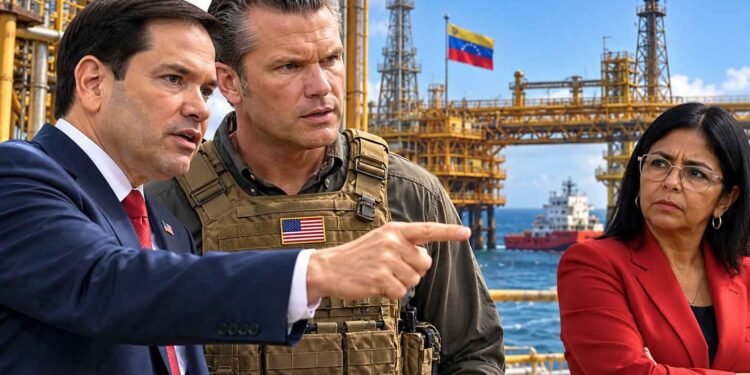
Last month, U.S. military forces carried out deadly strikes against boats in the Caribbean, killing at least three people in a September 15 operation that destroyed a vessel, its cargo, and what Trump’s administration now calls “unlawful combatants.”
These weren’t isolated incidents—they followed a massive buildup of American naval power in the region: eight warships carrying over 5,000 sailors and Marines, the largest U.S. military presence in Caribbean waters in recent memory.
Trump’s justification? A memo declaring that drug cartels are terrorist organizations and that the United States is now in an “armed conflict” requiring the use of military force—essentially granting himself war powers without congressional approval.
The memo claims cartels “conduct ongoing attacks throughout the Western Hemisphere,” conveniently framing drug smuggling as armed aggression warranting lethal military response.
Here’s what the memo doesn’t mention: the majority of Caribbean nations have long advocated for the region to be recognized as a zone of peace. They oppose militarization of their waters.
They reject the framing of their neighborhood as a battleground in someone else’s war. Yet their objections barely register in Washington’s calculus. Trinidad and Tobago, notably, has been conspicuously silent on this violation of regional sovereignty—perhaps too busy pursuing its own former leader to object to foreign warships turning Caribbean waters into a free-fire zone.
The Hypocrisy That Kills
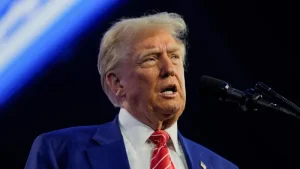
But here’s the cruellest irony: while Trump wages war on boats carrying drugs, his administration remains conspicuously silent on the flood of illegal American guns that are actually killing Caribbean people.
Thousands of young lives are cut short annually by firearms trafficked from the United States—weapons that flow south with a fraction of the scrutiny applied to drugs flowing north.
Where are the warships interdicting gun smugglers? Where are the strikes on arms traffickers? Where is the declaration of “armed conflict” against the merchants of death whose products create the violence that destabilises Caribbean communities far more than any drug shipment?
The answer is nowhere. Because U.S. intervention in the Caribbean has never been about Caribbean well-being.
It’s about American priorities, American definitions of security, and American assertions of dominance—dressed up in the language of counter-narcotics and counter-terrorism.
Reclaiming Caribbean Sovereignty
Both the Rowley case and Trump’s Caribbean strikes reveal the same uncomfortable truth: Caribbean sovereignty exists only insofar as more powerful actors choose to respect it. Whether it’s a vindictive administration abusing Interpol or a U.S. president declaring war in regional waters, the pattern is clear—international systems and military might trump self-determination.
The Caribbean has long prided itself on peaceful transitions and regional cooperation. But peace requires more than the absence of coups. It requires governments that won’t weaponize justice against political opponents.
It requires great powers that respect “zone of peace” declarations as more than symbolic gestures. And it requires Caribbean unity in defending sovereignty—not selective silence when violations serve narrow interests.
The volcanic expertise that brought Rowley to Montserrat may prove less dangerous than the eruptions threatening Caribbean autonomy from all sides. WiredJA