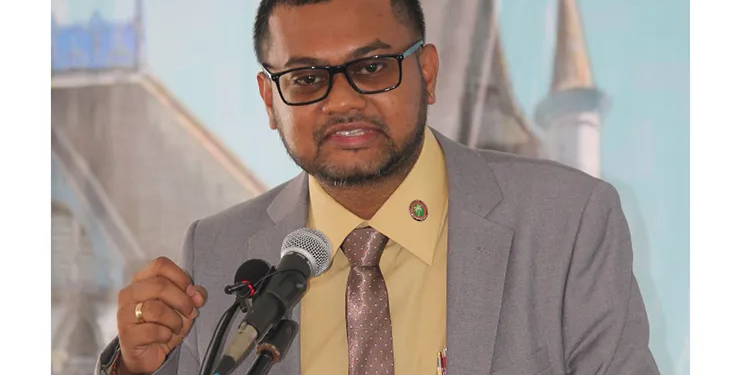
By Mark DaCosta-In a heartfelt address to his supporters, Azruddin Mohamed, the leader of the We Invest in Nationhood (WIN) Party, passionately contested the recent electoral results, claiming systemic manipulation that undermined the democratic process. Following the announcement by the Guyana Elections Commission (GECOM) which indicated a victory for the People’s Progressive Party (PPP), Mohamed implored the nation to remain vigilant and resolute in the face of adversity.
The backdrop to Mohamed’s stirring speech is a turbulent political climate after the September 1 elections. Despite his evident popularity and the widespread belief among many Guyanese that he was the rightful winner, GECOM’s official figures placed him at a notable disadvantage – he came in at second place. As news of alleged electoral fraud began to circulate, feelings of betrayal intensified among his supporters, who were already disenchanted by the ruling party’s strategies. In this context, Mohamed’s articulate and poised appeal resonated, framing a narrative of hope against a backdrop of perceived injustice.
In an impassioned video message that garnered significant viewership on social media, Mohamed presented a compelling case against the integrity of the election process. “We have arrived at a critical point in the history of our nation,” he declared, marking the urgency of the moment. His voice, steady and resolute, underscored the gravity of allegations directed towards the People’s Progressive Party (PPP) regarding electoral manipulation. He highlighted a litany of grievances, including missing statements of poll, the tampering of ballot boxes, and widespread voter intimidation. “These are grave matters that undermine the pillars of our democracy,” he remarked, setting the tone for a determined resistance against what he described as a “dictatorship.”
Mohamed’s speech painted a vivid picture of undermined democratic values, alleging that foreign nationals were allowed to vote despite not meeting residency requirements. “We have also been made aware of the voting by Bangladeshis, Indians, and Venezuelans,” he stated, positioning the election as marred by both local and international transgressions engineered by the PPP. The merit of his assertions rests on the palpable disconnect between reported results and the trust and goodwill he claims to have garnered within the electorate.
Criticising the PPP for its alleged misuse of governmental resources, Mohamed expressed his outrage at the apparent political coercion rampant in vulnerable communities across the country. “They made efforts to buy votes… with cash ranging from $500,000 to $800,000,” he charged, illustrating a pattern of behaviour designed to ensure the continuance of power at the expense of ethical governance. His particular focus on the plight of the Amerindian community starkly awakened sentiments of injustice for historically marginalised groups, as he recounted incidences of intimidation and coercion faced by Indigenous voters, stating, “These are deplorable non-democratic behaviours and cannot be permitted to define our future.”
Amidst the tension surrounding the election results, Mohamed expressed profound gratitude towards his supporters, stating, “You stood beside me, and you fought for the WIN movement even when your hands were tied due to victimisation.” Remarkably, he positioned his relatively young party as a formidable challenger to long-standing political norms in the nation, a sentiment that many of his followers embraced wholeheartedly.
“Do not lose hope,” he reassured, offering a rallying cry aimed at galvanising the populace into collective action against perceived injustices. His insistence on continuing to be the voice for the disenfranchised echoed within the hearts of those present, reverberating a desire for systemic change. He stressed the importance of empowerment and integration, noting, “We will ensure that our voices are heard loud and clear.”
With conviction, Mohamed pledged to persist in the fight for justice, dignity, and respect for every citizen, stating, “We will fight for the care, respect, justice, and integrity that each Guyanese man, woman, and child is entitled to.” His conclusion, highlighting a commitment to not concede to oppression, encapsulated a broader message of resilience amidst adversity. “This is not the end. Our movement is stronger than ever before,” he proclaimed.
As the political landscape unfolds, it is clear that Mohamed’s remarks are not merely a reflection of personal disappointment; they encapsulate a broader yearning for a future grounded in equity and fairness. The rallying cry of the WIN Party continues to resonate, symbolising hope for many who feel disenfranchised. While the PPP may celebrate its victory, the sentiments echoed by Mohamed remind us that the struggle for true democracy is far from over. The eyes of the nation remain fixed forward, searching for justice, integrity, and an unwavering commitment to the voice of the people.