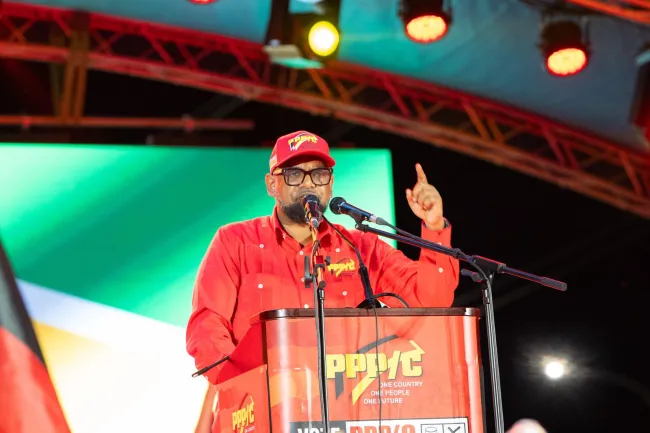
President Irfaan Ali made a passionate appeal to Guyanese voters at the People’s Progressive Party/Civic (PPP/C)’s final rally on Saturday evening at Lusignan, urging citizens to turn out in large numbers on election day to secure what he described as a “victory within reach.”
Speaking before a crowd of red-clad supporters, the President asserted that the PPP/C remains committed to ensuring that all Guyanese — regardless of where they live, their background, or political affiliation — benefit from the country’s ongoing development.
“We have fulfilled every single promise. We worked hard side by side with you,” Ali told the crowd, while highlighting what he described as major investments made in housing, healthcare, education, and infrastructure under his administration.
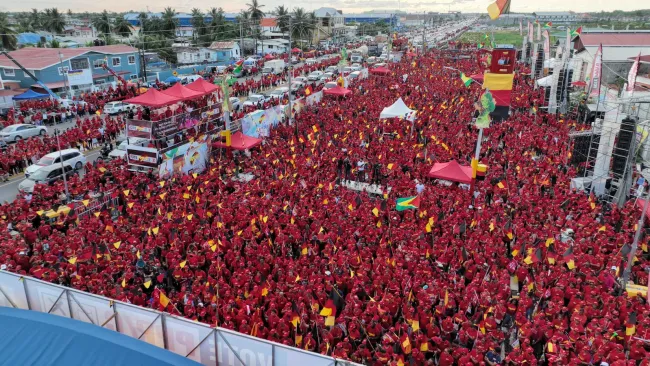
Ali painted the party’s development agenda as one grounded in “inclusivity and equity,” noting that the progress Guyana is experiencing is meant to uplift every citizen. “The smell of victory is in the air… Let us not take victory for granted,” he declared. “We have one final hurdle to cross which is turning out in numbers on election day and putting your X in the box next to the cup at the top and the bottom.”
He also acknowledged the role of the party’s grassroots supporters, saying, “You have worked tirelessly and hard. You deserve the victory that you voted for. Your hard work is for all of Guyana… The success of this campaign rests on your shoulders. We are proud of you and all the work you have done.”
But even as Ali struck a confident tone, questions remain about whether the electorate will continue to place its trust in the PPP/C government. While the party touts progress, its tenure has been marred by growing public concern over issues of widespread corruption, the marginalisation of specific ethnic and regional communities, and accusations of state resources being used for partisan purposes.
For many Guyanese, support at rallies may not directly translate to support at the ballot box. With increasing calls for transparency, inclusivity, and equity in the distribution of wealth—especially from the country’s oil revenues—voters are weighing whether the PPP/C has lived up to its promises or merely entrenched the old political order under a new guise.
As Guyana prepares to head to the polls, the central question remains: Will the electorate reward the PPP/C for its pledges and projects, or hold it accountable for the grievances that continue to simmer beneath the surface?