The 2025 electoral choice presents Guyanese voters with a fundamental decision between incremental progress and transformative change. While both the APNU Coalition and PPP offer viable paths forward, a comprehensive analysis reveals that APNU’s “People-Centred Development Strategy” represents a more ambitious, comprehensive, and ultimately more effective approach to addressing Guyana’s development challenges. The Coalition’s manifesto demonstrates superior vision in eliminating poverty, transforming the business climate, and fostering long-term economic competitiveness, offering the potential for breakthrough progress that could position Guyana as a regional leader in inclusive development.
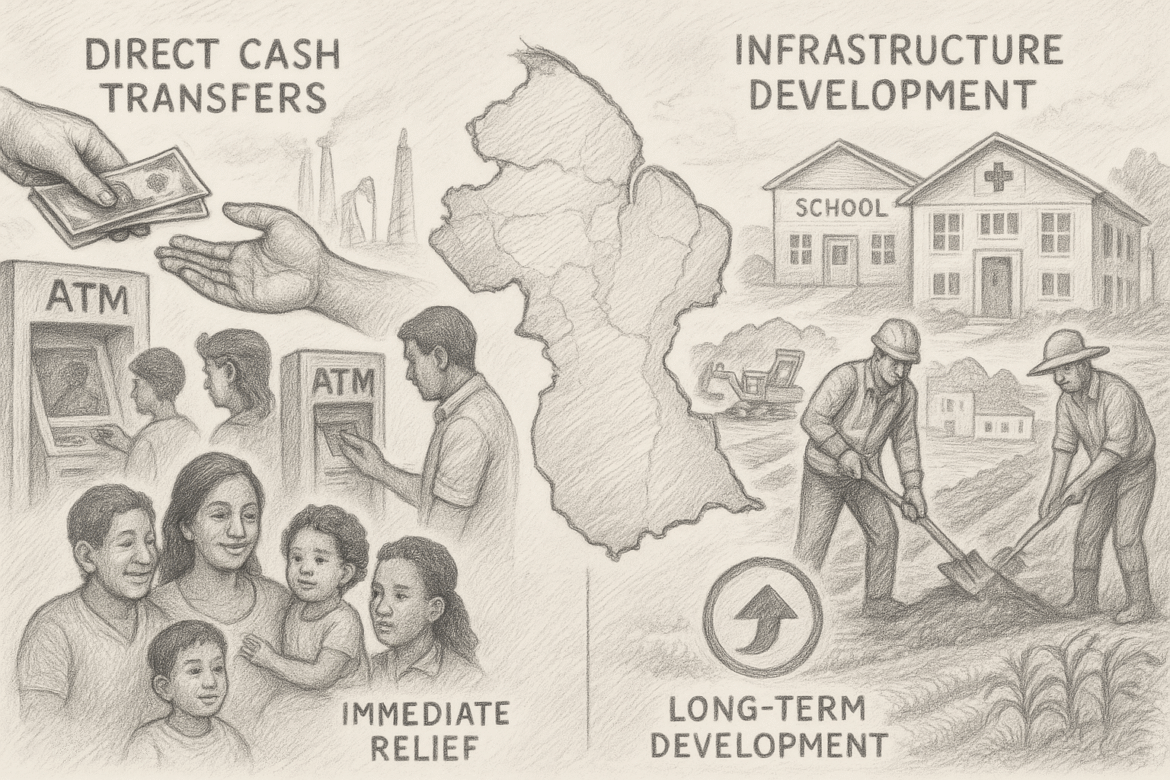
The fundamental strength of APNU’s approach lies in its recognition that Guyana’s oil wealth presents a once-in-a-generation opportunity to eliminate poverty and transform the economy within a single electoral term. While the PPP’s incremental approach may appear safer, it fails to match the scale of intervention with the magnitude of the opportunity. APNU’s commitment to guaranteeing every household a livable income represents visionary leadership that could position Guyana as a global model for resource-wealth distribution. The Coalition’s comprehensive cash transfer system—providing $ 100,000 or more annually to every adult, $120,000 per school-age child, and $50,000 monthly to students—would create immediate, measurable poverty alleviation. This approach recognizes that poverty is fundamentally about insufficient income and addresses it directly, rather than relying on the hope that economic growth will eventually trickle down to the poorest households. The mathematical impact is undeniable: most households would see their incomes double or triple within the first year of implementation.
APNU’s business development strategy demonstrates a sophisticated understanding of the structural barriers that have historically constrained private sector growth in Guyana. The proposed reduction in corporate tax rates from 40% to 20-30% represents the most significant business-friendly reform in Caribbean political history, potentially making Guyana the region’s most competitive jurisdiction for investment. This bold tax policy, combined with the establishment of a Development and Investment Bank, addresses the two most critical constraints facing businesses: excessive taxation and limited access to affordable credit. The Coalition’s financial sector modernization agenda, including expanded stock market operations, a junior market for SME financing, and measures to narrow interest rate spreads, demonstrates comprehensive thinking about capital market development. These reforms would fundamentally transform how businesses access capital and could unlock entrepreneurship and innovation that the current financial system’s limitations have constrained.
In contrast, while the PPP’s track record of removing 200+ taxes is commendable, their approach lacks the boldness necessary to position Guyana competitively in an increasingly globalized economy. The PPP’s more incremental approach to improving the business climate may preserve stability, but it sacrifices the transformative potential that APNU’s comprehensive reforms offer. The Coalition’s energy strategy demonstrates a superior long-term vision compared to PPP’s more limited focus on gas-to-energy. While the PPP’s 50% electricity tariff reduction is beneficial, APNU’s comprehensive renewable energy transformation, smart grid development, and commitment to net-zero emissions within 10-15 years position Guyana to capitalize on global trends toward clean energy and climate resilience. This approach could attract substantial green investment and position Guyana as a leader in sustainable development.
The Coalition’s infrastructure vision—including coast-to-hinterland highways, inter-regional connectivity, light rail systems, and the reintroduction of Guyana Airways—demonstrates ambitious thinking about national development. These investments would reduce regional inequalities, improve market access for businesses, and create the connectivity necessary for balanced national development. The proposal to establish a professionally managed state construction firm demonstrates innovative thinking about building domestic capacity while potentially reducing infrastructure costs. This comprehensive approach to infrastructure development far exceeds the PPP’s more limited focus on completing existing projects, demonstrating the kind of forward-thinking leadership that transformative development requires.
The poverty reduction comparison reveals the most significant advantage of APNU’s approach. While the PPP’s strategy may achieve a gradual reduction in poverty of 2-3 percentage points annually, APNU’s comprehensive transfer system could reduce poverty by 20-30 percentage points within the first two years. This difference is not merely quantitative but qualitative—APNU offers poverty elimination while PPP offers poverty reduction. The transformative impact of APNU’s approach extends beyond immediate income effects. By guaranteeing livable incomes, the Coalition would create conditions for improved health, education, and social outcomes that compound over time. Children whose families are lifted out of poverty through guaranteed income support are more likely to complete education, access healthcare, and develop the human capital necessary for long-term economic participation.
Critics may raise concerns about the fiscal sustainability of APNU’s ambitious spending commitments, but these concerns often underestimate both Guyana’s resource wealth and the Coalition’s comprehensive approach to revenue enhancement. The 20-point oil sector agenda, including contract renegotiation and the establishment of an autonomous Petroleum Commission, could significantly increase government revenues. The Coalition’s projection of extracting “up to 30% more on every dollar” through reduced corruption and waste reflects realistic potential given the well-documented inefficiencies in current government operations. Moreover, the economic stimulus effects of massive cash transfers could generate substantial indirect revenues through increased consumption, business activity, and increased participation in the formal sector. The increased purchasing power would drive demand across all sectors of the economy, potentially creating a virtuous cycle of growth that supports the sustainability of transfer programs.
The PPP’s emphasis on fiscal conservatism, while prudent, may represent greater long-term risk by failing to capitalize on the current oil revenue opportunity. Conservative management of extraordinary resources could result in missed opportunities for transformative development that may not recur. APNU’s approach to technological development and innovation, while less detailed than some aspects of their manifesto, demonstrates an understanding of future economic trends. The emphasis on telecommunications infrastructure, digital connectivity, and modern financial systems creates enabling conditions for digital economy development. The Coalition’s commitment to education reform and skills development would complement technological infrastructure to position Guyana competitively in knowledge-based industries.
The PPP’s innovation strategy, while more detailed in some respects, lacks the comprehensive economic transformation that would make such innovation programs most effective. Innovation thrives in environments with high human capital, strong infrastructure, and accessible capital markets—areas where APNU’s comprehensive reform agenda offers superior foundations. APNU’s aggressive corporate tax reduction strategy could position Guyana as the Caribbean’s premier business destination, potentially attracting multinational corporations and creating a hub effect for regional investment. The Coalition’s comprehensive approach to economic transformation could make Guyana a model for other resource-rich developing countries seeking to translate natural wealth into inclusive development.
The emphasis on transparency in oil sector management, combined with ambitious social spending, would demonstrate that resource wealth can be managed for the broad-based benefit of society rather than elite capture. This approach could enhance Guyana’s international reputation and access to development financing and technical assistance. The integrated analysis reveals that APNU’s manifesto offers superior potential across multiple dimensions of development. While the PPP’s approach may appear more conventional and therefore “safer,” it fails to match the scale of intervention with the magnitude of opportunity that oil wealth represents. The Coalition’s comprehensive approach—combining aggressive poverty elimination, business climate transformation, infrastructure modernization, and energy sector leadership—could achieve in five years what conventional approaches might take decades to accomplish.
The choice facing Guyanese voters is ultimately between maintaining steady progress under familiar leadership or embracing transformative change that could position Guyana as a global development success story. APNU’s willingness to think boldly about what oil wealth can achieve, combined with their comprehensive approach to economic and social transformation, offers the superior pathway for maximizing Guyana’s development potential. Guyana stands at a unique historical moment where extraordinary resource wealth creates possibilities for development breakthroughs that may not recur. APNU’s manifesto recognizes this moment and proposes interventions commensurate with the opportunity. While implementation challenges exist, the potential rewards of successful execution far outweigh the risks of cautious incrementalism.
The Coalition’s vision of eliminating poverty while transforming the business climate and positioning Guyana for long-term competitiveness represents the kind of ambitious leadership that transformative moments require. For voters seeking fundamental change rather than incremental progress, APNU’s comprehensive development strategy offers the most straightforward path to realizing Guyana’s full potential as a prosperous, inclusive, and regionally competitive economy. The question is not whether APNU’s approach involves risks—all ambitious undertakings do—but whether these risks are justified by the transformative potential of the initiative. The evidence suggests they are, making APNU’s manifesto the superior choice for Guyana’s development future.
Guyana Business Journal