

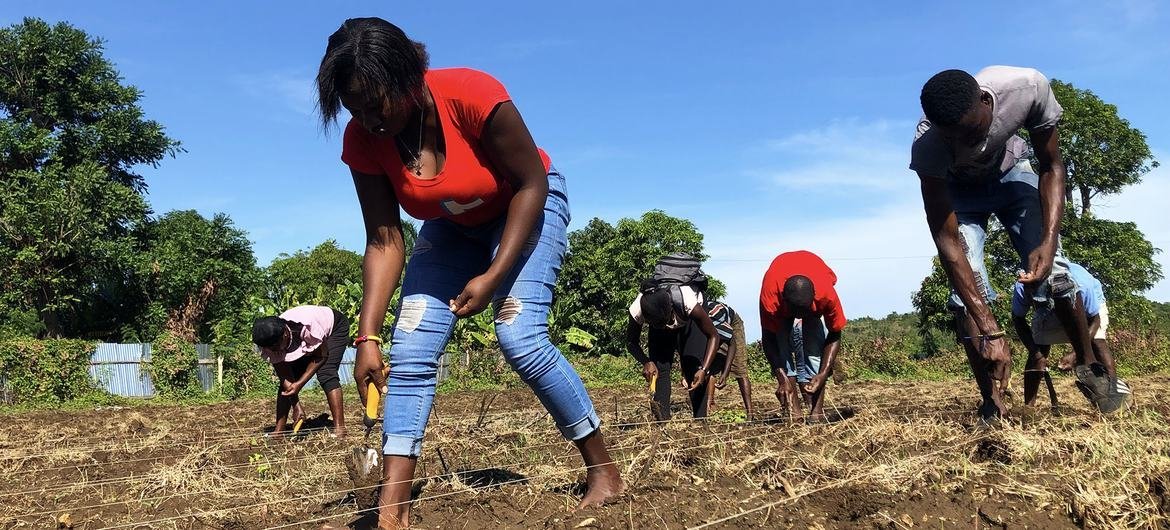
Instead of having seeds which sprout reliably, farmers contend with batches which may grow only 40 or 50 per cent of the time. This not only diminishes their yield and profit but also decreases their ability to sustain their livelihoods.
The Food and Agriculture Organization (FAO) is working with the Ministry of Agriculture in Haiti to change this by localising the seed economy and training members of organized seed banks known as Groupements de Production Artisanale de Semences (GPAS).
“We realised that most of the seeds were of doubtful quality, that is to say they were not adapted to certain climate conditions… and as long as they are not well-adapted and are not good quality, we will have weak production,” PierreFrantz Jacques, a former farmer and one of FAO’s seed bank project managers, told UN News.
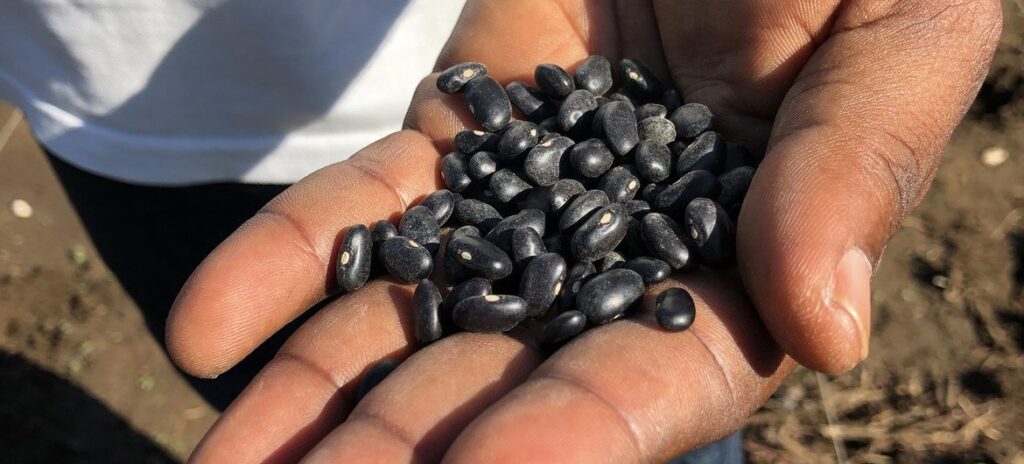
There are now over 200 GPAS located throughout Haiti, which cultivate high-quality seeds to distribute to other farmers with the goal of increasing farmers’ yields and reducing dependency on foreign seed and food imports.
Especially today, these groups play an important role with more than half of the country facing emergency food insecurity and with agricultural production threatened by armed violence due to increased gang activity.
“GPAS, in providing seeds of quality, contributes to the improvement of agricultural productivity and food security in communities,” Mr. Jacques said.
A beginning amidst catastrophe
Around two-thirds of Haiti’s population relies on agriculture for their livelihoods, most of them are small farmers. However, because of recent globalizing forces, these farmers only produce 40 per cent of Haiti’s food, creating an untenable food situation through which Haiti has become dependent on exports.
Throughout the past decades, various FAO programmes in Haiti have worked to support seed production as one approach to reducing the trade deficit. The GPAS programme in particular was revitalized in 2010 following the catastrophic 7.0 earthquake which devastated Haiti and its agricultural sector.
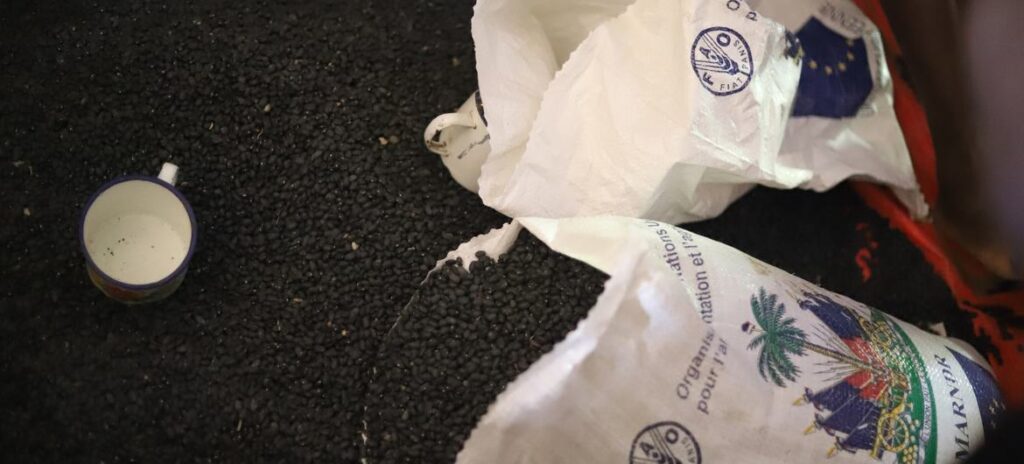
During this humanitarian crisis and while helping with the provision of emergency assistance, FAO looked beyond the immediacy of the crisis and began considering what it would mean to rebuild the agricultural sector.
“Immediately, we need to have resources from humanitarian assistance dedicated to resilience activities. You have to prepare for later from the beginning,” said Pierre Vauthier, FAO’s Representative in Haiti.
In 2010, this meant recognising that seed systems in Haiti were insufficient, with many farmers dependent on external sources and varieties of low-quality permeating the formal and informal market.
From emergency to resilience
This is where GPAS came in, giving them high-quality, first-generation seeds (semences de base) with which to jumpstart their enterprises. The groups were also trained in best practices for cultivation, harvesting and financial management.
While this training does rely on scientific research and technological advances, it also seeks to deploy local knowledge of ecosystems.
In this vein, ultimately, it is the GPAS farmers who pick the seed varieties they want to cultivate, with many choosing local species which are already well-adapted to the environment and already a part of local agricultural traditions.
“The farmers and locals know their environment, all the particularities. They know the type of soil, the type of climate. And this knowledge is passed down from generation to generation,” Mr. Jacques said.
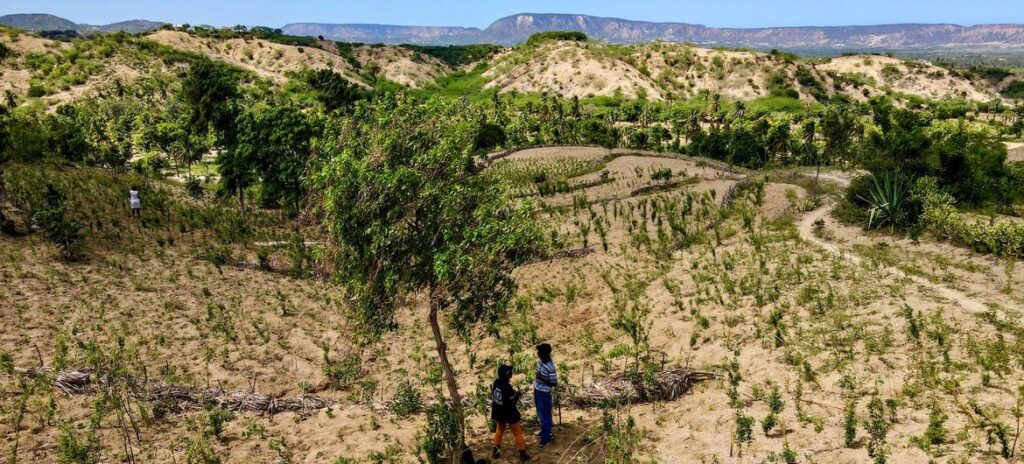
Additionally, FAO works to provide seed banks with silos and other tools to practice proper storage. This is particularly important during climate shocks, enabling farmers to better protect stocks despite extreme weather events.
“We can consider the seeds as an adaptation tool which allows farmers to continue to cultivate crops even during extreme conditions,” Mr. Jacques said.
Ultimately, a program like GPAS is at the heart of what FAO does, Mr. Vauthier said — yes, FAO facilitates humanitarian assistance, but their real expertise lies in what comes after, in creating self-sustaining communities.
“Resilience can give communities back dignity. It can make your brain think in a very different way, not as assisted but as someone taking control of his own life,” Mr. Vauthier said.
One seed matters
Haiti is facing a protracted crisis — 1.3 million people displaced, almost six million facing emergency food insecurity, impending climate shocks for which the country is ill-prepared and armed violence which is brutalising communities.
In this context, perhaps it is hard to believe that one seed matters. But for FAO, sometimes change needs to be small, to be locally sustainable before it is exported to the entire country. These changes may not be revolutionary, Mr. Vauthier said, but they do work and they do last.
Seed banks are much the same, according to Mr. Jacques.
“What happens is that farmers are less dependent on other human beings. They are capable of producing their own seeds… they will contribute to reinforcing autonomy and food security,” he said. United Nations






![Former President Barack Obama gestures as he campaigns on behalf of Democratic presidential nominee and his former Vice President Joe Biden in Philadelphia, Pennsylvania [Kevin Lamarque/Reuters]](https://villagevoicenews.com/wp-content/uploads/2020/10/Obama-1.jpg)

