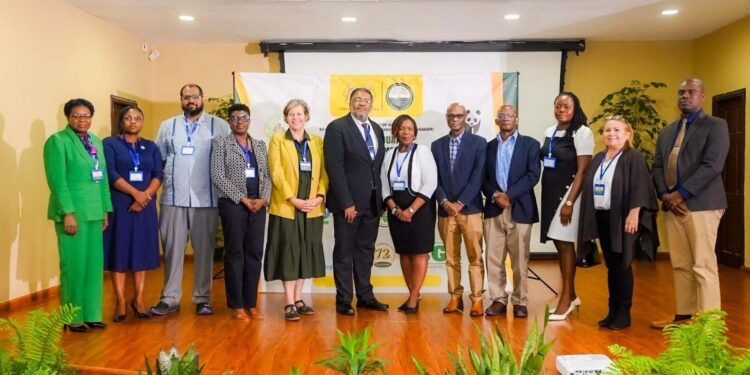
A Partnership for National Unity (APNU) Prime Ministerial Candidate, Juretha Fernandes, is sounding a national alarm over what she describes as the “worsening healthcare crisis” in Guyana’s hinterland, particularly in the Upper Mazaruni, Region 7.
Drawing from firsthand visits to interior communities, Fernandes condemned the deplorable state of medical care and accused the government of prioritizing political optics over the lives of its most vulnerable citizens.
“After five years of trillion-dollar budgets and high-gloss ribbon-cutting ceremonies, the harsh truth remains: the most vulnerable citizens in our country are still being left in the dark — literally,” she said in a statement from her office.
Fernandes contrasted the fanfare surrounding the recent opening of a new hospital in Bath, Region 5 — just minutes away from the already equipped Fort Wellington Hospital — with the grim reality in Kamarang, where the district hospital is barely functioning.
“There, blackouts are a part of daily life. Nurses and midwives are forced to deliver babies by torchlight. The generator runs for only four hours each night, continually damaging essential equipment. [Even] basic medication like Panadol is often unavailable,” she revealed.
She slammed the government’s approach as political manipulation, not transformation. “Staff and resources are being diverted from functioning health facilities to stage grand openings designed for political vanity, not patient care,” Fernandes charged.
Highlighting further failures, Fernandes noted that the newly opened Diamond Regional Hospital “fatally lacked oxygen recently” — a disturbing indicator, she argued, of systemic negligence.
In remote villages like Paruima, she added, women continue to risk their lives crossing dangerous terrain to access emergency care that may not be available when they arrive.
“This must stop. Every Guyanese life matters — whether in Bath or in the Upper Mazaruni. No mother should be forced to give birth in darkness. No community should be treated as an afterthought in a country this rich,” Fernandes declared.
On behalf of the APNU coalition, she pledged a comprehensive and equitable plan for hinterland healthcare, promising:
-
24/7 electricity to power critical equipment
-
Fully stocked pharmacies with essential medications
-
Timely and fair compensation for healthcare workers
-
Facilities that reflect the dignity and worth of every citizen
Fernandes’ call to action comes amid rising national concern about frequent and widespread power outages (blackout) and the uneven distribution of healthcare resources, particularly in Indigenous and interior regions. Her statement elevates healthcare equity as a key issue heading into the September 1 elections.
“This is not just policy. It’s a matter of life and death,” she warned. “APNU is committed to ending this shameful neglect and delivering the healthcare all Guyanese deserve — no matter where they live.”