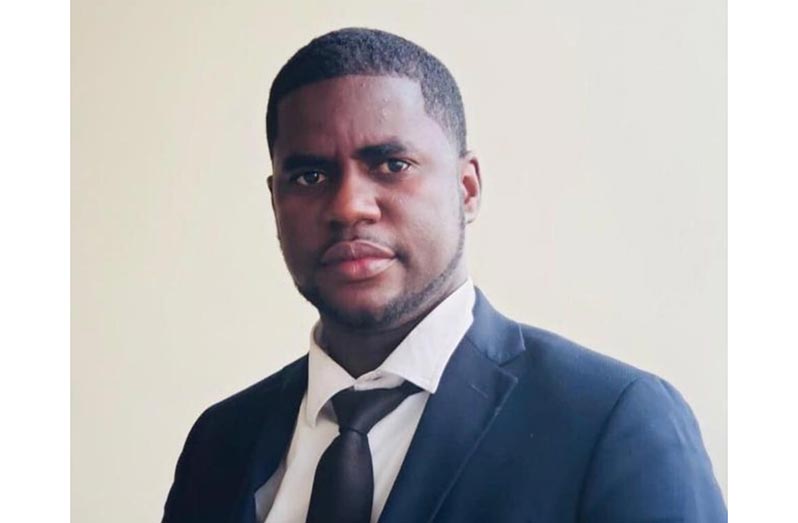
Prominent attorney-at-law Darren Wade has launched a scathing rebuke of President Irfaan Ali and the People’s Progressive Party (PPP) following what he describes as an “unlawful” and “blatantly political” appointment of a CARICOM Youth Ambassador at a party campaign event.
The controversy erupted after President Ali, during the PPP’s manifesto launch yesterday, publicly announced that a young supporter would be appointed as Guyana’s CARICOM Youth Ambassador — a decision made on the spot, before a packed audience and in the presence of top PPP officials including Vice President Bharrat Jagdeo.
Wade, reacting on social media, condemned the announcement as an abuse of public office, claiming it violates constitutional principles and undermines equal opportunity for all Guyanese youth.
“Why must you wear a PPP shirt or have a party card to be given opportunities?” Wade asked. “Irfaan Ali continues to show he has no decency and no respect for our laws and constitution.”
The attorney argued that such appointments should follow transparent procedures and merit-based evaluation, not be handed out at political rallies. He further noted that making such a declaration at a partisan event amounts to a clear case of political favoritism and potential misuse of executive power.
“This is blatant corruption and nepotism, displayed before our eyes, as he uses government roles for political purposes. I can’t see a court in this world that wouldn’t declare this unlawful,” Wade stated.
While expressing sympathy for the young man named in the appointment, Wade stressed that the issue lies not with the individual, but with the process and the principle at stake.
“Even if Irfaan wants to help, it could have been handled discreetly, without public discussion, and in a way that wasn’t unfair. Every Guyanese must be treated equally,” Wade said.
The appointment — made without prior consultation, open application, or transparency — has sparked fresh criticism of the PPP government’s long-standing pattern of rewarding political loyalty with state-sponsored opportunities. Opposition parties and civil society groups have since echoed Wade’s sentiments, raising alarm over the blurring lines between party politics and national governance.
Political analysts warn that such incidents only deepen public distrust in the administration and reinforce perceptions of systemic favoritism.
Neither the Office of the President nor the Ministry of Youth has issued a formal statement on the appointment or addressed the growing criticism.
Wade’s rebuke is likely to resonate with frustrated young voters and citizens increasingly concerned about transparency, fairness, and democratic governance in Guyana.