JUNETEENTH commemorates the emancipation of enslaved African Americans in the United States, specifically in Texas, where Union General Gordon Granger announced the end of slavery on June 19, 1865. This date marks the culmination of a long process that began with President Abraham Lincoln’s Emancipation Proclamation on January 1, 1863.
History of Juneteenth
– June 19, 1865: Union General Gordon Granger arrives in Galveston, Texas, to announce the end of slavery.
– The Emancipation Proclamation was signed two years prior, but it took time for the news to reach Texas.
– The celebration of Juneteenth grew out of the profound experiences of freedom and the surmounting challenges that lay ahead for African Americans.
Juneteenth TODAY IN THE USA
– In 2021, Juneteenth was established as a federal holiday in the United States, signed into law by President Joseph Biden.
– Today, Juneteenth is celebrated across all 50 states and around the world with festivals, parades, music, dance, and traditional foods.
– The holiday recognizes African American resilience and achievement while preserving history and community traditions.
CELEBRATING Juneteenth
– Attend Juneteenth festivals and events in your area, featuring traditional African American music, dance, and food.
– Learn about the history and significance of Juneteenth through museum exhibits, documentaries, and educational resources.
– Share your experiences and stories on social media using #Juneteenth.



Left to Right: NIGERIA, Accomplish Magazine; Dr Osita Aniemeka, Chairman, ACCOMPLISH Magazine, and Diiyi William-West, Editor, ACCOMPLISH Magazine
Dr. Osita Aniemeka is a teacher, broadcaster, publisher, and President of Sub-Saharan Open University (SSOU). He’s the Dean of the Academy of Management Science and a Central Bank of Nigeria Consultant. He sits on the Board of various companies and non-profit organizations, and serves as the Chairman of ACCOMPLISH Magazine.
Diiyi William-West, Editor, ACCOMPLISH Magazine. More formally known as DDWEST, he has several years of media practice experience, spanning magazines, newspapers, television, and radio, laying emphasis on mainstreaming standards in media practice. He practiced and taught Public Relations for nearly a decade before going into leadership consulting and real estate consultancy.
Ibrahim Traoré : Changing Africa’s Narrative – Accomplish Magazine
Ibrahim Traore: Changing the Narrative
BY Diiyi William-West
Captain Ibrahim Traoré, the 37-year-old interim President of Burkina Faso and the world’s youngest leader, has emerged as a transformative figure in African leadership. Since his rise to power in a 2022 coup, Traoré has captivated both domestic and international audiences with his bold anti-imperialist stance, emphasis on sovereignty, and commitment to economic and social reforms.
His Revolutionary Leadership Style
Emulating the legacy of the late Thomas Sankara, Burkina Faso’s former revolutionary leader, Traoré has sought to redefine national identity and governance. He has expelled French troops, banned French companies from the mining sector, and renamed colonial-era landmarks to Honour African heroes. His government has also embraced partnerships with non-Western countries, notably Russia, signaling a shift away from traditional Western alliances.
Due to decades of neocolonial double-speak, Traoré’s anti-imperialist rhetoric resonates with many Africans disillusioned by historical exploitation and ongoing foreign influence. Traoré’s emphasis on self-reliance and sovereignty has positioned him as a symbol of resistance and empowerment across the continent.
Economic and Social Reforms
Under Traoré’s leadership, Burkina Faso has initiated significant economic reforms aimed at reducing dependence on foreign powers and fostering local development. The government has invested heavily in agriculture, distributing over 400 tractors, 239 tillers, 710 motor pumps, and 714 motorcycles to farmers, leading to increased production of tomatoes and rice.
In the mining sector, Traoré has prioritized local processing of gold, establishing the country’s first modern gold mine and a tomato processing plant. These initiatives aim to retain more value within the country and create jobs for the youth. He’s determined to do more to free Burkina Faso from France’s unwholesome economic grip while empowering more Burkinabè, especially the youth, to own and exploit their natural resources themselves.
Socially, Traoré has focused on education and youth engagement, understanding that a well-educated populace is critical for the nation’s future. His administration has sought to improve access to education and vocational training, empowering young people to contribute to the nation’s development.
Security Challenges and Regional Cooperation
Despite these reforms, Burkina Faso faces significant security challenges. Extremist violence has displaced over 2 million people, and more than sixty percent of the country remains outside government control. In response, Traoré has enhanced the capabilities of the Burkinabè security forces and fostered closer cooperation with regional partners through initiatives like the Alliance of Sahel States (AES), aimed at combating terrorism and promoting stability in the Sahel region.
What His Critics Say
While Traoré’s leadership has garnered widespread support, particularly among the youth, it has also attracted criticism. His government has been accused, mainly by foreign commentators and domestic opposition leaders, of suppressing press freedom, conscripting dissenters, and failing to restore national security.
Conclusion
Ibrahim Traoré’s leadership represents a bold departure from conventional African governance. His emphasis on sovereignty, economic self-reliance, and social reforms has inspired many across the continent. However, the challenges of maintaining security and upholding democratic principles remain significant. As Africa continues to navigate its post-colonial trajectory, Traoré’s leadership offers both a model of resilience and a cautionary tale of the complexities inherent in transformative governance.
Let’s not forget that it’s highly probable that Traoré may not have made as much progress in governance in a democratic setting, a realization that reechoes questions about the relevance of democracy in Africa.
Diiyi William-West
Editor, ACCOMPLISH Magazine
June 2025
Juneteenth: Metaphor for Triumph Over Travesty
BY Osita Aniemeka
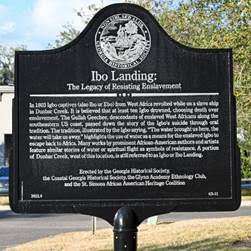
On June 19th, 1865, the long-deferred promise of freedom finally reached the shores of Texas, United States — two years after the Emancipation Proclamation, and centuries after the first captives were torn from African soil. This day, now known as Juneteenth, is more than an American observance; it is a global reckoning. It echoes across oceans and generations, reverberating back to the waters of Dunbar Creek (on St. Simons Island, Glynn County, Georgia, United States) in 1803, where Igbo people, newly arrived and unbroken, chose the tide over bondage.
Their defiance was silent, sacred — a return to spirit before the whip could claim them. From that act of ancestral resistance to the jubilant cries of emancipation in Galveston, Texas, Juneteenth stands as a testament to the unyielding will of a people who refused to be forgotten.
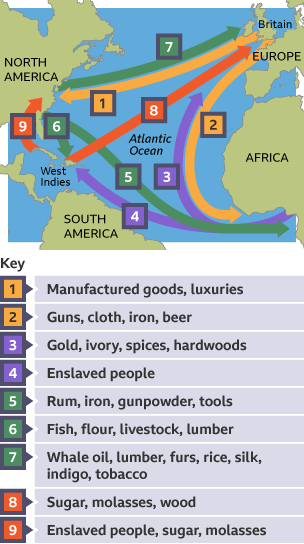
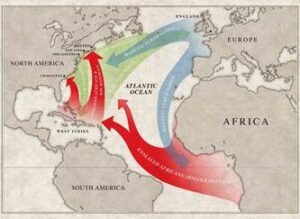
Though rooted in U.S. history, the echoes of slavery reverberate deeply in Europe and Africa, where the impacts of centuries of human bondage continue to manifest in systemic inequality, cultural erasure, and social injustice. In Europe, countries such as the United Kingdom, France, Belgium, and the Netherlands played central roles in the transatlantic slave trade. Despite abolishing slavery long ago — the British Empire in 1833, France in 1848, and the Netherlands in 1863 – these nations still grapple with its aftermath.
For instance, in the Netherlands, Juneteenth has gained increasing recognition among Afro-Dutch communities and anti-racism advocates. The country has recently begun confronting its colonial past, including its role in transporting over half a million Africans to Dutch colonies in the Caribbean. In cities like Amsterdam and Rotterdam, Juneteenth events are used to raise awareness about institutional racism and police brutality against Black citizens, mirroring similar struggles in the U.S.
In the United Kingdom, where the slave trade was abolished in 1807, modern Juneteenth celebrations have grown in cities like London and Manchester. These gatherings highlight ongoing racial disparities in education, employment, and criminal justice. Activists also draw attention to the Windrush scandal – where Caribbean migrants who had lived in the U.K. for decades were wrongly detained or deported – as a painful reminder of how historical injustices continue to affect Black Britons today.
Across the English Channel, France officially commemorates May 10th as National Day of Remembrance for Victims of Slavery. Yet, Juneteenth has also found resonance, particularly among diaspora communities in Paris and Marseille. French activists use both days to critique persistent inequalities faced by people of African descent, especially in housing, education, and law enforcement.
Turning to Africa, the continent most directly impacted by the transatlantic slave trade, Juneteenth serves as a moment of reflection and solidarity. Countries like Ghana, Nigeria, and Benin Republic, which were central to the forced export of millions of Africans, have embraced Juneteenth as part of a broader pan-African movement.
In Ghana, for example, Juneteenth has been linked to the “Year of Return” initiative launched in 2019, inviting the African diaspora to reconnect with their ancestral roots. Events held during this period included cultural festivals, educational forums, and visits to historic sites like Elmina Castle — once a holding center for enslaved Africans before they were shipped overseas.
Similarly, in Nigeria, Juneteenth has sparked conversations about internal ethnic tensions and historical forms of indigenous slavery that persisted even after the transatlantic trade ended. Nigerian scholars and civil society groups use the occasion to promote unity, healing, and dialogue around the complex legacies of slavery within the nation.
Long before the chains of American slavery clamped shut, the Igbo of Nigeria had already declared their stance. In 1803, when the Atlantic still carried the screams of the stolen, a group of Igbo souls stepped into the waters of Dunbar Creek rather than submit to bondage. They did not drown — they returned. To their gods, to their ancestors, to the soil of a home they would never see again.
That same fire of refusal burns in Juneteenth — not just as a celebration of what was won, but as a vow to keep fighting what was lost. Across Ghana, Nigeria, and Benin Republic, where the scars of the Middle Passage remain etched into the land, Juneteenth becomes not only a day of remembrance but a ritual of reconnection — to those who leapt, to those who lived, and to those who still rise.
Juneteenth, therefore, transcends national boundaries. It is no longer just an American observance but a global reckoning with the deep-rooted consequences of slavery. Whether in European cities demanding racial justice or African nations reclaiming their heritage, Juneteenth reminds us that freedom must be remembered, honoured, and continually fought for.
Just as the Igbo walked into the creek to reclaim their dignity, and just as freed men and women danced beneath the Juneteenth sun, so too does Captain Ibrahim Traoré embody the ongoing struggle for sovereignty and reform. His vision for Burkina Faso is not new — it is as old as the dust of the continent, revived in every generation that dares to say: We will not be bound.
While Juneteenth commemorates the emancipation of enslaved African-Americans in the United States, Captain Ibrahim Traoré, the progressive hero whose face has been beaming across social media feeds throughout West Africa and from posters and placards hoisted in the streets of Burkina Faso, represents a contemporary struggle for sovereignty and reform in West Africa — both moments reflect the enduring global pursuit of freedom, justice, and self-determination for Black communities.