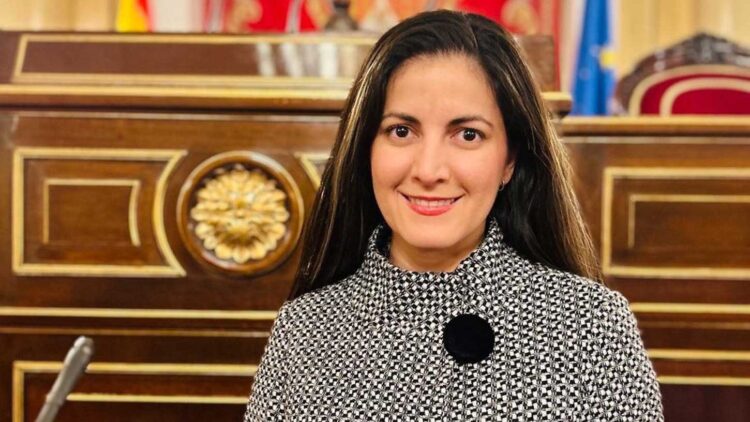
(WiredJA)-The Organisation of American States has elected Rosa María Payá Acevedo as a commissioner to the Inter-American Commission on Human Rights, marking what Cuban authorities describe as the culmination of an intensive U.S. pressure campaign that undermined the commission’s independence and impartiality.
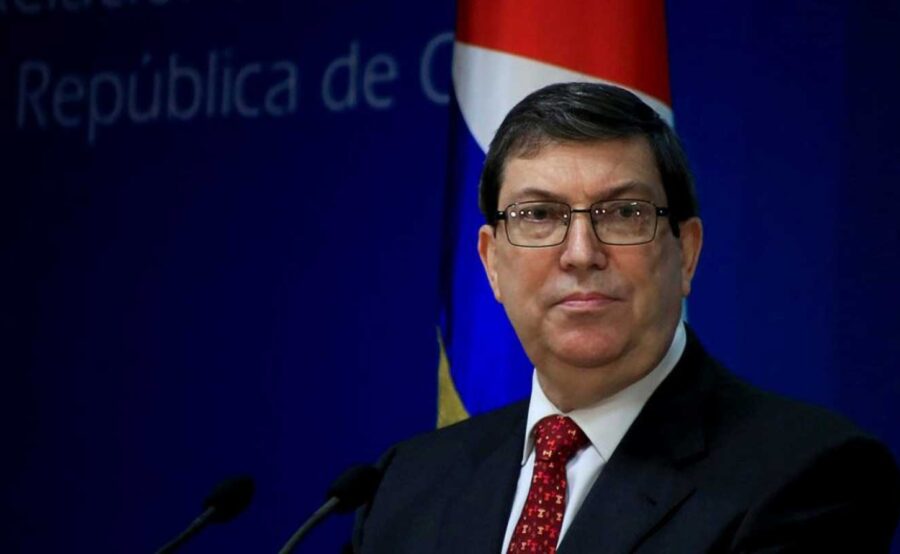
The Cuban Foreign Minister, Bruno Rodríguez Parrilla, questioned the legitimacy of the activist and denounced that the OAS “imposed” on the IACHR a person who advocates for “coercive policies” universally rejected, according to the Ministry of Foreign Affairs statement released Friday.
Secretary of State Marco Rubio spearheaded what Cuban officials characterize as an aggressive months-long campaign to install Payá—whom the U.S. State Department describes as “a principled, courageous, and deeply committed human rights and democracy defender”—into the supposedly impartial human rights body.
The campaign’s success came despite vocal opposition from numerous Latin American and Caribbean governments who questioned her suitability for the role.
Cuban authorities allege the election victory was secured through intense diplomatic pressure, including threats to cut U.S.-funded cooperation programs across the hemisphere—a charge that highlights the contentious nature of Payá’s narrow electoral victory.
“Deeply honoured by the trust that the states of the Americas have placed in me to defend the human rights of all people in our region. It will be an honor to serve all the peoples of the Americas,” the activist, daughter of the late dissident Oswaldo Payá, expressed on social media following her election.
The appointment has exposed fundamental disagreements about the commission’s direction and independence. While the U.S. State Department praised Payá as “an internationally respected democracy advocate, human rights leader, and expert in Latin American policy”, critics have raised serious questions about her qualifications and political neutrality.
An Independent Panel established specifically to assess IACHR candidates found troubling gaps in Payá’s credentials, noting that she “demonstrated limited knowledge of international human rights law, jurisprudence, or doctrine.”
More damaging still, the panel concluded that her extensive political activism “could undermine the appearance of independence in the eyes of a reasonable observer”—a devastating assessment for someone seeking to serve on a body that depends on perceived impartiality.
The Center for Economic and Policy Research reinforced these concerns in a special report, stating that “Ms. Payá’s public record reveals a consistent disregard for human rights and international human rights law” and documenting how she has spread “disinformation about the governments of OAS Member States.”
These assessments paint a picture starkly different from the State Department’s glowing endorsements.
Cuban officials argue that Rubio’s success in placing what they term “one of his favored operatives” on the commission reflects a broader strategy to weaponize international institutions against countries that resist U.S. foreign policy objectives.
They contend that Payá’s track record includes supporting coups d’état, promoting military interventions, and advocating for economic warfare throughout the region—hardly the resume of an impartial human rights expert.
The timing of Payá’s installation proves particularly provocative, as the IACHR has simultaneously launched what Cuban authorities describe as an unprecedented attack on Cuba’s internationally recognized medical cooperation programs.
The commission has demanded that all OAS member states respond to detailed questionnaires about current or past health cooperation agreements with Cuba—a move many governments view as an unacceptable intrusion on national sovereignty.
This coordinated pressure campaign against Cuban medical missions, which have provided healthcare to millions across Latin America and the Caribbean, exemplifies what Havana sees as the commission’s transformation from an independent rights body into an instrument of U.S. geopolitical strategy.
The controversy surrounding Payá’s election and the commission’s targeting of Cuba’s medical programs underscores what Cuban officials describe as the urgent need for a fundamental transformation of hemispheric relations.
They argue that the current system allows Washington to manipulate supposedly independent institutions to advance its foreign policy agenda, undermining the very principles these bodies claim to uphold.
In its strongest language, the Foreign Ministry declared that Cuba “does not and will not recognize any moral or legal authority of the OAS, nor of any of its officials, subsidiary bodies, or autonomous entities.”
This categorical rejection reflects Havana’s view that the organization has been so thoroughly compromised by U.S. influence that it can no longer claim legitimacy as an impartial arbiter of hemispheric affairs.
The Payá appointment thus represents more than a personnel change—it symbolizes a broader struggle over the future of inter-American institutions and whether they will serve as instruments of U.S. hegemony or as genuine forums for multilateral cooperation based on sovereign equality and mutual respect.