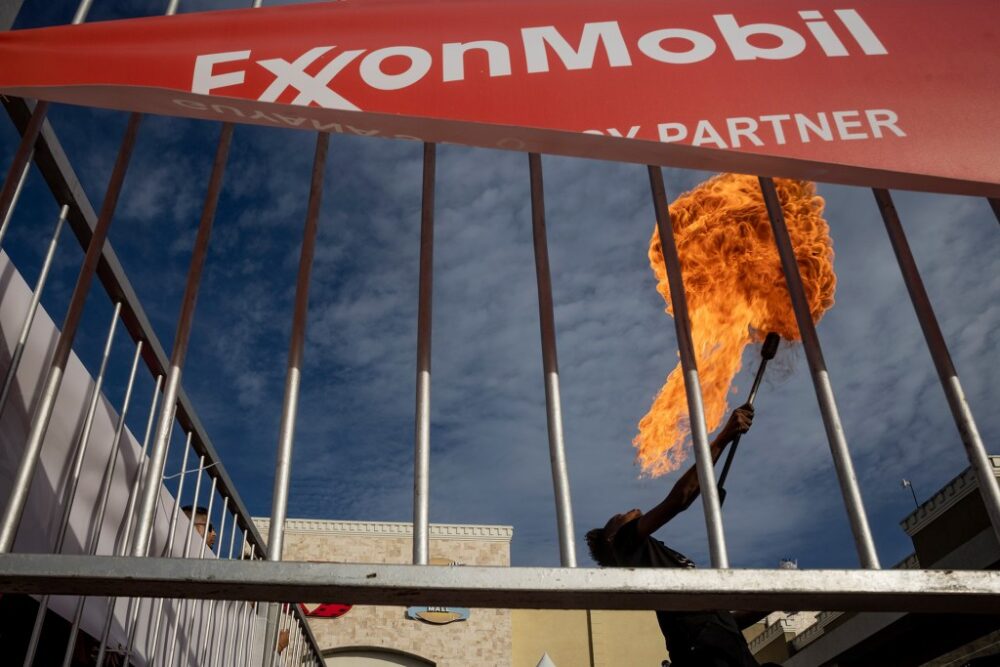
In November 2024, the InfoAmazonia team traveled to Georgetown and its vicinity to interview key whistleblowers from the oil industry and scrutinize lawsuits and reports revealing ExxonMobil’s environmental violations in Guyana. This investigation is a component of Every Last Drop, a cross-border journalism project that has been examining the consequences of oil extraction in the Amazon for the past year.
The investigation shows that the Guyanese government has eased environmental regulations, signed contracts that benefit oil companies at the expense of the public, and backed the companies in legal disputes.
“Our institutions have been captured by foreign interests. Exxon isn’t the only one, but it’s certainly the most egregious,” says environmentalist Sherlina Nageer, founder of the Greenheart Movement, an initiative that advocates alternatives to the oil industry, and one of the main voices opposing fossil fuel exploration in Guyana.
Nageer deems it “foolish” to trust a company with annual profits surpassing Guyana’s entire Gross Domestic Product (GDP). In 2022, ExxonMobil recorded global revenues of US$413 billion, nearly 28 times the country’s GDP, which was estimated at US$14.7 billion, according to World Bank data.
The nation is solidifying its status as a “petro-state,” with its economy, political decisions, and institutions becoming increasingly intertwined with the oil industry. The line between the state and ExxonMobil is blurring, making it harder to distinguish where one ends and the other begins.