Saturday, October 24, 2026
Village Voice News
ADVERTISEMENT
  • Home
  • News
  • Sports
  • Editorial
  • Letters
  • Global
  • Columns
    • Eye On Guyana
    • Hindsight
    • Lincoln Lewis Speaks
    • Future Notes
    • Blackout
    • From The Desk of Roysdale Forde SC
    • Diplomatic Speak
    • Mark’s Take
    • In the village
    • Mind Your Business
    • Bad & Bold
    • The Voice of Labour
    • The Herbal Section
    • Politics 101 with Dr. David Hinds
    • Talking Dollars & Making Sense
    • Book Review 
  • Education & Technology
  • E-Paper
  • Contact Us
No Result
View All Result
Village Voice News
No Result
View All Result
Home Regional

JAMAICA | Revisiting the Legacy of the Holy Thursday Rastafarian Uprising

Admin by Admin
March 28, 2024
in Regional
0
SHARES
0
VIEWS
Share on FacebookShare on Twitter

MONTEGO BAY,  – As we commemorate the Coral Gardens Uprising of 1963 let us never forget  that Rastafarian Farmer Benjamin ‘Rudolph’ Franklyn  was shot and killed by the police on that mournful Holy Thursday of  April 11,  over the unsettled  issue of land tenure on the Rose Hall property.

O. Dave Allen says “The Coral Gardens Uprising was a revolutionary act of resistance, an assault against the system. It was a part of a wider struggle by the Rastafarian against imperialism, a struggle rooted in the fight for equity and justice, a struggle for land and dignity, waged by a warrior class that lit the torch of freedom as revolutionaries do.

Let us also be reminded of the quotation from   Franz Fanon in  his masterpiece, the ‘Wretched of the Earth’:  “For a colonised people the most essential value, because the most concrete, is first and foremost the land: the land which will bring them bread and, above all, dignity.”

READ ALSO

CARICOM Reports Biodiversity Gains, Urges Stronger Data to Measure Progress

Guyanese JTV Reporter Cathy Richards Ordered Deported from British Virgin Islands

Let us not be distracted from the fundamental issue that gave rise to  the Coral Gardens Uprising, the uprising  was  rooted in the iniquitous distribution of land.

Coral Gardens was part of a larger property, the Rose Hall estate (which includes the Rose Hall Great House). According to historian and noted Montego Bay Scholar, Dr. Horace Campbell,  this property was the site of both small-scale farming by Rastafarians, as well as the ambitions of landlords and government officials who hoped to convert the area into a tourist destination.

The government and landlords saw the Rastafarians as an obstacle to their goal of re-purposing the property for tourism, and frequently sent police to evict the Rastafarians.

Victimhood and a revolutionary mindset represent two distinct approaches to addressing social injustices or challenging circumstances:

The historic Gardens Incident of 1963 where every Rasta was a wanted man. When held, the police would forcefully trim their locks.

The Coral Gardens Uprising was a revolutionary act of resistance,  an  assault against the  system. It was a part of  a wider struggle by the Rastafarian against imperialism, a struggle   rooted in the fight  for equity and justice,   a  struggle for land and dignity, waged  by a warrior class that lit the torch  of freedom   as  revolutionaries  do.

As the masses of the people are more and more alienated from the land, the New Rastafarian movement must take on that revolutionary struggle and  focus on challenging the establishment to  transform existing power structures and systems  that perpetuate injustice.

They must believe in their ability to effect change and take proactive steps to bring about social or political transformation. Non but ourselves.

This New Rasta must break with  the peace and love mantra which was used by Priest Brown  of the Potters House, as a defensive shield to protect Rasta from the brutal force of the army and the Police.

It has since outlived its usefulness which  as only render the Rasta movement as  an exotic  component of the tourist industry, tolerated yet  neither loved nor feared.

The movement  should not   remain   victims who appeal to the benevolence  of the oppressor or  see themselves as disadvantaged by external forces or individuals who feel powerless to change their situation and rely on others for sympathy or support, victims who  seek validation and sympathy from others to reinforce their perceived victim status. But proud champions of the oppressed.

While victims may feel marginalized or oppressed by circumstances beyond their control, revolutionaries actively work to challenge and dismantle oppressive conditions   to create a more equitable and just society.

This new generation must  seize the moment, and the agent of change  to  address social injustices at their core.

In contrast,  a victim mentality  often involves a sense of helplessness, externalized blame, and a focus on personal grievances without necessarily seeking broader societal transformation.

The mission of this   new generation should be inspired  by the  awakening from neo-colonialism as expressed by the young warriors Burkina Faso, Mali and Niger given the symbiotic relationships with mother Africa.

oodamaxef@yahoo.com

(Source: WiredJA)

ShareTweetSendShareSend

Related Posts

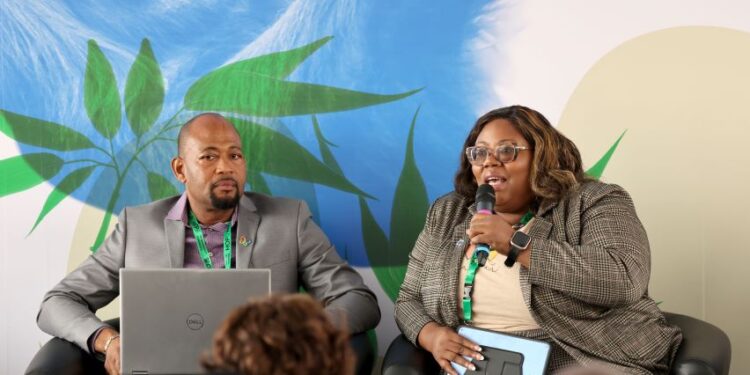
Teshia Jn Baptiste, Senior Project Officer, Sustainable Development, CARICOM Secretariat, makes an intervention during one of the side events at COP 17. (Photo via OECS)
Regional

CARICOM Reports Biodiversity Gains, Urges Stronger Data to Measure Progress

by Admin
October 24, 2026

(CARICOM)- The Caribbean Community (CARICOM) has demonstrated how progress in biodiversity conservation is possible through investments in protected areas, integration...

Read moreDetails
Cathyoliva O. Richards (VI photo)
Regional

Guyanese JTV Reporter Cathy Richards Ordered Deported from British Virgin Islands

by Admin
October 24, 2026

A Guyanese television reporter who was convicted of uttering forged documents in the British Virgin Islands (BVI) has been ordered...

Read moreDetails
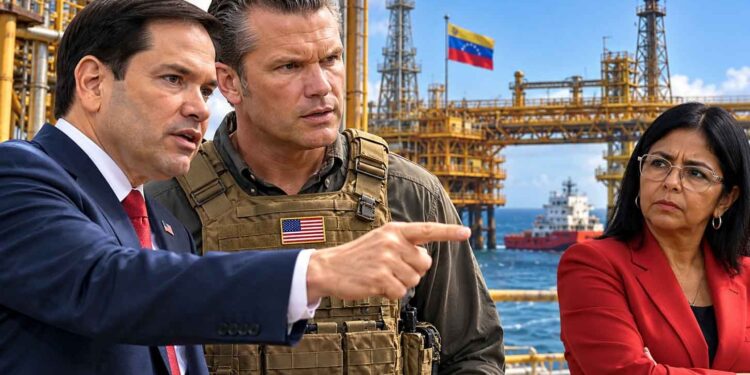
L-R US secty of State Marco Rubio, US Secty of War Pete Hegseth, Venezuela acting President  Delcy Rodríguez
Global

CARIBBEAN | Barbados Company at Centre of Trump’s Venezuelan Oil Deal Signed in Texas

by Admin
October 24, 2026

Leaked terms of the “biggest oil deal in world history” show Washington taking first claim on Venezuela’s crude for half...

Read moreDetails
Next Post

Whiz Kids season three wraps up


EDITOR'S PICK

Jayden Seales' workload is being monitored by Cricket West Indies  •  Getty Images

CWI blocks Seales’ Hampshire move in bid to manage workload

April 27, 2026
Google photo

Worker Killed, Others Trapped in Wall Collapse at East Coast Demerara Site

September 22, 2025
The International Court of Justice 

ICJ shifts case management for border controversy matter to Jan. 25   

January 14, 2021
New Airstrip commissioned at Aishalton in Region Nine

President Ali urges cheaper airfares, BK Group delivers

January 8, 2026

© 2024 Village Voice

No Result
View All Result
  • Home
  • News
  • Sports
  • Editorial
  • Letters
  • Global
  • Columns
    • Eye On Guyana
    • Hindsight
    • Lincoln Lewis Speaks
    • Future Notes
    • Blackout
    • From The Desk of Roysdale Forde SC
    • Diplomatic Speak
    • Mark’s Take
    • In the village
    • Mind Your Business
    • Bad & Bold
    • The Voice of Labour
    • The Herbal Section
    • Politics 101 with Dr. David Hinds
    • Talking Dollars & Making Sense
    • Book Review 
  • Education & Technology
  • E-Paper
  • Contact Us

© 2024 Village Voice