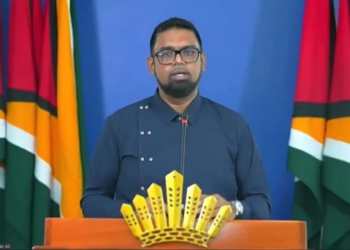
While many persons have power, those who possess political power may be in a different category altogether; a category that makes them susceptible to a degenerative mental process; we could call that process the “power disease.”
Power, generally, is defined as, “the capacity or ability to direct or influence the behaviour of others or the course of events.”
The boss in a workplace has power over his employees. The head of a home has power over a family. A landlord has power over tenants. However, such powers are relatively limited.
On the other hand, political power — particularly governmental powers — are wide in scope and have enormous depth. Additionally, the political power holder has many types or categories of power.
The powerful politician has:
- Positional power — through the office he or she holds.
- Referent power — because the powerful person has powerful colleagues and subordinates.
- Cohesive power — to punish people
- Reward power — to grant favours.
Such a wide array of influence often changes the way that the powerful person perceives the world.
According to theories developed by D. Keltner and colleagues, “Powerful people are prone to take risky, inappropriate, or unethical decisions and often overstep their boundaries. They tend to generate negative emotional reactions in their subordinates, particularly when there is a conflict in the group. When individuals gain power, their self-evaluation becomes more positive, while their evaluations of others become more negative.
“Power tends to weaken one’s social attentiveness, which leads to difficulty understanding other people’s point of view. Powerful people also spend less time collecting and processing information about their subordinates and often perceive them in a stereotypical fashion.
“People with power tend to use more coercive tactics, increase social distance between themselves and subordinates, believe that non-powerful individuals are untrustworthy, and devalue work and ability of less powerful individuals.”
Those changes in how a powerful person perceives the world are all negative, therefore they have negative effects on the behaviour of the powerful person
The powerful politician may become aloof and emotionally distant. Scholars tell us that such people may begin to believe that social rules and laws do not apply to them, they may lose the ability to feel empathy, and they may become heartless. According to a study conducted by Professor Dr. Gerben van Kleef of the University of Amsterdam, powerful people usually hold the irrational belief that they are better role models than others.
The fact that people who interact with powerful people are usually afraid to contradict or correct them only intensifies the problems.
Accompanying this mental and behavioral decline, powerful people may treat their staff and other supporters with scant regard, and make unreasonable demands; they may behave socially inappropriately; and they may become bullies. And as time progresses, such behaviours – left unchecked – may become worse.
While the decline may appear hopeless, experts say that all is not lost. Experts say that a powerful person can impede the development of such negative traits by actively working to disrupt the degenerative process. This requires that the powerful person recognise, acknowledge, and accept the truth of the problem, engage in willful introspection and take positive action.
Such actions, say the experts, include developing a team approach to problem-solving; abandoning the “I” mentality in favour of a “we” attitude. The powerful politician must foster a personal philosophy of interdependence and cooperation. And importantly, they must consciously, constantly strive to remain humble, and rooted in reality.
Guyanese have first-hand knowledge of the “power disease;” we have all seen how a normal, ordinary, humble person can become a heartless bully when he or she is given some power. Unfortunately, the victim of the power disease may not recognise their own decline.
With these facts in mind, Guyanese should take every opportunity to frankly and forthrightly tell powerful politicians when they are falling into this abyss. Additionally, we should vow not to become power disease victims if we are ever given political power.