PANAMA CITY/WASHINGTON D.C., June 23, 2022 – Four in five sixth graders in Latin America and the Caribbean (LAC) are expected to lack basic reading comprehension proficiency, according to a report issued today by the World Bank and UNICEF, in collaboration with UNESCO. While the region was already in a learning crisis prior to the pandemic, this represents a substantial increase. This new and staggering estimate also suggests that two years of COVID-19 school closures in the region may have set learning outcomes back by more than a decade. Emerging evidence from across LAC buttresses these estimates.
The new report ‘Two Years After: Saving a Generation’ underlines that these learning losses could cost today’s students in the region a 12 percent decrease in lifetime earnings.
Children in Latin America and the Caribbean experienced some of the longest and uninterrupted COVID-19 school closures in the world. On average, students in the region lost, fully or partially, two thirds of all in-person school days since the start of the pandemic, with an estimated loss of 1.5 years of learning.
“Latin America and the Caribbean faces an unprecedented education crisis, which could compromise our countries’ future development,” said Carlos Felipe Jaramillo, World Bank Vice President for Latin America and the Caribbean. “The fact that a large majority of sixth graders may not be able to understand what they read, jeopardizes the future well-being of millions of children who have not developed critical foundational skills, which increases the risks to deepen the already long-standing inequities in the region.”
Younger and more vulnerable children have been disproportionally affected by the learning losses, the latest evidence from across the region shows, setting the stage for increased inequality and a generational crisis.
“Latin America and the Caribbean has already lost more than ten years of learning progress due to two years of COVID-19 school closures. The education catastrophe is still going on, day after day,” said Jean Gough, UNICEF’s Regional Director for Latin America and the Caribbean. “While most schools have reopened across the region, we are seeing that far too many children are not back in the classroom full-time, and many of those who have returned are lost. In both cases, they are not learning. Turning a blind eye to the most severe learning crisis ever faced by the region will hurt children now and all of us in the long run.”
Also released today, ‘The State of Global Learning Poverty: 2022 Update’ report, produced by the World Bank, UNESCO, UNICEF, FCDO, USAID, and BMGF, shows that in comparative terms, the education crisis in Latin America and the Caribbean places the region in the second worst place globally. Only sub-Saharan Africa shows a higher rate of learning poverty, with around 9 out of 10 students at the end of primary education unable to read and understand a simple text.
More worryingly, Latin America and the Caribbean shows the steepest increase in this index since 2019, followed by South Asia. According to the report, this was likely due to the length of the school closures in both regions.
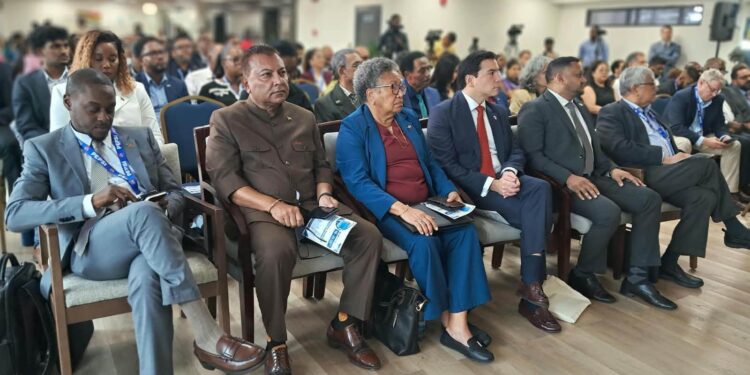
Claudia Uribe, Director of OREALC/UNESCO Santiago highlighted the outcome of the III Regional Meeting of Ministers of Education of Latin America and the Caribbean in which the urgency of prioritizing the recovery and transformation of education systems was expressed. “The recovery cannot mean going back to business as usual, it is necessary to prioritize education in the public agenda of our nations, guaranteeing its adequate financing in order to achieve the proposed objectives”.
Given the gravity of the crisis ‘Two Years After: Saving a Generation’ urges governments to immediately focus policies on two essential strategies: returning to schooling and recovering lost learning. The first aims to complete the reopening of all schools in a sustainable manner, re-enroll all students, and prevent dropouts. The learning recovery agenda must prioritize foundational reading and math skills, assessing learning levels, and implementing learning recovery strategies and programs at scale. Addressing psychosocial needs of students and teachers and digital gaps will also be necessary to tackle these challenges.
The report includes four key actions to help put this generation back on track:
Place the education recovery at the top of the public agenda
Reintegrate all the children that abandoned school and ensure they stay in it
Recover lost learning and ensure the socio-emotional well-being of children
Value, support, and train teachers
The report’s recommendations echo the “Commitment to the Recovery and Protection of Learning in Latin America and the Caribbean” announced earlier this month jointly with the InterAmerican Dialogue, UNESCO, and UNICEF, and with the support of the Presidents of Argentina, Chile, Ecuador, and Honduras.