Thursday, July 30, 2026
Village Voice News
ADVERTISEMENT
  • Home
  • News
  • Sports
  • Editorial
  • Letters
  • Global
  • Columns
    • Eye On Guyana
    • Hindsight
    • Lincoln Lewis Speaks
    • Future Notes
    • Blackout
    • From The Desk of Roysdale Forde SC
    • Diplomatic Speak
    • Mark’s Take
    • In the village
    • Mind Your Business
    • Bad & Bold
    • The Voice of Labour
    • The Herbal Section
    • Politics 101 with Dr. David Hinds
    • Talking Dollars & Making Sense
    • Book Review 
  • Education & Technology
  • E-Paper
  • Contact Us
No Result
View All Result
  • Home
  • News
  • Sports
  • Editorial
  • Letters
  • Global
  • Columns
    • Eye On Guyana
    • Hindsight
    • Lincoln Lewis Speaks
    • Future Notes
    • Blackout
    • From The Desk of Roysdale Forde SC
    • Diplomatic Speak
    • Mark’s Take
    • In the village
    • Mind Your Business
    • Bad & Bold
    • The Voice of Labour
    • The Herbal Section
    • Politics 101 with Dr. David Hinds
    • Talking Dollars & Making Sense
    • Book Review 
  • Education & Technology
  • E-Paper
  • Contact Us
No Result
View All Result
Village Voice News
No Result
View All Result
Home Columns The Herbal Section

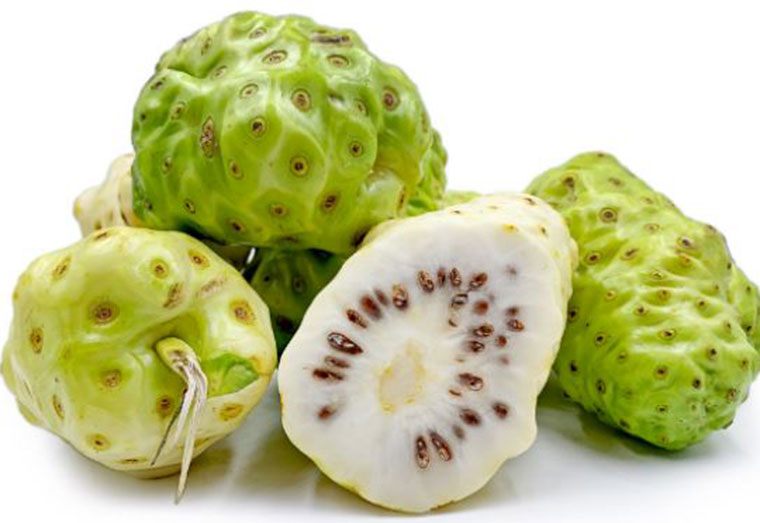
Herbal Section | Noni (Morinda citrifolia)

Staff Reporter by Staff Reporter
January 1, 2022
in The Herbal Section
0
SHARES
0
VIEWS
Share on FacebookShare on Twitter

Polynesian healers have used noni fruits for thousands of years to help treat a variety of health problems such as diabetes, high blood pressure, aches, pains, burns, arthritis, inflammation, tumors, the effects of aging, and parasitic, viral, and bacterial infections. Ancient healing manuscripts cite the fruit as a primary ingredient in natural healing formulations. Today, fruit preparations are sold as juice, in dried “fruit-leather” form, and as a dry extract in capsules.

General uses
Noni has traditionally been used for colds, flu, diabetes, anxiety, and high blood pressure, as well as for depression and anxiety. All plant parts are used for a variety of illnesses in Samoan culture, and noni is one of the most frequently used Hawaiian plant medicines.
Claims that have not been proven in clinical trials include: the use of bark for the treatment of bacterial infections, cough, diarrhea in infants, and stomach ailments; the flowers for sore or irritated eyes, styes, conjunctivitis, ocular inflammation, and coughs; the fruit for asthma, wounds, broken bones, mouth and throat infections, tuberculosis, worms, diarrhea, fever, vomiting, eye ailments, arthritis, depression, seizures, bacterial and fungal infections, viruses, and as a tonic; the fresh fruit juice for cancer; the dried leaves used externally for infections, burns, children’s chest colds, and inflammation, and internally for boils, pleurisy, inflamed gums, and arthritic pain; the fresh leaves used externally for burns and internally for fevers, hemorrhage, bacterial infections, and inflammation; and the roots for oral ulcerations, fevers, and cancerous swellings.

READ ALSO

Arugula: Benefits and Nutrition

Galangal Root: Benefits, Uses, and Side Effects

What is the recommended dosage?- 30 to 750 mL/day; dosing of 500 mg extract is nontoxic.

Contraindications- Contraindications have not yet been identified.

Pregnancy/Lactation- Information regarding safety and efficacy in pregnancy and lactation is lacking.

Interactions-None well documented.

Side Effects- No information is available on the adverse reactions of noni.

Toxicology- Potential liver damage has been observed. People with kidney disease and unexplained potassium elevation should be cautious in their use of noni because it may increase potassium levels (Drugs.com).
ShareTweetSendShareSend

Related Posts

Arugula (Google photo)
Herbal Section

Arugula: Benefits and Nutrition

by Admin
July 26, 2026

Key takeaways Arugula is a nutrient-dense, low-calorie leafy green that provides calcium, potassium, folate, and vitamins A, C, and K....

Read moreDetails
Galangal root (Google photo)
Herbal Section

Galangal Root: Benefits, Uses, and Side Effects

by Admin
July 19, 2026

Galangal root is a spice native to Southern Asia. It’s closely related to ginger and turmeric and has been used...

Read moreDetails
Indian Snakeroot (google photo)
Herbal Section

Indian Snakeroot – Uses, Side Effects, and More

by Admin
July 6, 2026

Overview Indian snakeroot (Rauvolfia serpentina) is an evergreen shrub found in Southeast Asia. The root is used as medicine. It's...

Read moreDetails
Next Post

Kwanzaa Spicy Black-Eyed peas


EDITOR'S PICK

President Irfaan Ali

Learn from the lessons of sacrifice – President Ali

July 21, 2021
K. Sharma Solomon
Member of Parliament

Beyond the Son Chapman: Truth, Memory and the Path to National Reconciliation

July 6, 2026

Bridging cultural divides: Orchid Awards winner David Ferguson’s take on communicating China

September 21, 2023

ExxonMobil Acquires FPSO Prosperity in Guyana for $1.23 Billion

November 19, 2024

© 2024 Village Voice

No Result
View All Result
  • Home
  • News
  • Sports
  • Editorial
  • Letters
  • Global
  • Columns
    • Eye On Guyana
    • Hindsight
    • Lincoln Lewis Speaks
    • Future Notes
    • Blackout
    • From The Desk of Roysdale Forde SC
    • Diplomatic Speak
    • Mark’s Take
    • In the village
    • Mind Your Business
    • Bad & Bold
    • The Voice of Labour
    • The Herbal Section
    • Politics 101 with Dr. David Hinds
    • Talking Dollars & Making Sense
    • Book Review 
  • Education & Technology
  • E-Paper
  • Contact Us

© 2024 Village Voice