Wednesday, April 29, 2026
Village Voice News
ADVERTISEMENT
  • Home
  • News
  • Sports
  • Editorial
  • Letters
  • Global
  • Columns
    • Eye On Guyana
    • Hindsight
    • Lincoln Lewis Speaks
    • Future Notes
    • Blackout
    • From The Desk of Roysdale Forde SC
    • Diplomatic Speak
    • Mark’s Take
    • In the village
    • Mind Your Business
    • Bad & Bold
    • The Voice of Labour
    • The Herbal Section
    • Politics 101 with Dr. David Hinds
    • Talking Dollars & Making Sense
    • Book Review 
  • Education & Technology
  • E-Paper
  • Contact Us
No Result
View All Result
  • Home
  • News
  • Sports
  • Editorial
  • Letters
  • Global
  • Columns
    • Eye On Guyana
    • Hindsight
    • Lincoln Lewis Speaks
    • Future Notes
    • Blackout
    • From The Desk of Roysdale Forde SC
    • Diplomatic Speak
    • Mark’s Take
    • In the village
    • Mind Your Business
    • Bad & Bold
    • The Voice of Labour
    • The Herbal Section
    • Politics 101 with Dr. David Hinds
    • Talking Dollars & Making Sense
    • Book Review 
  • Education & Technology
  • E-Paper
  • Contact Us
No Result
View All Result
Village Voice News
No Result
View All Result
Home Global

$800,000 USD Shipment of Chinese hair goods seized by U.S. officials suspecting forced labor

Staff Reporter by Staff Reporter
July 1, 2020
in Global
0
SHARES
0
VIEWS
Share on FacebookShare on Twitter

By Christine Murray

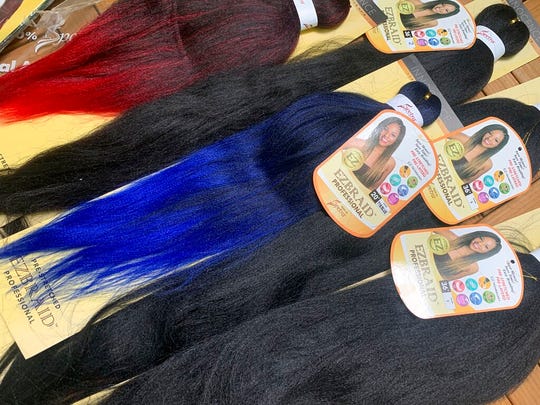
MEXICO CITY, July 1 (Thomson Reuters Foundation) – The U.S. government on Wednesday said it blocked an $800,000 shipment of hair extensions and accessories from China on suspicions that the products were made with forced labor.

READ ALSO

Over half of South Sudan’s population faces acute hunger crisis

UN rights chief warns of escalating crackdown in Iran amid conflict

The goods were held under a June order against a Xinjiang-based company suspected of using prison labor and forced labor with excessive overtime, withheld wages and restrictions on workers’ movements, the Customs and Border Protection (CBP) agency said.

The United States bans the import of goods made entirely or in part by forced labor, whether prison work or bonded or forced child labor.

The CBP order dated June 17 called for the detention of goods made by Xinjiang’s Lop County Meixin Hair Product Co.

The importers of the detained shipments must prove the merchandise was not produced with forced labor or export it elsewhere, the agency said.

“The use of forced labor is not just a serious human rights issue, but also brings about unfair competition in our global supply chains,” said Brenda Smith, executive assistant commissioner of the CBP’s Office of Trade, in a statement accompanying the June order.

The autonomous Xinjiang region in northwest China is home to a large population of Muslim Uighur people, an ethnic minority who speak a Turkic language and face repression from the Chinese government.

The United Nations has said it has credible reports that 1 million Muslims have been detained in camps in the region.

China denies mistreatment of the Uighurs and says the camps are vocational training centers needed to fight extremism. The Chinese embassy in Washington, D.C. could not immediately be reached for comment.

The CBP has been criticized for not enforcing U.S. law against forced labor imports enough, and critics say the agency’s forced labor division is understaffed and underfunded.

A CBP spokesman told the Thomson Reuters Foundation that the agency has been working to develop and expand the division, and that the number of forced labor investigations was rising.

In October, the CBP said had blocked imports suspected to have been made with forced labor from five countries, including clothing from China and diamonds from Zimbabwe.

The number of forced labor prosecutions is low, so the CBP’s orders to halt imports are a powerful tool, said Martina Vandenberg, head of the Washington-based Human Trafficking Legal Center.

“Criminal justice remedies have failed,” she said. “Advocates are looking for more innovative and creative tools to combat forced labor in supply chains.”

There were just 939 labor trafficking prosecutions around the world in 2019, according to the U.S. State Department’s most recent Trafficking in Persons Report.

The CBP can issue a “withhold release order” when it believes goods were made by forced labor, and it has issued 16 of them since March 2016.

The CBP said the blocked imports from Xinjiang, which included long hair extensions, weighed 13 tons and were held at a port in Newark, New Jersey.

Lop County Meixin also could not be reached for comment.

Two weeks ago, President Donald Trump signed legislation calling for sanctions on China over its treatment of Uighurs.

The State Department separately on Wednesday issued an advisory to caution businesses about supply chain links to Xinjiang.

Credit the Thomson Reuters Foundation, the charitable arm of Thomson Reuters, that covers the lives of people around the world who struggle to live freely or fairly.
ShareTweetSendShareSend

Related Posts

© UNICEF A child in South Sudan is fed by a healthcare worker.
Global

Over half of South Sudan’s population faces acute hunger crisis

by Admin
April 29, 2026

Conflict and displacement are intensifying South Sudan’s hunger crisis, with 7.8 million people facing high levels of acute food insecurity while...

Read moreDetails
© Unsplash/Mohammad Takhsh Tehran, Iran before the conflict began. (file)
Global

UN rights chief warns of escalating crackdown in Iran amid conflict

by Admin
April 29, 2026

The UN’s top human rights official warned on Wednesday that Iranians’ rights are being eroded in “harsh and brutal ways,”...

Read moreDetails
Global

US will issue commemorative passports with Trump’s picture for America’s 250th birthday

by Admin
April 29, 2026

WASHINGTON (AP) — The State Department said Tuesday that it is preparing a limited release of commemorative U.S. passports celebrating America’s...

Read moreDetails
Next Post
Model Naomi Campbell speaks from Los Angeles during an interview on Zoom with Reuters in Lagos, Nigeria June 26, 2020. Picture taken June 26, 2020. REUTERS/Alexis Akwagyiram

Naomi Campbell sees Black Lives Matter altering fashion and beauty industries


EDITOR'S PICK

Guyana’s Development Dilemma: Rich on Paper, Poor by Convenience

April 5, 2026
By O. Dave Allen

JAMAICA | The PNP at a Crossroad : Its Relevance In he Age of Generation Z

January 16, 2026

Workers, know your rights! ILO Convention No. 98 protects collective bargaining

December 24, 2023

The First 100 Days: Governing by Ghost Story– The Guyanese Disconnect

December 15, 2025

© 2024 Village Voice

No Result
View All Result
  • Home
  • News
  • Sports
  • Editorial
  • Letters
  • Global
  • Columns
    • Eye On Guyana
    • Hindsight
    • Lincoln Lewis Speaks
    • Future Notes
    • Blackout
    • From The Desk of Roysdale Forde SC
    • Diplomatic Speak
    • Mark’s Take
    • In the village
    • Mind Your Business
    • Bad & Bold
    • The Voice of Labour
    • The Herbal Section
    • Politics 101 with Dr. David Hinds
    • Talking Dollars & Making Sense
    • Book Review 
  • Education & Technology
  • E-Paper
  • Contact Us

© 2024 Village Voice