Thursday, October 1, 2026
Village Voice News
ADVERTISEMENT
  • Home
  • News
  • Sports
  • Editorial
  • Letters
  • Global
  • Columns
    • Eye On Guyana
    • Hindsight
    • Lincoln Lewis Speaks
    • Future Notes
    • Blackout
    • From The Desk of Roysdale Forde SC
    • Diplomatic Speak
    • Mark’s Take
    • In the village
    • Mind Your Business
    • Bad & Bold
    • The Voice of Labour
    • The Herbal Section
    • Politics 101 with Dr. David Hinds
    • Talking Dollars & Making Sense
    • Book Review 
  • Education & Technology
  • E-Paper
  • Contact Us
No Result
View All Result
  • Home
  • News
  • Sports
  • Editorial
  • Letters
  • Global
  • Columns
    • Eye On Guyana
    • Hindsight
    • Lincoln Lewis Speaks
    • Future Notes
    • Blackout
    • From The Desk of Roysdale Forde SC
    • Diplomatic Speak
    • Mark’s Take
    • In the village
    • Mind Your Business
    • Bad & Bold
    • The Voice of Labour
    • The Herbal Section
    • Politics 101 with Dr. David Hinds
    • Talking Dollars & Making Sense
    • Book Review 
  • Education & Technology
  • E-Paper
  • Contact Us
No Result
View All Result
Village Voice News
No Result
View All Result
Home Global

CDB calls for enabling the private sector, diversifying the economies and completing regional integration to advance the standard of living in the Caribbean

Staff Reporter by Staff Reporter
October 1, 2020
in Global
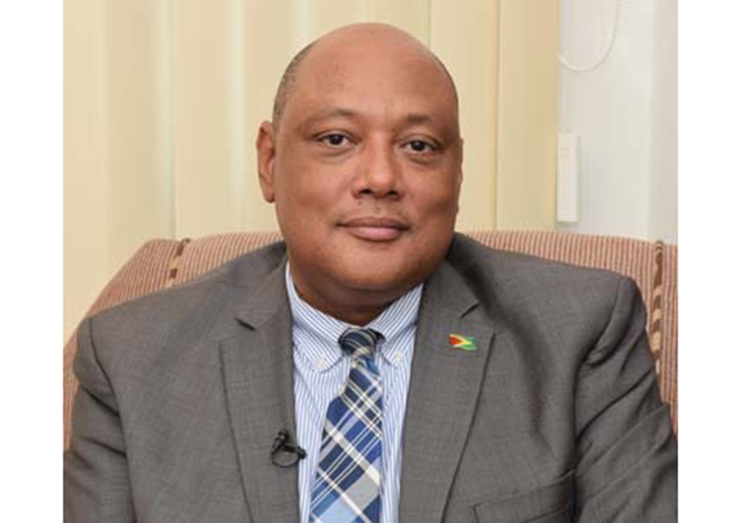
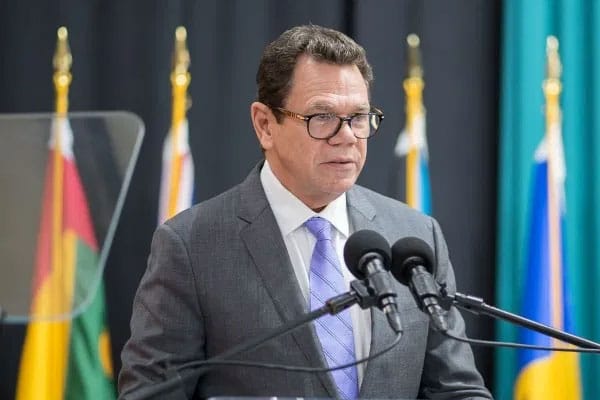
President of CDB, Dr Warren Smith

President of CDB, Dr Warren Smith

0
SHARES
0
VIEWS
Share on FacebookShare on Twitter


President of CDB, Dr Warren Smith

The President of the Caribbean Development Bank (CDB), Dr. Wm Warren Smith, stressed at Wednesday’s 50th Annual Meeting of the Bank’s Board of Governors that in the small Caribbean economies with no reserve currencies, sustainable advances in standards of living must be driven by export expansion.

READ ALSO

AI focus shifts to application and regulation

Breaking News: Grynspan Narrowly Leads Race for Next UN Secretary-General, Sources Say

“A diversified production structure helps to build economic resilience, making economies less susceptible to price and output fluctuations. Such a diversified structure also leads to low cost, productive and competitive economies”, said Smith.

The CDB President emphasised that Caribbean countries need to find a way to get the private sector to assume its place as the ultimate generator of jobs, incomes, and exports. In order to make this happen, the public sector needs to pay much more attention to creating an ecosystem that includes climate-friendly infrastructure, a healthy and skilled labour force, enabling legislative and regulatory frameworks, enabling culture, and access to appropriate types of finance.

Smith noted that the Caribbean has not exploited the true potential of the regional integration project to allow regional firms access to a larger protected market in which they could grow, and which would serve use as a launching pad to the global market. More than half of the actions agreed in the 2001 roadmap to a single market and economy still need to be implemented.

“I believe that the full potential of the integration movement has been limited by significant non-tariff barriers to trade; a lack of harmonised investment codes, tax incentives, and macroeconomic policies; and restrictions on capital mobility,” highlighted Smith.

Looking back at his tenure at the helm of CDB that will conclude in April 2021, CDB President Smith stated that the Bank was instrumental in helping to transform the Region. Between 2011 and 2019, total approvals amounted to US$2.5 billion with the bulk of the resources approved for projects in transportation, social infrastructure, environment, sea defences, disaster management, reconstruction, and energy. In the same period, US$1.8 billion had been disbursed. Despite the setbacks caused by COVID-19, total approvals in 2020 are anticipated to reach US$470 million, and disbursements to be around US$367 million.

Touching upon some highlights of CDB results, Smith noted that during the ten-year period, CDB helped to narrow the infrastructure deficit in the Region and improved access to social and economic services. Almost 2,400 kilometres of roads were constructed and upgraded with CDB funds. Some 60 communities benefitted from community-based interventions in disaster risk management to reduce vulnerability and strengthen the capacity of residents to cope with hazard events.

CDB also improved learning conditions by building human capital through investments in over 1,600 classrooms, and training almost 13,000 teachers. These initiatives have benefitted and continue to benefit some 469,000 students across the Region. By installing and upgrading over 800 kilometres of water supply lines in several countries, an estimated 62,700 households now have access to improved water and sanitation services.

To achieve this, CDB deepened strategic partnerships and mobilised resources from numerous donor countries and multilateral financial institutions, with a strong focus on attracting funding for climate adaptation, renewable energy and energy efficiency, making the Region more resilient to climate change while better meeting its energy demand in a sustainable manner.

“I am even more convinced that the business of development is complex. It requires many players, including CDB, joining forces in an orchestrated manner to create the environment best suited for advancing living standards in our Region”, concluded Smith.

ShareTweetSendShareSend

Related Posts

Global

AI focus shifts to application and regulation

by Admin
September 30, 2026

China Daily - China's approach to generative artificial intelligence is evolving from a focus solely on technological development to emphasizing...

Read moreDetails
(FILES) Secretary-General of the United Nations Trade and Development (UNCTAD) Rebeca Grynspan looks on prior to a press conference ahead of the 16th UN conference on trade and development, in Geneva, on October 13, 2025. Former Costa Rican Vice President Rebeca Grynspan officially joined the race to become the first woman to head the United Nations Secretariat replacing Antonio Guterres, the Costa Rican government announced on March 3, 2026. She is competing with former Chilean President Michelle Bachelet, the director of the International Atomic Energy Agency (IAEA), Argentine Rafael Grossi, and former Senegalese President Macky Sall to take office next year. (Photo by Fabrice COFFRINI / AFP)
Breaking News

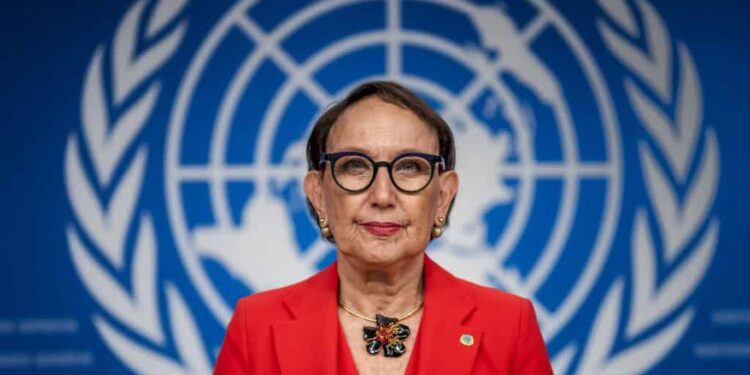
Breaking News: Grynspan Narrowly Leads Race for Next UN Secretary-General, Sources Say

by Admin
September 29, 2026

Sept 29 (Reuters) - An informal poll by ​the United Nations Security Council on Tuesday placed ‌former Costa Rican Vice...

Read moreDetails
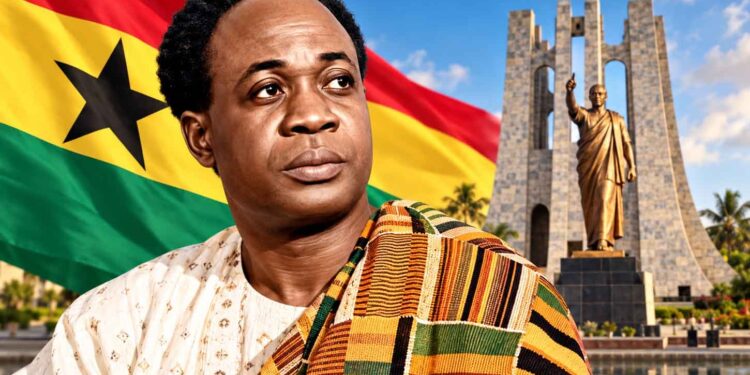
Osagyefo Dr. Kwame Nkrumah
Global

JAMAICA | PNP Salutes Nkrumah as Ghana Marks Restored Founder’s Day

by Admin
September 29, 2026

The People's National Party joined Ghanaians and Pan-Africanists worldwide in honouring Kwame Nkrumah on the 117th anniversary of his birth...

Read moreDetails
Next Post

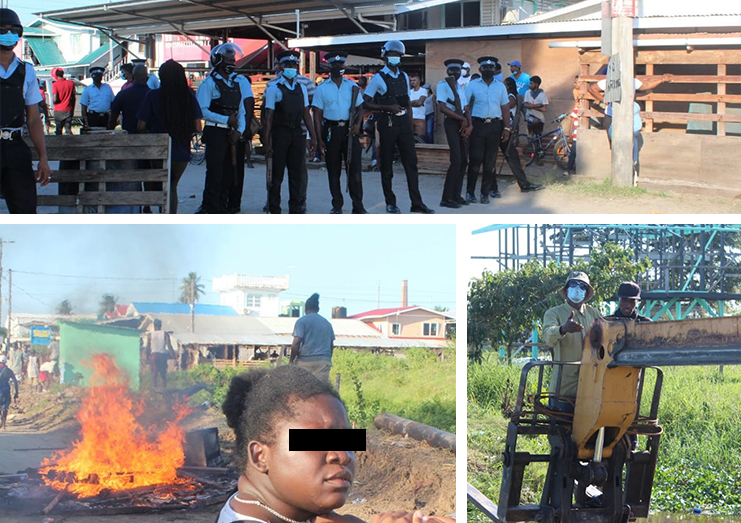
Govt to engage ECD squatters after fiery standoff with police


EDITOR'S PICK

WORD OF THE DAY: VOX POPULI

June 16, 2023

Hope holds firm despite defeat; eyes strong finish in T20 Series

July 23, 2025
Raphael G.C. Trotman, Esq. LLB, LEC, MA, Ph.D (ABD).

BREAKING: AFC Elections; Sherrod Duncan out as General Secretary, Raphael Trotman in

June 29, 2024

No clear reason yet for Washington air disaster that killed 67, officials say

January 30, 2025

© 2024 Village Voice

No Result
View All Result
  • Home
  • News
  • Sports
  • Editorial
  • Letters
  • Global
  • Columns
    • Eye On Guyana
    • Hindsight
    • Lincoln Lewis Speaks
    • Future Notes
    • Blackout
    • From The Desk of Roysdale Forde SC
    • Diplomatic Speak
    • Mark’s Take
    • In the village
    • Mind Your Business
    • Bad & Bold
    • The Voice of Labour
    • The Herbal Section
    • Politics 101 with Dr. David Hinds
    • Talking Dollars & Making Sense
    • Book Review 
  • Education & Technology
  • E-Paper
  • Contact Us

© 2024 Village Voice