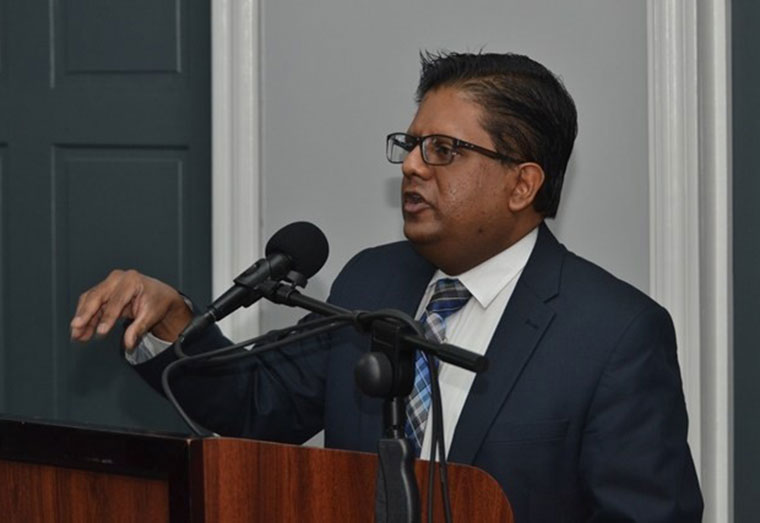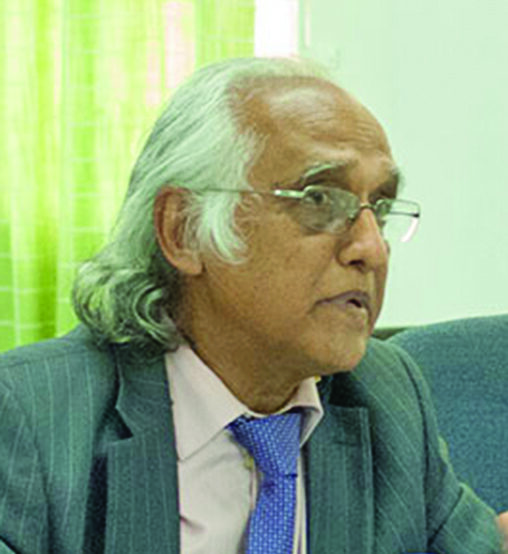
The National Insurance Scheme (NIS) is seeking to have a legal challenge over the calculation of minimum old-age pensions dismissed, as attorney Christopher Ram presses ahead with claims that thousands of pensioners have been underpaid and are owed billions of dollars in arrears.
The dispute centres on the interpretation of Regulation 4(b) of the NIS Benefit Regulations, which Ram and three trade unions contend requires the minimum monthly old-age pension to be at least 50 per cent of the Public Service minimum wage.
The National Insurance Board (NIB), however, maintains that the applicable benchmark is the national minimum wage under the Labour Act, rather than the Public Service minimum wage.
The latest development came during proceedings on November 24, when the Board applied to have the entire case struck out on the grounds that it constitutes an abuse of process. The application adds another dimension to the legal battle, which could have significant financial implications for the country’s social security system.
According to reports of the proceedings, the Chief Justice established a timetable requiring the parties to submit their final written arguments by February 9, 2027. The substantive dispute remains before the court, and no ruling has been made on whether pensioners are legally entitled to the higher payments.
Ram has criticised the Board’s position, accusing it of presenting a misleading account of the pension regulations and their application. He has argued that the Board’s interpretation contradicts information contained in previous statements, NIS publications, annual reports and actuarial reports.
He also questioned why the affidavit supporting the Board’s position was sworn by Pensions Officer Allison Hodge-Nurse rather than the chairman, general manager or deputy general manager.
The applicants contend that the statutory minimum pension should be calculated using half of the Public Service minimum wage. Based on a Public Service minimum wage of $102,346, they calculate that the minimum monthly pension should be $51,173.
They maintain that the current minimum pension of $43,075 leaves eligible pensioners short by $8,098 monthly.
The applicants further argue that the NIS failed to maintain the statutory minimum from 2021, despite increases in the Public Service minimum wage.
Their claim reportedly affects more than 27,000 pensioners, with estimated arrears of approximately $510,300 per person. Based on those figures, the potential financial exposure could exceed $13.7 billion, although that amount represents the applicants’ estimate and has not been established as a liability by the court.
The NIS Board disputes the interpretation advanced by Ram and the unions. In its affidavit, the Board argues that the Public Service minimum wage is relevant to determining the ceiling on earnings subject to NIS contributions, while the national minimum wage should be used to establish the minimum old-age pension.
The Board also maintains that payments above what it considers the statutory minimum are discretionary, or ex gratia, and do not automatically create an enforceable legal entitlement.
It has additionally challenged Ram’s standing to bring the proceedings and questioned the legal capacity of the three unions involved.
The legal action was initiated by Ram, pensioner Kalicharan Heera and the Union of Agricultural and Allied Workers, the United Minibus Union and the Guyana Market Vendors Union. Attorney Khemraj Ramjattan is also assisting the applicants without charge.
The applicants are seeking retrospective payments dating from 2021, together with interest. They are also pursuing payments allegedly owed to the estates of pensioners who died while receiving the disputed pension amounts.
The dispute followed correspondence in October 2026, when Ram and representatives of the unions demanded an explanation from the NIS Board and payment of the alleged outstanding arrears.
Ram has maintained that a 2015 amendment to Regulation 4(b) increased the statutory minimum pension from 40 per cent to 50 per cent of the Public Service minimum wage, and that the NIS was last compliant with that formula in 2020.
The case raises important questions about the interpretation of statutory pension entitlements, the accountability of the NIS and the financial obligations owed to contributors after retirement.
With the Board seeking to have the proceedings dismissed and the applicants maintaining their demand for higher payments and arrears, the High Court will ultimately have to determine which interpretation of the regulations is legally correct.
Final written submissions are due by February 9, 2027.