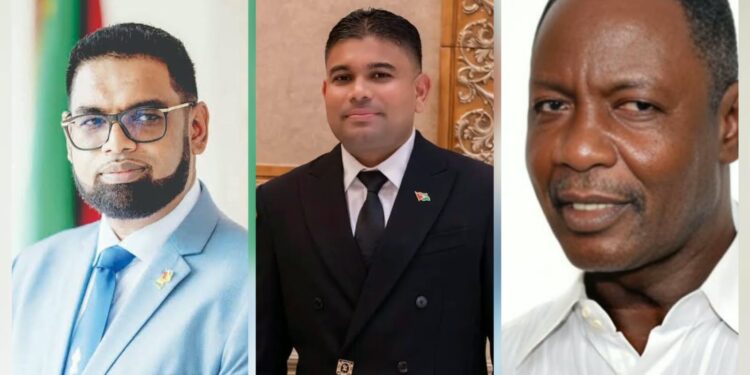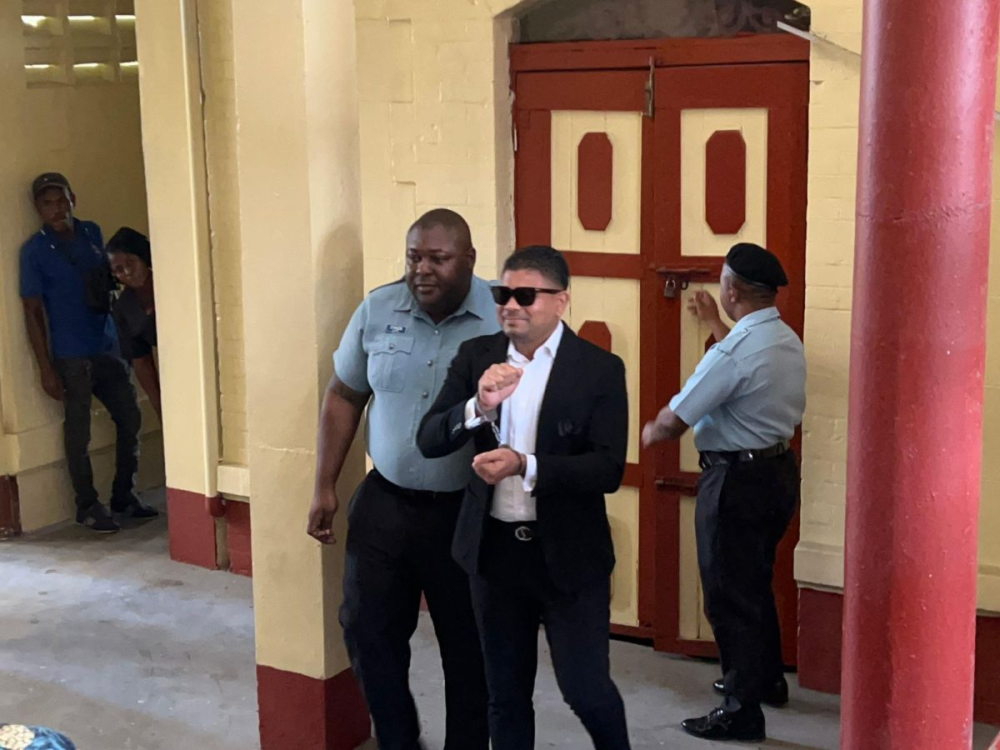
A high-stakes constitutional battle is unfolding in the High Court of Guyana as embattled parliamentarian Azruddin Mohamed launches an urgent Fixed Date Application seeking reasonable bail, alleging his continued detention at Lusignan Prison amounts to “inhuman or degrading punishment” in violation of Articles 139, 141, 144, and 153 of the Constitution.
The application, filed by prominent attorneys Roysdale A. Forde, SC, Siand A. Dhurjon, and Damien Da Silva of Dhurjon Chambers, paints a harrowing picture of Mohamed’s confinement since October 30, 2026: held alone on his floor, confined to his cell for approximately 23 hours and 50 minutes daily, with “little to no direct sunlight, minimal meaningful human contact and virtually no reading material.”
According to the court documents, Mohamed’s cell is “windowless, excessively hot, poorly ventilated and continuously lit, interfering with sleep.” Smoke and fumes reportedly cause “wheezing, headaches and nausea or malaise.” On November 19, when he reported difficulty breathing, he was refused temporary access to cooler air—even in handcuffs. The only medical attention provided was a blood-pressure check conducted through the cell door.
THE CHARGES: A POLITICAL PROSECUTION?
Mohamed faces charges under Section 9(1)(b) of the Cybercrime Act 2018 and common law aiding and abetting misconduct in public office. The prosecution alleges that on October 13, 2026, Mohamed and Police Constable Ryan Greene unlawfully obtained and shared CCTV footage related to a shooting incident on Barr Street, Kitty, the previous day.
But the defense argues the charge is fundamentally flawed. The application contends that the footage in question was disclosure material to which Mohamed was lawfully entitled as a defendant in a separate criminal case and as a sitting Member of Parliament investigating police criminality. The application states: “If one breaks into the bank and steals banking data and gives the data to its lawfully entitled account holder, no offence under s.9 can be made.”
The defense further alleges that the prosecution’s case is riddled with contradictions. On October 16, 2026, Magistrate McGusty had ordered police to provide disclosure in a related gun, ammunition, and obstruction case. The cybercrime charge, according to the defense, essentially criminalizes the provision of material that was already subject to a court disclosure order.
PROSECUTION UNDER FIRE
The application levels serious accusations against the Director of Public Prosecutions (DPP), accusing the office of relying on “obviously false allegations in breach of its duty as minister of justice.” It claims that footage and statements disclosed by the Deputy DPP on November 6 “totally undermine the account on which that inference depended and render it a false premise.”
The defense also highlights a shift in prosecutorial strategy: during a November 24 bail hearing, it became clear the prosecution “wished to use Greene as a witness against me whilst still proceeding with the charges against both of us separately.” Greene’s out-of-court admission, the defense argues, “is not evidence of the Applicant’s guilt merely because they were jointly charged.”
The application notes that the misconduct charge carries a maximum penalty of one year imprisonment under Section 21 of the Criminal Law (Offences) Act, Cap. 8:01. Both the cybercrime and misconduct charges are deemed non-serious under the Bail Act 2022.
A QUESTION OF BAIL
The defense argues that there are no lawful grounds to deny bail. The prosecution has conceded that Mohamed is not a flight risk. He has no previous convictions, has complied with reporting and passport conditions in all other proceedings, and has not contacted the complainant or his family since a no-contact condition was imposed.
Citing Compton English v. AG (1994-5 GLR 41 at 47), the application states: “Where it is clear that the evidence of the charge is weak and likely to fail, bail ought to be granted. The strength of the evidence in support of the charge is another factor. Obviously the weaker the case the more the court should lean in favour of bail.”
The defense also invokes the Mandela Rules 43-45 on standards for untried prisoners, arguing that the restrictions on association exceed what Prison Rule 312(2) permits. The “high risk” classification does not, according to the application, explain the necessity of near-total isolation or the conditions described.
WHAT’S AT STAKE
This case raises profound questions about the boundaries of prosecutorial power, the rights of pretrial detainees, and the intersection of parliamentary privilege with criminal law. Mohamed’s legal team is seeking:
1. An Order for reasonable bail pending trial
2. A Declaration that his continued detention violates his right to liberty under Article 139
3. A Declaration that his detention violates his right to be presumed innocent under Article 144
4. A Declaration that the conditions of his detention constitute inhuman or degrading treatment under Article 141
The application warns that the “duration and cumulative physical and mental effects of these conditions exceed what is necessary for safe custody.”
BACKGROUND: A PATTERN OF INTIMIDATION?
The application suggests a broader pattern of prosecutorial overreach, noting that the cybercrime charge identifies Mohamed as the alleged recipient of footage relating to a shooting incident in which he was “either victim or culprit.” The prosecution reportedly relied on pending firearm, ammunition, and obstruction charges as evidence of a “pattern of offending”—allegations the defense characterizes as “severely undermined by subsequent disclosure materials.”
The application alleges “state criminality of shivering proportions which remain improperly concealed by the DPP in the cybercrime and misconduct proceedings.”
NEXT STEPS
The matter is scheduled for a hearing before the High Court, with the prosecution required to file an Affidavit in Defence at least two to four days before the fixed date. The Respondents—the Attorney General and the Director of Prisons—must respond to the serious allegations contained in the application.
For Azruddin Mohamed, the stakes could not be higher. As he sits alone in his windowless cell for nearly 24 hours a day, the High Court must now determine whether his detention is a legitimate exercise of state power or a politically motivated abuse of process that violates the very constitutional principles Guyana claims to uphold.
The matter remains pending before the High Court.