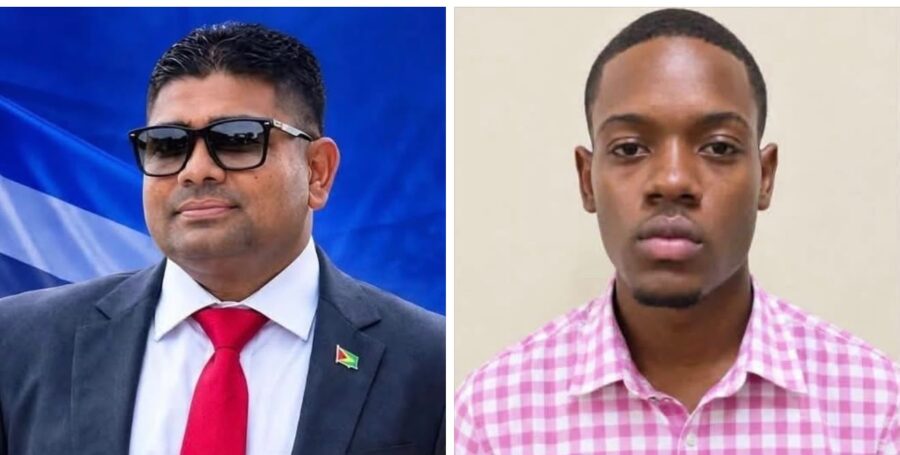
Police Constable Ryan Greene was on Tuesday, November 24, granted $300,000 bail after the prosecution indicated that it had no objection to his release, citing expectations that he would testify against Opposition Leader Azruddin Mohamed in the ongoing investigation into the alleged leak of footage from Guyana’s Safe Country surveillance system.
Magistrate Abigail Gibbs granted Greene $150,000 bail on a cybercrime charge and another $150,000 on a charge of misconduct in public office.
The decision marks a significant development in the case, particularly because Mohamed and fellow Police Constable Ashton Chapelle remain on remand after their renewed applications for bail were refused.
According to a report by News Room Guyana, the prosecution’s position changed in relation to Greene, with the court being informed that he was expected to testify against Mohamed.
As part of his bail conditions, Greene must surrender his passport and report to the Major Crime Unit at the Criminal Investigations Department (CID) Headquarters on the second and fourth Monday of every month.
Alleged sale of surveillance footage
Greene, 20, was arrested on October 26 and charged on October 30 alongside Mohamed in connection with the alleged unauthorised access to and disclosure of footage from the government’s Safe Country CCTV surveillance system.
The investigation centres on footage relating to an October 12 incident outside the Georgetown residence of Senior Superintendent Prem Narine, head of the Guyana Police Force’s Special Branch Unit.
Earlier reporting by Demerara Waves Online News indicated that Greene was accused of involvement in the alleged GY$800,000 sale of police CCTV footage to Mohamed.
The allegations have raised serious questions about the security of state surveillance infrastructure and whether personnel entrusted with protecting sensitive information improperly accessed or disclosed that material.
Greene’s father, Randy Greene, had previously filed a bail application on his son’s behalf, arguing that the alleged offence did not meet the legal threshold for classification as a serious offence under the Bail Act.
Mohamed and Chapelle remain in custody
While Greene was granted bail, Magistrate Gibbs refused renewed applications by Mohamed and Chapelle.
In Mohamed’s case, the prosecution maintained its objection to bail. The magistrate said the court was not satisfied that there had been a material change in circumstances to justify overturning the earlier decision.
She maintained that there were substantial grounds to believe Mohamed could commit a further offence if released and that bail conditions would not adequately address the perceived risk.
The magistrate also refused bail on the charge of aiding and abetting misconduct in public office.
Chapelle was similarly denied bail, with the court citing concerns about possible interference with witnesses and the integrity of the investigation.
The magistrate noted that Chapelle’s wife, who is also a police officer stationed at the Command Centre, was under investigation in connection with the matter. However, she stressed that the court was making no finding against the wife.
Mohamed has remained at Lusignan Prison since October 30. His earlier challenge to the magistrate’s bail decision was dismissed by High Court Justice Priscilla Chandra-Hanif, who found that the application had not established grounds for judicial review.
Questions surrounding the prosecution’s position
Greene’s release introduces an important dimension to the proceedings. The prosecution’s expectation that he will testify against Mohamed raises questions about the evidence he may provide, the circumstances under which it was obtained and whether his testimony will be supported by independent evidence.
The public must also be able to distinguish between an accused person being granted bail and one being exonerated. Greene remains charged, and the allegations against all parties must be tested through the judicial process.
The case has broader implications for public confidence in the Guyana Police Force. State surveillance systems are intended to protect citizens, assist investigations and strengthen national security. Allegations that footage from such a system was improperly accessed and disclosed demand a thorough and transparent investigation.
The proceedings also underscore the importance of ensuring that criminal investigations are conducted without political interference, selective enforcement or the perception that individuals are being treated differently because of their political standing.
The misconduct-related charges were adjourned to December 10 for disclosure.