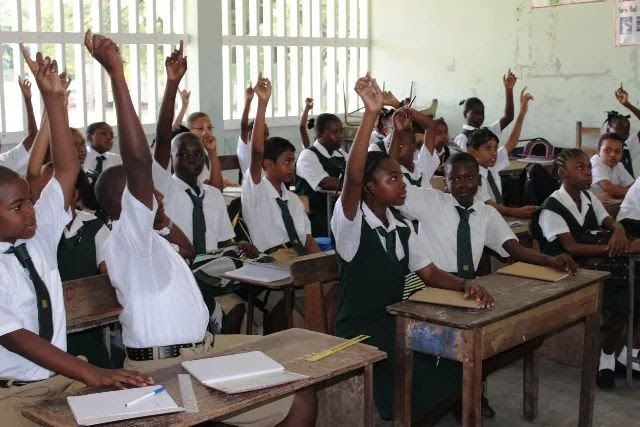
Education unions across the Caribbean are intensifying calls for governments to provide fully funded public education, arguing that adequate investment is essential to improving learning conditions, protecting teachers’ working rights and ensuring equitable access to quality education.
The regional push, highlighted by Education International in November 2026, places renewed attention on the relationship between public investment, teachers’ working conditions and the quality of education delivered to children throughout the Caribbean.
Education International, the global federation representing education unions, has reported on efforts by Caribbean unions to strengthen regional solidarity and coordinate advocacy around the need for properly funded public education systems.
The campaign reflects longstanding concerns across the region about the resources available to schools, the conditions under which teachers work and the ability of education systems to respond to the needs of students.
Fully funded public education involves more than allocating money for teachers’ salaries. It also requires investment in school infrastructure, classroom resources, teaching materials, technology, special-needs support, teacher training and adequate staffing.
Education unions have consistently argued that teachers cannot be expected to deliver improved educational outcomes without the necessary institutional support and resources.
The regional initiative also comes against a backdrop of continuing industrial-relations challenges in several Caribbean countries, where teachers’ organisations have been pressing governments over wages, collective bargaining, working conditions and professional recognition.
In Guyana, for example, the Guyana Teachers’ Union has been raising concerns about outstanding collective bargaining arrangements, the restoration of automatic deductions of union membership dues and safety concerns affecting teachers and students. The union has also warned that it could consider further industrial action if its demands remain unresolved.
While the Guyana dispute is a national matter, it illustrates some of the wider concerns confronting education unions across the Caribbean.
The regional campaign seeks to strengthen cooperation among teachers’ organisations, allowing them to share experiences and press for policies that place public education at the centre of national development.
Education unions maintain that investment in education should be regarded as a long-term public priority rather than simply an expenditure competing with other demands on government budgets.
For Caribbean governments, the challenge is to balance fiscal constraints with the need to ensure that children, regardless of their economic circumstances or geographical location, have access to quality education.
The call for fully funded public education also raises questions about how governments measure educational investment, whether spending reaches classrooms and how teachers and their representative organisations are included in decisions affecting the sector.
The success of the regional campaign will ultimately depend on whether its demands translate into concrete commitments, improved school conditions and meaningful engagement between governments and education unions.