The Caribbean Community (CARICOM) has called for a broader approach to measuring economic development, warning that traditional Gross Domestic Product (GDP) figures fail to capture the full extent of the region’s vulnerability to climate change and the long-term impact of natural disasters.
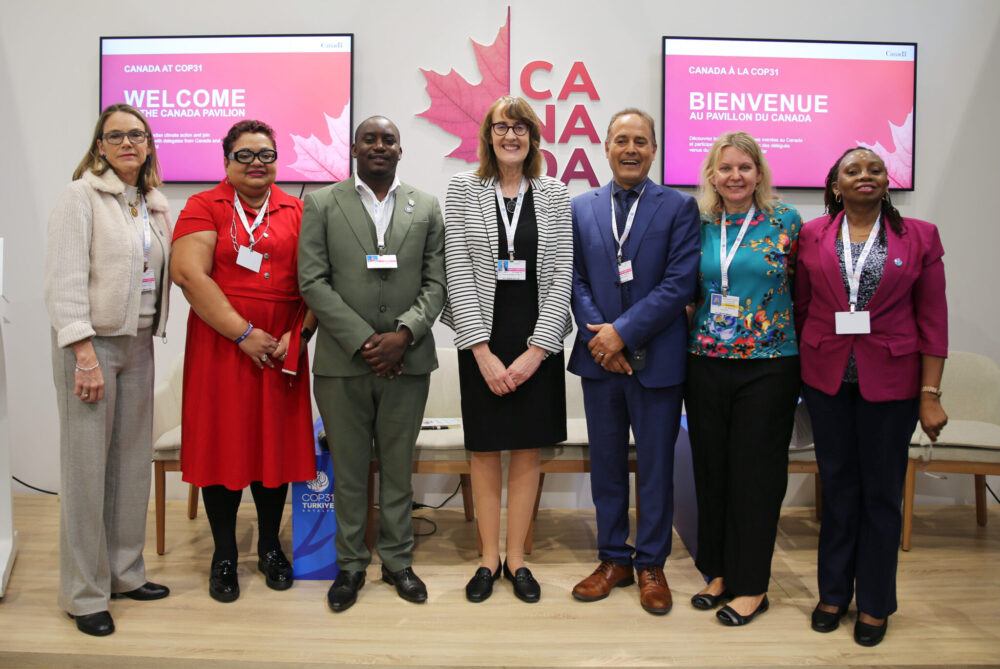
The call was made by Programme Manager for Sustainable Development at the CARICOM Secretariat, Amrikha Singh, during a side event at the 31st Conference of the Parties to the United Nations Framework Convention on Climate Change (COP31) in Antalya, Türkiye.
Singh highlighted the need for governments to incorporate what she described as “invisible resilience” into national budgeting and development planning, arguing that the true costs of climate disasters extend far beyond the immediate destruction of infrastructure and the losses recorded in economic statistics.
Invisible resilience refers to the social, environmental and economic resources that enable countries and communities to withstand, adapt to and recover from climate disasters but are often overlooked in traditional economic measurements. These include secure housing, food availability, functioning healthcare and education systems, sustainable livelihoods and healthy ecosystems.
For example, a country’s GDP may begin recovering following a hurricane, while thousands of families remain displaced, farmers struggle to restore their livelihoods and communities continue to face disruptions to healthcare, education and other essential services.
Such circumstances demonstrate why economic growth figures alone cannot provide a complete picture of a country’s recovery or its ability to withstand future disasters.
The event, hosted by the International Institute for Sustainable Development (IISD), brought together policymakers, researchers and practitioners to examine how governments and institutions are putting “Beyond GDP” measurements into practice to better assess resilience, sustainability and long-term prosperity.
Singh drew attention to the particular challenges confronting Caribbean countries, which face repeated exposure to hurricanes and other climate-related hazards that can reverse years of economic and social progress.
She noted that the substantial GDP losses caused by hurricanes cannot simply be recovered within a single budget cycle. Instead, the consequences can affect economic growth and development for decades, placing additional pressure on governments already struggling with limited fiscal resources.
Against this background, Singh called for greater use of comprehensive wealth measurements that account for natural and human capital alongside conventional economic indicators.
Such measurements, she explained, should capture factors including housing, food security and access to essential services following disasters.
These considerations are particularly important in assessing how communities recover after extreme weather events, since economic output alone cannot adequately reflect the hardships experienced by households whose homes, livelihoods and access to basic services have been disrupted.
The “Beyond GDP” approach seeks to address these shortcomings by broadening the assessment of national progress beyond the value of goods and services produced within an economy.
For Caribbean countries, this means recognising that healthy ecosystems, resilient communities, secure housing, food systems and reliable public services are essential components of national wealth.
Singh’s intervention comes as the region continues to confront mounting climate-related risks, with governments facing difficult decisions over how to finance disaster preparedness, recovery and long-term adaptation.
Her call for budgets to account for invisible resilience underscores the need for climate vulnerability and the protection of human and natural capital to become central considerations in national development strategies.
The broader challenge for Caribbean governments is ensuring that economic growth is not measured solely by GDP expansion, but also by the capacity of countries and communities to withstand disasters, recover from their effects and protect the well-being of future generations.