US Secretary of War Pete Hegseth’s declaration that Venezuela must “regain its borders and territory” has added fresh uncertainty to an already sensitive regional dispute, even as Guyana’s Foreign Affairs Minister Hugh Todd insists that Georgetown will not entertain bilateral negotiations over the 1899 Arbitral Award.
During a November 18 visit to Caracas, Hegseth called on Venezuelans to reclaim their national identity and territory, while announcing renewed military cooperation between Washington and the Venezuelan Government.
His remarks come against the backdrop of Venezuela’s longstanding claim to Guyana’s Essequibo region, approximately two-thirds of Guyana’s national territory, and growing questions about the United States’ position on how the border controversy should ultimately be resolved.
“Let us build this peace together. That peace will require that this nation regain its borders and territory, and with it, its proud and beautiful national identity,” Hegseth said.
“You are Venezuelans, proudly, and you have been for centuries. And now is your time to boldly, as you have so many times in your past, reclaim it.”
The US Department of War’s account of the visit placed Hegseth’s comments within the context of efforts to remove narcoterrorist networks, address security threats and restore Venezuela’s territorial integrity. It also said Washington would assist with security and defence reforms and modernisation of Venezuela’s military.
However, the language about Venezuela reclaiming its borders and territory carries particular significance for Guyana, which is pursuing a final judicial determination of the longstanding controversy with Caracas.

The remarks also come just days after a Reuters report disclosed that former US State Department official Jeremy Lewin had reportedly raised the possibility of territorial discussions between Guyana and Venezuela, including the prospect of Venezuela obtaining partial control of Essequibo.
The report prompted questions about whether Washington was exploring alternatives to the judicial process, despite its longstanding public support for Guyana’s position on the 1899 Award.
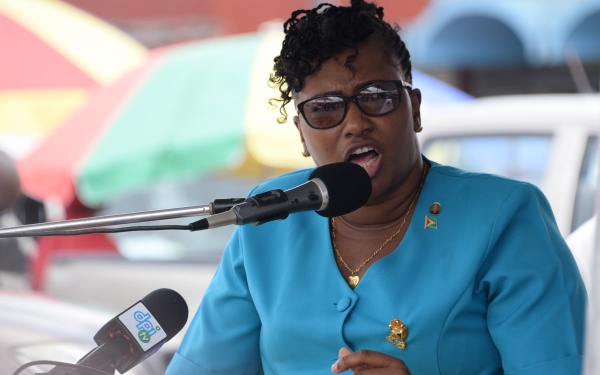
Guyana’s Foreign Affairs Minister Hugh Todd has since sought to reinforce Georgetown’s position, declaring that the country will not negotiate bilaterally with Venezuela over the validity of the Award.
In an address to the nation, Todd said Guyana’s case before the International Court of Justice (ICJ) had entered its final stage, with a judgment anticipated as early as the first quarter of 2027.
“Guyana has been very clear and very firm that we will not hold any bilateral discussions with Venezuela with regard to their controversy over the 1899 Arbitral Award. Guyana will not waver from our position, we are very firm in our position, and we believe that the process before the court is consistent with the Rule of International Law,” Todd affirmed.
Todd said Foreign Secretary Robert Persaud had rejected any alternative to the ICJ process during discussions with the former US official. He also pointed to the US Embassy’s subsequent reaffirmation of support for the 1899 Award.
Washington’s November 19 statement said the boundary should be respected unless or until a new boundary is established by a competent legal body or with the consent of both parties. Todd said Guyana regards the ICJ as the competent authority under Article 4(2) of the 1966 Geneva Agreement and dismissed the option of bilateral negotiations.
The central question now confronting Georgetown is how Washington’s renewed military partnership with Caracas and Hegseth’s language about recovering Venezuelan territory fit alongside its assurances of support for Guyana’s territorial integrity.
While the US Department of War framed Hegseth’s remarks around criminal networks operating inside Venezuela, the wider diplomatic context makes clear why Guyanese are demanding precise answers.
Todd has urged citizens to remain patient and focused on Guyana’s future as a sovereign and independent nation. But with the ICJ judgment still pending and Washington maintaining closer military ties with Caracas, general assurances may not be enough to quiet concerns about the country’s territorial security.