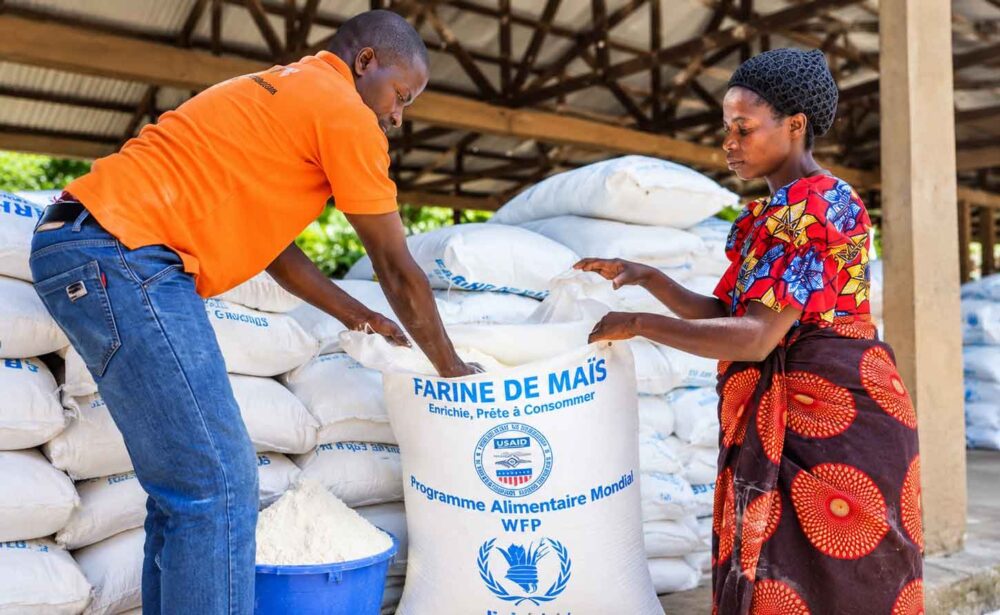
The UN‘s hunger monitor and the WHO issued two warnings in one week from the Democratic Republic of the Congo. Taken together, they describe a catastrophe the Caribbean cannot afford to file under ‘somebody else’s problem’.
By Calvin G Brown (WiredJA)— Two numbers out of the Democratic Republic of the Congo this week should have stopped the world in its tracks. The first is 28.8 million — the number of Congolese who cannot find enough to eat. The second is 10,141 — the number of people infected with a strain of Ebola for which no approved vaccine or treatment exists. Nearly 5,000 of them are already dead.
Neither figure led the international news. Both ought to have.
The hunger figure comes from the Integrated Food Security Phase Classification (IPC), the UN-backed monitor that grades food crises on a five-point scale ending in famine. Its latest alert, covering September 2026 to June 2027, finds that 23 per cent of the population analysed is in Phase 3 or worse — “crisis” conditions or deeper — through December. More than 3.6 million people are in Phase 4, “emergency”, a single rung below famine itself.
And the IPC is explicit that the worst is still ahead. Between January and June it projects 30.3 million people in Phase 3 or above, with 4.2 million in emergency conditions. The drivers read like a catalogue of everything that can go wrong at once: conflict, displacement, Ebola, El Niño flooding, rising food and fuel prices — and, in the IPC’s own words, “declining humanitarian assistance”.
Read that last phrase again. As the need rises, the aid falls.
Where the two crises meet
The geography is no coincidence. Hunger and Ebola have taken root in the same soil: the eastern provinces of North Kivu, South Kivu and Ituri, where armed groups have terrorised civilians for a generation. Those three provinces alone account for 10.4 million people in Phase 3 or above. Four territories within them — Djugu, Fizi, Shabunda and Walungu — are now classified in Phase 4.
Ituri is also where the Ebola outbreak was declared on 15 May. Within two days the World Health Organization (WHO) had named it a Public Health Emergency of International Concern. Within three months it had overtaken the 2018–2020 Kivu epidemic to become the largest Ebola outbreak in Congolese history. It is now the second-largest ever recorded, behind only the West African catastrophe of 2014–2016 — and, by the reckoning of the Africa CDC, it is growing faster.
The virus responsible is Bundibugyo, a rarer cousin of the Zaire strain, and that distinction matters enormously. The Ervebo vaccine and the antibody therapies that finally tamed Zaire Ebola were built for Zaire Ebola. Against Bundibugyo, the medical shelves are bare.
A rapidly expanding Ebola outbreak, recurrent disease epidemics, rising food and fuel prices, and the impacts of floods and other climate shocks are compounding vulnerabilities. — IPC Acute Food Insecurity Alert, DRC, September 2026
The IPC draws the connection the headlines have missed. A hungry population is a population less able to fight infection, less able to isolate, less able to stay away from the markets and fields where the virus travels. Quarantine is a luxury of the fed.
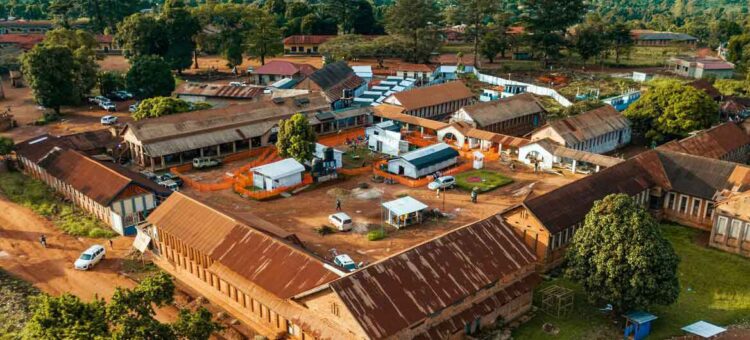
“Sustained efforts are essential”
WHO’s message this week was measured in tone and urgent in substance. “Sustained efforts are essential to end the outbreak,” the agency’s Africa office said, calling for a continued scale-up of control measures, greater access to affected areas, and community outreach that builds trust and encourages people to engage with the response.
Trust is the operative word. The outbreak has now spread to eight provinces, including areas that responders cannot safely reach. Earlier in the year, exhausted staff at Ebola treatment centres downed tools in protest. A response that cannot reach the sick, and cannot keep its own workers at their posts, is a response fighting with one hand tied.
There is progress, and WHO is right to report it. More than 2,600 people have recovered. Testing and treatment capacity have expanded. In Bunia on Friday, scientists launched the TUMAINI trials — Swahili for “hope” — to test whether Ervebo can offer any cross-protection against Bundibugyo, using the same ring-vaccination method that proved Ervebo’s worth in Guinea a decade ago. Expert findings on two further Bundibugyo-specific candidate vaccines are expected imminently.
But hope is not a vaccine, and a trial is not a cure. Close to half of those infected have died.
The spillover has begun
Kenya has recorded nine cases and two deaths, all traced to a Kenyan man working in the DRC who flew to Nairobi via Uganda on 3 October and died two days later. More than 130 of his contacts were quarantined. A UN humanitarian fund has released more than US$2 million to harden Kenya’s border surveillance and train rapid-response teams. Uganda, which declared its own outbreak over in late July, remains on watch.
Why the Caribbean cannot look away
It would be comfortable, from Montego Bay, to file this under “Africa’s problems”. It would also be wrong.
The Caribbean Public Health Agency (CARPHA) assesses the risk to our region as low, and nothing here contradicts that. But CARPHA’s Executive Director, Dr Lisa Indar, has urged member states to “maintain a high state of readiness”, and the Pan American Health Organization has activated its Incident Management System to coordinate preparedness across the Americas. In 2014, CARPHA–PAHO surveys found that not one member state was fully compliant with the International Health Regulations. That was twelve years ago. The region should be asking, loudly, whether the gap was ever closed.
There is a deeper reason, too. The Caribbean is the African diaspora. The 28.8 million hungry and the 10,141 infected are not strangers; they are kin. And the Congo’s wealth — the cobalt in our phones, the coltan in our laptops — flows out of the country while hunger and disease flow in. That the richest soil on earth cannot feed its own people is not a natural disaster. It is a political one.
The world eventually found the billions and the vaccine for West Africa — after 11,000 people had died. The Congo should not have to wait for a body count that large before it is taken seriously.
Sources: IPC Acute Food Insecurity Alert, DRC (Sept 2026–June 2027); UN News; WHO Africa Regional Office; DRC Ministry of Health; Africa CDC; PAHO (18 May and 4 June 2026); CARPHA (21 May 2026).