Only one of the 22 third-country nationals (TCNs) who arrived in Jamaica from the United States more than two weeks ago has returned to their homeland, while another has expressed a desire to remain on the island, raising fresh questions about the pace of departures under the controversial transit arrangement.
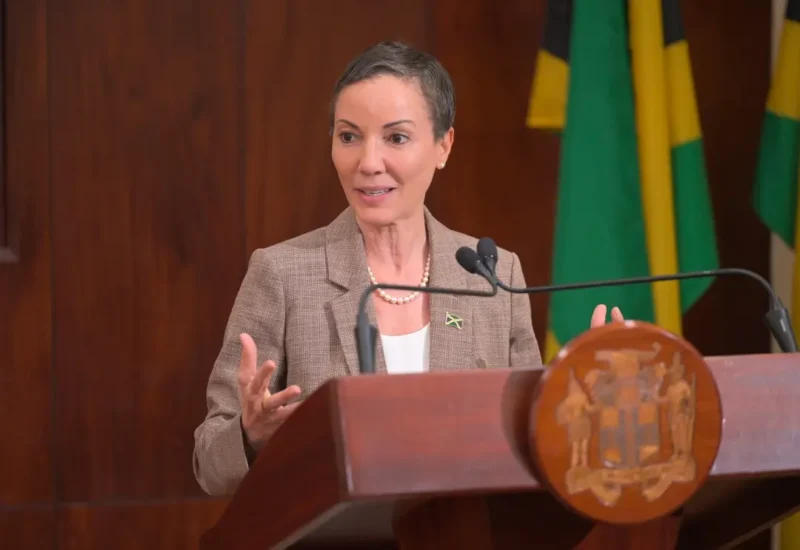
Minister of Foreign Affairs and Foreign Trade Sen. Kamina Johnson Smith made the disclosure during a press conference at Jamaica House on Tuesday.
Johnson Smith said discussions were underway with the individual seeking to remain in Jamaica to explain that the arrangement was intended to facilitate transit rather than permanent settlement.
The group is being assisted with its return through the assisted voluntary return programme operated by the International Organization for Migration (IOM). The remaining 20 individuals are still being processed for onward travel, according to Nationwide News.
The first group arrived at Norman Manley International Airport in Kingston on Oct. 13 under an agreement between the Jamaican and U.S. governments. The 22 adults — 15 men and seven women — were granted visitor status for up to 90 days while arrangements were made for their onward travel. The group included nationals of Latin American countries, including Ecuador and Honduras.
Under the agreement, Jamaica is to receive no more than 25 third-country nationals every two weeks. The programme is also to be suspended if 10 or more individuals apply to remain in Jamaica through asylum procedures or other humanitarian processes.
The latest disclosure means the arrangement remains well below that threshold, with only one person reported to have expressed a desire to stay.
The Jamaican government has said the arrangement will not be funded by the state. Instead, the U.S. government is funding the IOM, which is responsible for providing assistance to the individuals while they are in Jamaica and facilitating their return to their countries of origin or other destinations.
When the first group arrived, the government said the individuals had undergone identity verification and processing by several agencies, including the Jamaica Constabulary Force, Jamaica Customs Agency, Ministry of Health and Wellness and the Passport, Immigration and Citizenship Agency. Officials also said no individual with a criminal history would be permitted to transit through Jamaica under the programme.
However, the arrangement has drawn criticism over the lack of public access to the memorandum of understanding governing the deal.
The government has said the United States has not agreed to make the bilateral agreement public, although Johnson Smith has maintained that safeguards were negotiated to protect Jamaica’s interests and account for the country’s capacity constraints.
Opposition figures have called for the agreement to be tabled in Parliament, arguing that Jamaicans should be able to scrutinise the terms of an arrangement involving national security, immigration and the potential use of local services.
The agreement places Jamaica among a growing number of countries accepting migrants removed from the United States for temporary transit before their return to their home countries or onward transfer elsewhere.
caribbeannationalweekly.com