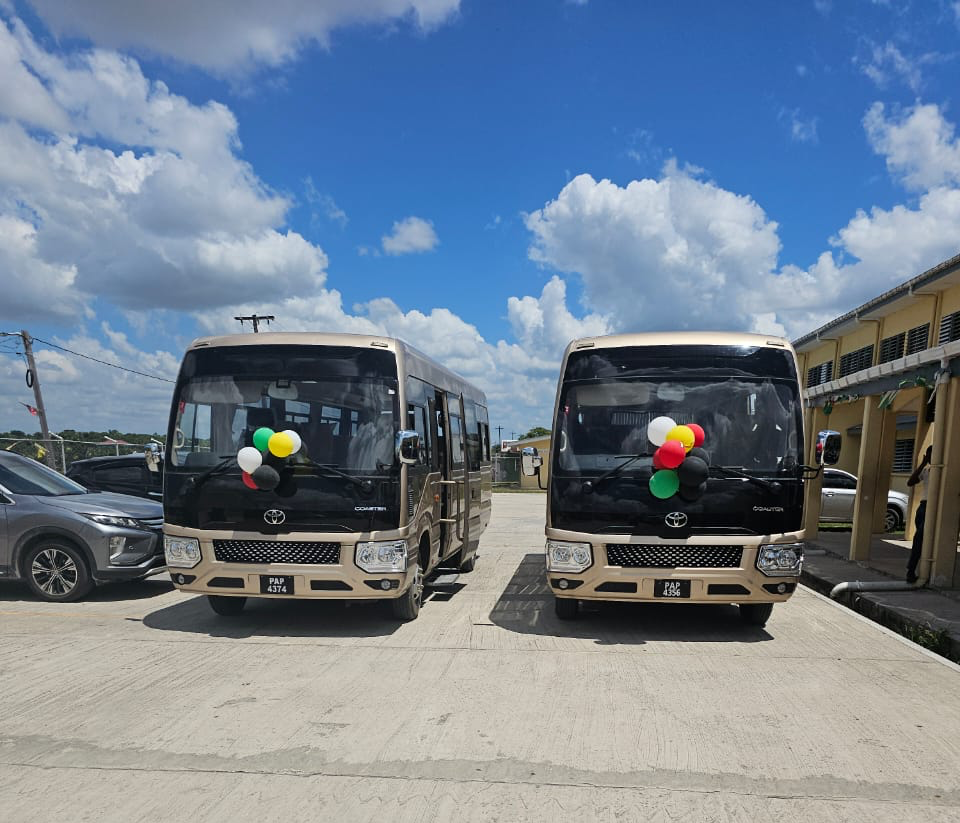
The People’s Progressive Party/Civic (PPP/C) Government has abandoned the previous administration’s flagship Five Bs education programme, allowing its school transportation component to fall into disrepair, only to now promote the purchase of new buses as another major investment in students.
The latest announcement, published by the Department of Public Information (DPI) on October 16, said two new buses had been added to the Region Four Education Department’s fleet to transport students along the Soesdyke-Linden Highway and Upper East Bank Demerara. Minister within the Office of the Prime Minister, Kwame McCoy, handed over the vehicles at Yarrowkabra Secondary School and announced plans to procure more.
The buses are intended to serve students attending Friendship Secondary, Soesdyke Secondary, Yarrowkabra Secondary, Dora Secondary and Kuru Kuru Primary schools.
While the provision of reliable transportation is essential to school attendance, the announcement highlights the Government’s abandonment of an existing initiative designed to address precisely that need.
The Five Bs programme—buses, boats, bicycles, books and breakfast—was introduced under the A Partnership for National Unity and Alliance For Change (APNU+AFC) coalition government led by former President David Granger. It was designed to remove barriers to education, particularly for children in hinterland, riverine and other underserved communities.
The programme was a public investment intended to help students attend school, reduce the transportation burden on families and improve access to educational opportunities. However, after the PPP/C returned to office in 2020, buses and other vehicles associated with the initiative were left unused or deteriorated for want of proper maintenance.
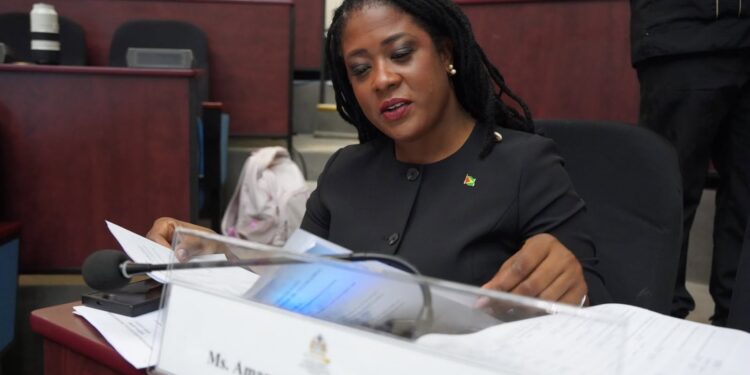
In 2022, Village Voice News reported that some vehicles associated with the programme were parked and deteriorating. Former Minister Amna Ally attributed their condition to inadequate maintenance and criticised the Government’s handling of the initiative.
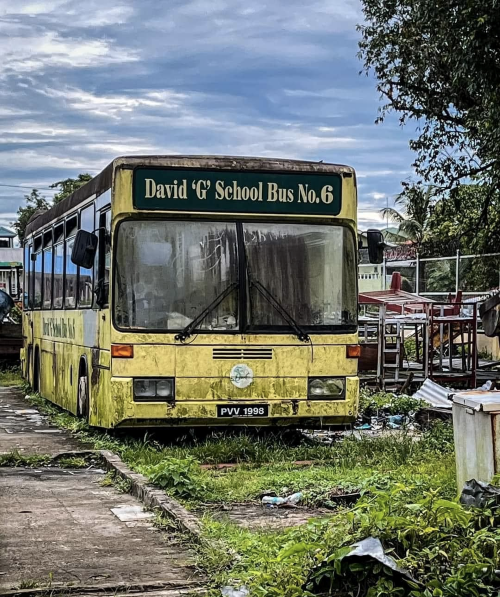
Rather than preserve and build on an established programme, the PPP/C has now embarked on another round of bus procurement, leaving taxpayers to question why existing public assets were allowed to deteriorate and whether repairing them would have been more economical than purchasing replacements.
In April 2025, Education Minister Priya Manickchand defended the PPP/C Government’s record on school transportation, telling a public meeting in Yupukari, Region Nine, that the administration had distributed more buses and boats for schoolchildren than the APNU+AFC government during its five-year term. There is no factual evidence to support the minister’s claim.
In a response issued through his office, former President David Granger disputed Manickchand’s account that the previous administration had not delivered buses and other components of the Five Bs programme to Region Nine.
The statement said:
“It is public knowledge that school buses were indeed distributed to every hinterland region as part of the Public Education Transportation Service (PETS).”
Granger also said he had personally presented buses at Annai and that buses had been distributed to other hinterland regions. He said the former First Lady had assisted in distributing bicycles.
Those competing claims do not alter the central issue: the public deserves a full accounting of what happened to the earlier fleet, which vehicles remain serviceable, how many were abandoned or left parked, and how much public money would be required to restore them.
At Friday’s handover, McCoy stressed the need for proper management of the new vehicles.
“We hope that these buses will come under strict administration and management so that there will be no misuse and abuse, and that they will all be for the benefit and the use of our children, our beautiful children of Guyana,” the minister said.
The statement underscores the importance of maintenance and accountability—precisely the responsibilities that must accompany any publicly funded transportation programme.
The PPP/C’s approach raises concerns about political partisanship in the management of state resources. A programme should not be allowed to collapse simply because it was introduced by a political opponent. Public services belong to the nation, not to the party that establishes them.
The Five Bs initiative could have been maintained, evaluated and improved to meet changing needs. Instead, the deterioration of its transportation component has created a need for fresh spending on a service that was already being provided.
With more buses promised, the Government must explain how it will prevent the new fleet from suffering the same fate. That requires transparent maintenance budgets, regular inspections, clear responsibility for repairs and public reporting on vehicle use.
The success of the latest initiative should be measured not by handover ceremonies or political announcements, but by whether buses remain operational, children reach school reliably and taxpayers receive lasting value for their money.
Allowing an existing programme to fall into disrepair before presenting a replacement as a fresh achievement is neither responsible public administration nor sound management of national resources. Guyana’s children deserve continuity in educational support, regardless of which political party is in office.