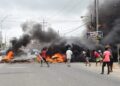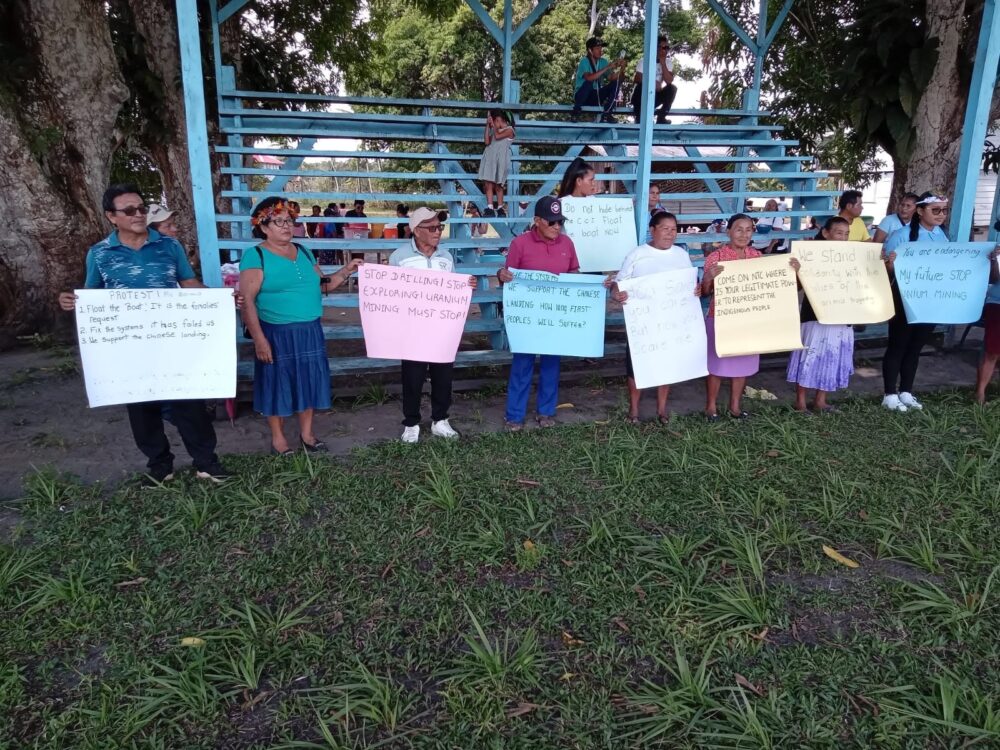
Residents of the Indigenous community of Waramadong in the Upper Mazaruni, Region Seven, joined members of the Amerindian Peoples Association (APA) on Wednesday in a peaceful demonstration to draw attention to issues affecting their community and Indigenous peoples across Guyana.
The demonstration formed part of wider activities in the Upper Mazaruni marking the culmination of Indigenous Heritage Month, but residents used the occasion to highlight concerns they say demand urgent attention from the Government.
Among their principal demands was greater transparency and accountability surrounding the MV Barima tragedy, an issue that has resonated deeply within Indigenous communities, particularly those in the hinterland who rely heavily on river transportation and remain concerned about the safety and reliability of essential services.
The vessel sank off Guyana’s northwest coast on July 18 while travelling from Georgetown to Port Kaituma, resulting in numerous deaths and people still reported missing. Families of victims and survivors have repeatedly called for greater disclosure of information about the circumstances surrounding the disaster and the government’s response.
The demonstration also brought attention to longstanding concerns surrounding mining activities in Indigenous territories, including disputes affecting communities such as Chinese Landing and Isseneru.
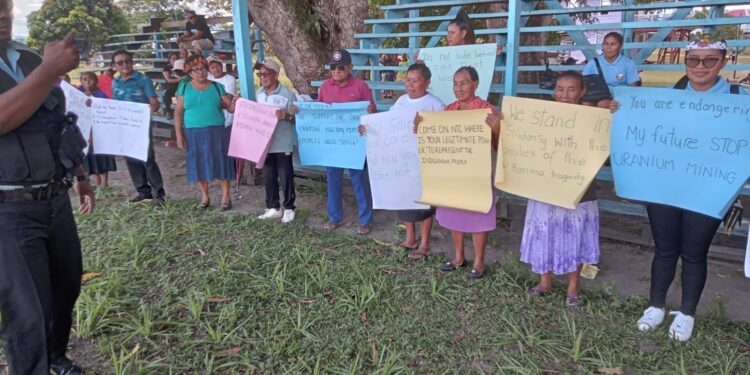
Mining has been a persistent source of tension in several Indigenous communities, particularly over questions of land rights, environmental impacts, mining concessions and the authority of Indigenous peoples to determine how their traditional territories are used.
Residents also called for greater respect for Indigenous Peoples’ rights, including rights connected to their ancestral lands and natural resources.
Land tenure remains a particularly significant issue for Indigenous communities, with questions surrounding the recognition, protection and security of Amerindian lands continuing to feature prominently in national discussions.
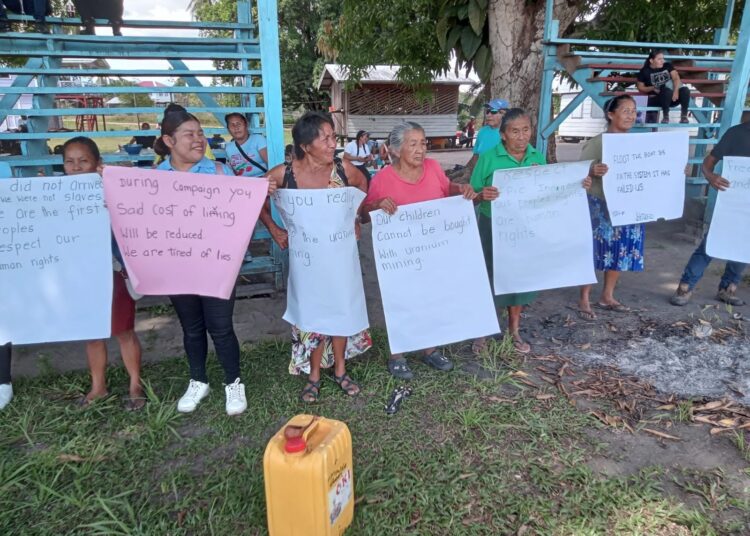
The concerns raised come against the backdrop of Guyana’s obligations under its Constitution and international commitments concerning Indigenous peoples’ rights. The Amerindian Act provides a framework for Indigenous land rights and governance, while Guyana is also a party to international instruments that recognise the rights of Indigenous peoples to participate in decisions affecting their communities and territories.
For the residents who participated in Wednesday’s demonstration, however, the issues extend beyond legal provisions and government policy.
They are demanding practical action, accountability and greater recognition of Indigenous communities in decisions involving their lands, livelihoods and future.
Wednesday’s demonstration sent a pointed message from the Upper Mazaruni: Indigenous communities are demanding more than ceremonial recognition of their heritage. They want concrete action on the issues affecting their lives—from the unresolved questions surrounding the MV Barima tragedy to mining disputes and the security of their ancestral lands—and are insisting that their voices be heard when decisions are made about their communities and territories.