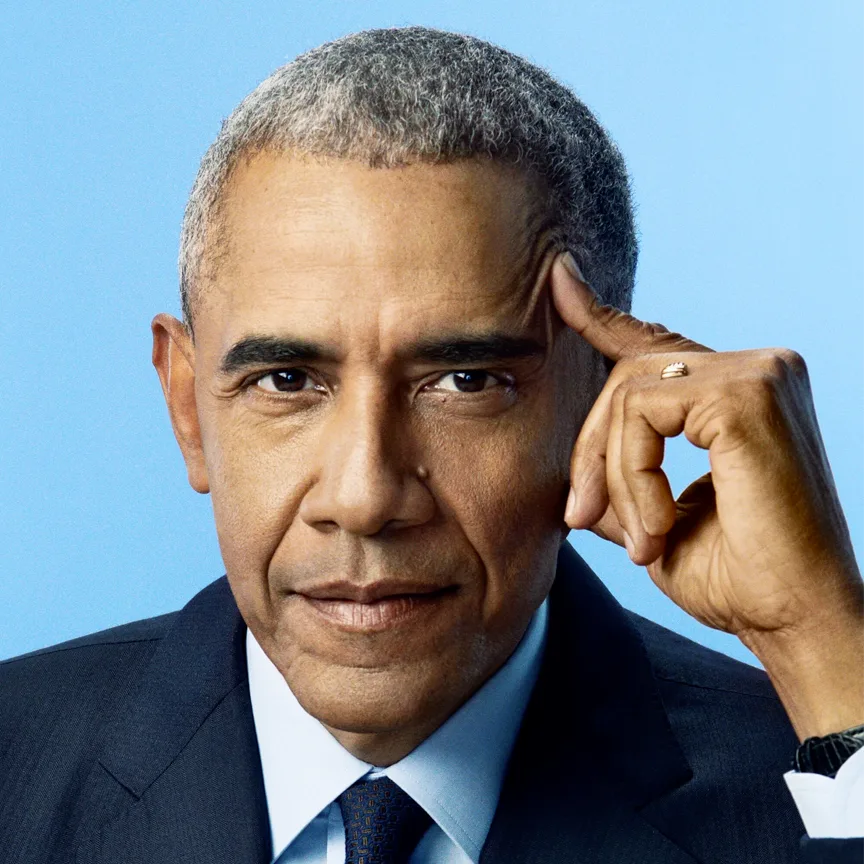
(NBC News)- Former President Barack Obama said it seems like the United States has either returned to the status quo or is “worse off” now than before President Donald Trump launched the war on Iran in February.
“We’ve now fought a war, spent billions and billions of dollars, you know, put enormous strain on our military. A lot of people have died. And it feels like we’re back where we were before we started the war, except maybe a little bit worse off,” Obama said in an interview with “TODAY” co-host Craig Melvin that aired Friday.
Obama made the remarks during a conversation with Melvin ahead of the public opening of the Obama Presidential Center, when asked for his reaction to the memorandum of understanding between the U.S. and Iran.
“I am very happy to see a ceasefire. And I’m hopeful that it holds,” said Obama, who questioned the rationale for the war on Iran.
The former president noted that under the Iran nuclear deal negotiated during his administration, “Iran had agreed not to develop nuclear weapons.”
“This administration, or a prior version of this administration, pulled out of it, which caused then Iran to develop more nuclear capacity,” Obama said.
Trump withdrew from the 2015 nuclear deal in 2018, during his first term. That agreement laid out detailed steps that Tehran should take over more than 25 years with the aim of restricting Iran from obtaining or developing a nuclear weapon. The current MOU does not fully address the fate of the country’s nuclear program.
Trump signed the MOU during a dinner at the Palace of Versailles on Wednesday night. It sets a 60-day deadline for negotiators to reach a more permanent deal to end the conflict.
During the interview with “TODAY,” Obama said that his new presidential center is a reminder of what America was like under his leadership.
“I think it’s true and I think it’s a reminder of what America is. There’s no doubt that we are going through a period right now of disruption, polarization,” he said, adding that he understands that people “feel as if our democracy, our civic habits and virtues, our shared understanding of how we treat each other has started to crumble.”
The former president said he’s glad that the center and museum remind people “not of the past” but of “what’s inside all of us.”
“We all have the capacity to feel a civic responsibility to make sure our government works,” Obama said. “We all play a part in assuring that our elected officials are accountable. And that’s not something that I think we can afford to suggest is — is behind us.”
———–
Opposition Wants Independent Explanation for EITI Meeting Exclusion
A Partnership for National Unity (APNU) on Friday demanded a full independent explanation from the Parliament Office over the failure to properly notify Opposition Members of Parliament (MP) about a meeting with a visiting Extractive Industries Transparency Initiative (EITI) Validation Team, arguing that an apology from the Clerk of the National Assembly does not adequately address concerns surrounding transparency and parliamentary accountability.
“This was not an ordinary meeting. EITI Validation is an international assessment of Guyana’s transparency, accountability, stakeholder engagement, and governance of its oil, gas, mining and other extractive sectors. In a country now defined by vast petroleum wealth, every Guyanese has a right to know whether national institutions are allowing independent voices to be heard,” the partnership stated.
The controversy stems from a June 11 engagement between Opposition MPs and the EITI Validation Team, which is conducting an international assessment of Guyana’s management of its oil, gas and mining sectors. According to reports, the Guyana EITI Secretariat requested that all Members of Parliament be invited to meet with the visiting assessors. While Government MPs reportedly received timely notification, Opposition MPs said they were informed only hours before the meeting or learned of it through unofficial channels.
The matter is particularly significant given the composition of the 13th Parliament. Of the 65 seats in the National Assembly, 29 are held by Opposition parties, including 16 seats held by the We Invest in Nationhood (WIN) party, 12 seats held by APNU, and one seat held by the Forward Guyana Movement (FGM). APNU contends that all elected representatives should have been afforded a fair opportunity to engage with the international validation mission.
Following public criticism, Clerk of the National Assembly Sherlock Isaacs reportedly acknowledged that Opposition MPs were not properly notified and apologised, attributing the lapse to an administrative error. APNU, however, maintains that the circumstances warrant a fuller explanation, including documentary evidence showing how the correspondence was handled and why Opposition parliamentarians were not informed in a timely manner.
The issue carries added significance because stakeholder participation is a central component of the EITI validation process, which assesses transparency, accountability and public oversight in countries with extractive industries. Guyana’s performance under the initiative has previously attracted international scrutiny.
In 2022, Guyana received an overall validation score of 52 points, one of the lower ratings among EITI implementing countries at the time, with assessors identifying deficiencies in stakeholder engagement, transparency mechanisms and oversight arrangements that required corrective action before the country’s next validation. https://eiti.org/board-decision/2022-20
The current validation comes at a critical time for Guyana, which has transformed into one of the world’s fastest-growing oil-producing nations since first oil production began in 2019. The international EITI Board has already raised concerns about aspects of Guyana’s implementation process, including governance issues affecting the country’s Multi-Stakeholder Group—the body responsible for overseeing EITI implementation and ensuring participation by government, industry and civil society representatives.
Against that backdrop, APNU argues that any failure to ensure the participation of elected Opposition representatives in meetings with international assessors raises legitimate questions about the environment in which transparency and accountability are being evaluated.