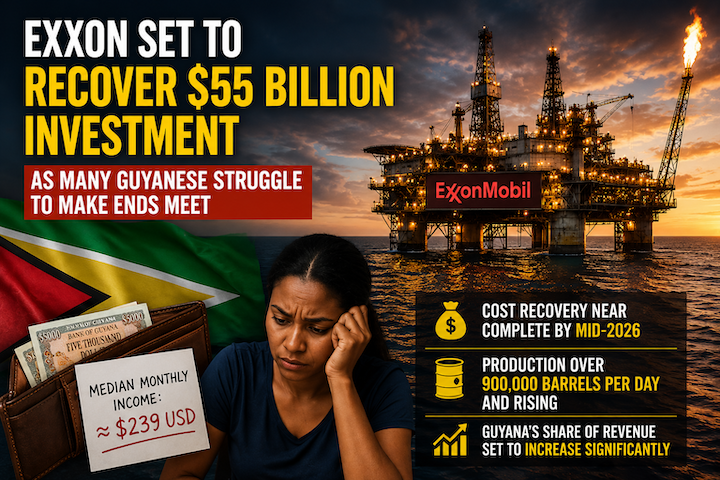
ExxonMobil and its partners are expected to recover their entire US$55 billion investment in Guyana’s oil sector by the second half of 2026, years ahead of original projections, according to company officials.
The milestone comes as oil production exceeds 900,000 barrels per day and moves steadily toward one million barrels daily, cementing Guyana’s place among the world’s fastest-growing economies.
Yet while Exxon prepares to complete recovery of its investment, many Guyanese continue to face a very different reality.
The median monthly income in Guyana remains approximately G$50,000, or about US$239. At the same time, estimates suggest that a single person living in Georgetown requires between US$900 and US$1,200 monthly to cover basic living expenses, excluding rent.
The contrast raises difficult questions about who is benefiting from Guyana’s oil boom and how quickly oil wealth is reaching ordinary citizens.
Under the Production Sharing Agreement, ExxonMobil, Hess and CNOOC are allowed to recover up to 75 percent of monthly production as cost oil before the remaining production is classified as profit oil and shared with Guyana.
As cost recovery nears completion, Guyana’s share of oil revenues is expected to increase significantly. The question now facing policymakers is whether those additional revenues will translate into meaningful improvements in wages, housing affordability, transportation, healthcare and other areas affecting daily life.
For many Guyanese, the issue is not whether the country is becoming wealthier. The issue is whether they are becoming wealthier too.