Component one of the project titled “Support to Safety Nets for Vulnerable Populations Affected by Coronavirus in Guyana”, was financed by the Inter-American Development Bank (IDB) and implemented by the Ministry of Human Services and Social Security (MHSSS).
Approved in December 2020, the programme formed part of the Government of Guyana’s emergency response to the unprecedented social and economic challenges created by the COVID-19 pandemic. The broader objective of the programme was to help safeguard the quality of life of vulnerable populations during a period of severe disruption and uncertainty. Component one focused specifically on strengthening social protection measures and supporting those most at risk of hardship.
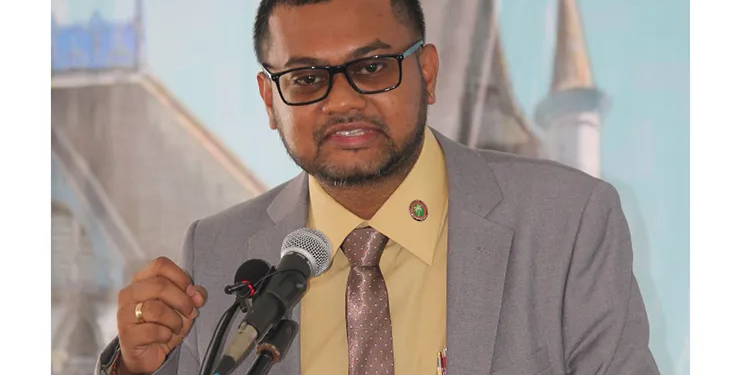
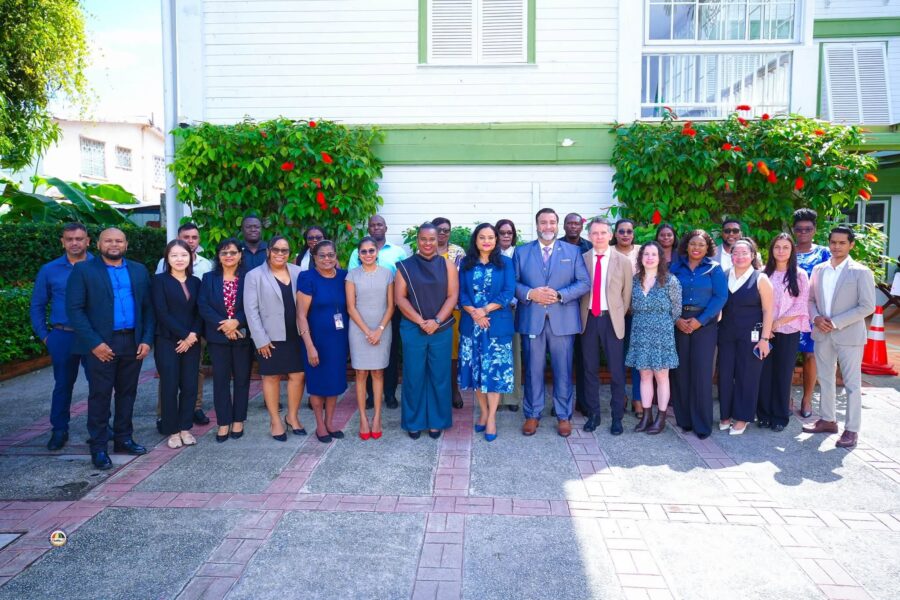
The achievements of the programme were highlighted by Minister, Hon. Dr Vindhya Persaud, on Wednesday at Cara Lodge, when she presented at the project closure workshop.
“When we embarked on this journey, we were in the height of the coronavirus, and the intention was to ensure that the populations affected were key vulnerable persons and the support given was done in a way to ensure that they had improvement in their quality of life,” the Minister recounted.
She explained that at the onset of the COVID-19 pandemic and after seeing the effects, a cash transfer programme was implemented, initially targeting approximately 56,000 Old Age Pension beneficiaries. By the end of the programme period, support had been extended to nearly 60,000 pensioners.
Just like the pensioners, the Ministry also provided targeted interventions to children living with disabilities.
As such, the Minister continued to say, “Then we went on to look at another category of beneficiaries and that would have been persons living with disabilities and again we exceeded that target because here we wanted to make sure that we not only looked at the larger category of beneficiaries but we extrapolated children from that category of beneficiaries.”
“And for the first time, we also developed a register of children who live with disabilities. We were able to provide for just under 5,000 children a cash grant of $100,000. And, overall, we were able to support over 21,000 persons on the assistance register.”
Moreover, the project also focused on strengthening and modernising the Ministry through the digitisation of its services. This led to the creation of the Guyana Social Services System (GSSS), a comprehensive platform that centralises data collection and improves service delivery.
This system now, however, supports key programmes such as Old Age Pension, Public Assistance, and disability services, while its ongoing expansion will enable the management of gender-based violence interventions, women’s empowerment initiatives, and child protection services, enhancing the Ministry’s efficiency, effectiveness, and data-driven decision-making. This aspect is expected to be fully completed by the end of 2027.
The project also supported the establishment of the Survivor Advocate Programme, a key component of Guyana’s response to gender-based violence. The initiative provides survivors with direct community-based support to access essential services and navigate challenging circumstances. Exceeding its initial target of 30 advocates, the programme trained and registered 34 Survivor Advocates across the country, strengthening support systems for survivors.
Dr Persaud also noted that the project contributed to strengthening the Ministry’s institutional capacity through the establishment of its first Monitoring and Evaluation (M&E) Unit. The Unit is currently being expanded and plays a critical role in tracking programme performance, measuring impact, and supporting evidence-based decision-making.
Another initiative of the project is the electricity subsidy programme, which was introduced to provide meaningful financial relief to vulnerable households, particularly pensioners.
“There was always an intention to make a meaningful contribution to households, and that is how the electricity subsidy programme was developed. We wanted to provide pensioners with tangible support to help offset their electricity costs. Initially, the programme targeted just over 15,000 households where the electricity meters were registered in the names of pensioners. Today, more than 47,000 pensioners benefit from the subsidy, demonstrating the significant progress we have made in helping to ease the burden of cost of living for some of our most vulnerable citizens,” Minister Persaud explained.
Furthermore, IDB Chief of Operations, Ivan Gaviria, applauded Minister Vindhya Persaud for the leadership she has shown throughout the project to ensure it was successful.
“I do want to recognise the Honourable Minister. As you could tell from her opening remarks, she understands every aspect of the project. She knows the people who are affected, and she has a passion for the people she serves, as well as for the outcomes these projects are intended to deliver. Without that kind of leadership and partnership, we would not have been successful in achieving these objectives,” Gaviria expressed.
He noted that the project reflected the Bank’s swift and coordinated response to the COVID-19 crisis. He explained that the IDB rapidly mobilised resources through emergency measures and worked closely with the Ministry to deliver critical support, including cash grants and other essential resources, to help the people of Guyana during the pandemic.
“Through a strong partnership between the Cooperative Republic of Guyana and the Inter-American Development Bank, this project helped to strengthen the country’s capacity to support these vulnerable populations, to protect livelihoods and to enhance the delivery of social assistance to those in need,” Gaviria said.
He stressed that the true success of the project cannot be measured solely through statistics or financial reports, but by its impact on people.
“As we review the results, outcomes, and lessons learned from this operation, it is important to recognise that its true success cannot be measured only by quantitative indicators. What truly matters is whether people were served effectively, equitably, and with dignity through the operation and the services we financed. In this particular case, I believe they were,” the IDB Chief of Operations asserted.
As component one of the project officially comes to a close, its outcomes will complement the Ministry’s work and will continue to strengthen social protection systems and expand access to services for those in need. The successful implementation of the project has laid a solid foundation for more efficient, accessible, and people-centred social services in the years ahead.