By Mark DaCosta- The path to our nation’s independence was marked by a fervent struggle led by the working class, driven by the desire for dignity and self-determination. This article explores how the labour movement, alongside key political figures, shaped the fight for sovereignty and the eventual achievement of independence on May 26, 1966.
The journey towards independence for our country, formerly known as British Guiana, was not merely a result of constitutional negotiations orchestrated from afar. Rather, it was the culmination of years of grassroots activism rooted in the harsh realities faced by the working class. Brutal conditions on the sugar plantations and oppressive environments in urban centres crystallised a sense of political consciousness among the labour force, agitating for rights and recognition.
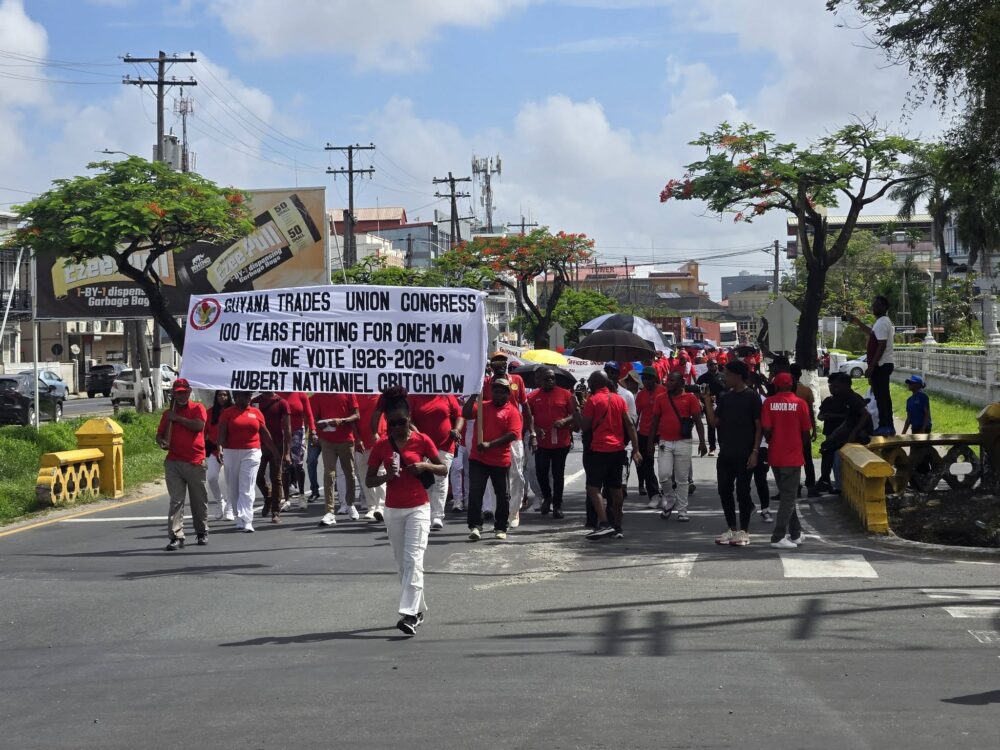
At the forefront of this labour movement was Hubert Nathaniel Critchlow, who in 1919 established the British Guiana Labour Union, the first recognised trade union in the British Empire. Critchlow understood that economic justice could not be separated from political empowerment. By 1926, he had placed on organised labour’s agenda the fight for universal adult suffrage (one man, one vote) and internal self-government, recognising that workers could not secure lasting social and economic gains without a voice in the governance of their country. His efforts forged an enduring link between workers’ rights and political representation, a theme that would resonate throughout Guyana’s long journey to self-rule and independence.
By the late 1940s, the discontent that emanated from the sugar estates had transformed into a united front against colonial rule. A pivotal moment occurred on June 16, 1948, at the Enmore sugar estate, where a strike protesting dehumanising working conditions turned tragic. The colonial police, in an act of brutality, opened fire on peaceful protestors, resulting in five deaths. This incident, forever remembered as the Enmore Martyrs’ tragedy, ignited a flame of outrage that unified different sections of society—including the professional middle-class and the industrial working class—under a common cause of national liberation.

This collective momentum led to the formation of the People’s Progressive Party (PPP) in January 1950, spearheaded by Cheddi Jagan and Forbes Burnham. This dynamic partnership aimed to bridge the ethnic divides that characterised British Guiana while advocating for a multi-ethnic approach to nationalism. Their collaborative leadership witnessed the first elections under universal adult suffrage on April 27, 1953, culminating in a remarkable victory for the PPP. The establishment of a government that promised to address the needs of the working class sparked hope yet simultaneously incited fear among the colonial authorities and elites.
However, the radical agenda of the new administration alarmed both local powerbrokers and British officials alike. The introduction of the Labour Relations Bill, which sought to empower trade unions, shattered any notion of stability in colonial governance. Just 133 days after the election, on October 9, 1953, the British government suspended the constitution and reinstated colonial rule, deploying troops to quash what they termed a communist threat. This event demonstrated the lengths to which colonial powers would go to maintain control and revealed an enduring belief that genuine economic justice and political autonomy were incompatible with colonial governance.
The political upheaval following the 1953 suspension prompted critical reflections on national strategies and alliances. Burnham discerned that the geopolitical landscape, heavily influenced by Cold War dynamics, necessitated a pragmatic approach to leadership. Divisions within the PPP materialised by 1955, leading to the formation of two factions: the Jaganite PPP and the Burnhamite PPP. By 1957, Burnham had consolidated his faction into the People’s National Congress (PNC), positioning himself as a moderate yet determined leader committed to achieving independence through strategic manoeuvring rather than outright confrontation.
During the early 1960s, Britain faced a volatile situation in our country—a battleground of civil and industrial strife reflected in strikes that challenged the colonial framework. Massive worker-led protests, including a significant general strike in 1963, illustrated the power of the organised working class and revealed the vulnerabilities of colonial governance. The British administration, recognising the intractable political stalemate, shifted its approach by implementing Proportional Representation ahead of the December 1964 elections, aimed at diluting the potential for any single party to assert dominance based on ethnic demographics.

In this election, the PPP garnered 45.8% of the vote but failed to capture an outright majority. Consequently, the PNC, securing 40.5%, formed a coalition government with the United Force. On December 14, 1964, Burnham assumed the role of Premier, representing a significant turn in the journey towards full autonomy. His leadership, which placated Western suspicions regarding a communist threat, paved the way for critical negotiations at the Lancaster House Constitutional Conferences. These discussions were instrumental in defining the legal and structural framework necessary for a sovereign state.
Finally, at the stroke of midnight on May 26, 1966, our nation officially emerged as an independent entity. The Union Jack was lowered for the last time, and the Golden Arrowhead was hoisted, symbolising a new era marked by self-determination. The historical image of Burnham and Jagan embracing at the independence podium encapsulated the struggle that transcended their political rivalry. This moment was not just a political milestone but a testament to the collective sacrifices made by the working class, whose relentless pursuit of equality, justice, and self-governance ultimately bore fruit.
In retrospect, the path to independence was not linear; it was fraught with trials and tribulations, underscored by the resilience of the Guyanese people. Our journey was shaped by the labour movement, whose voices rose in unison against colonial oppression, thereby transforming the sociopolitical landscape of our nation. Today, as we reflect on this pivotal moment in our history, it is essential to remember the indomitable spirit of those who fought for the rights of the working class and secured the freedom we cherish today. Together, we celebrate our independence as a reflection of both a rich history and a promising future anchored in unity and labour-led progress.