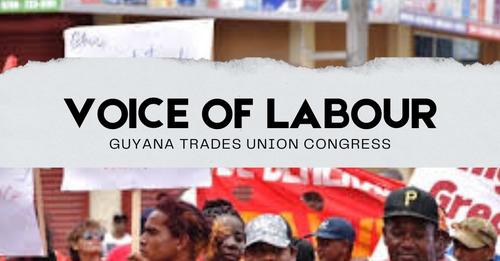
By Mark DaCosta- In a pointed declaration released on May 3, the Guyana Public Service Union (GPSU) has brought to the forefront a series of longstanding grievances as it calls attention to the neglect of workers’ rights just two days after Labour Day. This statement, issued during Workers’ Month, articulates an urgent need for government accountability and reform in light of recurring issues that have plagued the labour sector for decades.
The GPSU has long been unwavering in its commitment to safeguarding the rights of workers, asserting that “the Constitution of Guyana guarantees trade union rights” and freedom of association. However, it has repeatedly lamented that these rights are often overlooked in favour of political expediency.
The alarming trend of discrimination and victimisation of workers, particularly those aligned with the GPSU, has been noted, describing a status quo where rights become “self-evident” only when politically convenient. The association between political affiliation and the treatment of workers has created an environment of fear and uncertainty, pushing many to silence in the face of gross injustices.
In a scathing review of recent events, the GPSU recounted the systematic erosion of the Union over the years, noting several blatant abuses that have acquired a disturbing frequency. The Union highlighted incidents such as the suspension of the Agency Shop Agreement, which left Public Servants in a vulnerable position. Efforts to undermine the GPSU have included attempts at union busting and the deliberate de-recognition of representation at critical agencies, including the Forestry Commission.
The Union declared, “attacks on the GPSU have become prevalent,” blaming such actions on a deliberate strategy to weaken the influence of unionised workers. Their campaign against worker representation has intensified, contributing to a culture where loyal members face “active intentions to weaken militant Public Service Workers.” The ever-present threat of political interference has rendered many workers hesitant to stand firm in their rights, particularly concerning salary negotiations and promotion opportunities.
The GPSU’s statement reflects on “this unusual political intervention” that undermines the rights of workers who strive for basic fairness in their wages and recognition. They articulated how the government has persistently undermined efforts to establish fair wages through legislative manoeuvres that classify Public Servants’ roles as “essential services.” This classification has been wielded “conveniently” to restrict the militancy and welfare of union membership.
Crucially, the GPSU pointed to “scant regard for legally enforceable Collective Labour Agreements,” showcasing how the 2024 agreement — which promised duty-free concessions for nurses — remains unfulfilled. Such inaction by the government seamlessly aligns with their broader strategy to skirt around genuine negotiations with workers. The GPSU has made it clear that these violations serve to “attack its credibility and rob it of its support base.”
The determination employed by the GPSU has positioned the Union as a steadfast ally of the working class, particularly in the context of Guyana’s rapidly emerging oil-and-gas economy, where rising costs of living starkly contrast with stagnant wages. Amid these challenges, the government’s persistent refusal to engage in meaningful dialogue surrounding wages and working conditions has only compounded the hardships experienced by Public Servants.
Highlighting the plight of workers, the GPSU slams the administration for undue indulgence towards itself while neglecting to address the basic needs of the workforce, stating, “The perennial cry of workers in Guyana that the wages, salaries and allowances provided to them have afforded neither comfort nor created opportunity.” This glaring discrepancy between political salaries and those of rank-and-file workers adds to the growing resentment against the ruling party, perceived as increasingly disconnected from the realities faced by ordinary citizens.
Remarkably, the GPSU underscored recent judicial support that ought to pave the way for negotiations, which had been historically denied by the government. Yet, they expressed disdain for government representatives who undermine court orders, asserting that “the acts of the Government are unlawful when decisions affecting the membership of the Union are made without dialogue.”
The ongoing challenges for the GPSU, as recounted by the Union, stem from an administration that has historically shunned inclusivity in its dealings with workers. Beyond highlighting past grievances, the Union is also intent on raising awareness of the current climate where proposals to amend the Public Service Rules could further disenfranchise workers.
For the Union, the fight is not merely about historical injustices; it is a struggle for dignity and respect in a sector that historically championed the rights of labour. The Union’s leadership calls for reflection and solidarity among workers, emphasising the importance of unity in the face of governmental oppression. They affirm that “Labour Day is organised to enable reflection, remembrance, and renewed resilience,” urging workers to unite in demanding fairness.
As the statements from the GPSU reverberate through our nation, they resonate as a call to arms for all workers who share the sentiments of injustice and inequality. Their continuous advocacy reinforces the need for a government that prioritises the welfare of its citizens rather than perpetuating cycles of neglect and discrimination. The GPSU remains steadfast in its mission, embodying the soul of labour rights advocacy as it challenges the government to uphold the commitments made to its workers.