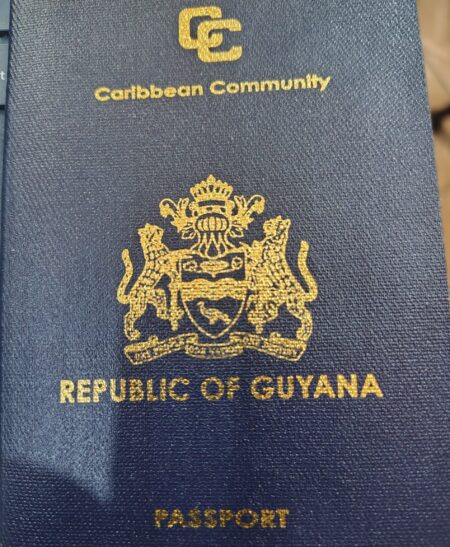
As discussions continue around national identity and constitutional reform, Guyana’s supreme law makes one point clear: the country’s official name—the Co-operative Republic of Guyana—is entrenched in the Constitution and cannot be changed without a formal amendment process.
Under Article 1 of the Constitution, Guyana is defined as “an indivisible, secular, democratic sovereign state… and shall be known as the Co-operative Republic of Guyana.” This designation has legal force and reflects the country’s political structure since becoming a republic on February 23, 1970.
However, in practice, a notable distinction exists between the constitutional name and how the state is sometimes represented in official documents. Guyanese passports, for example, are issued under the name “Republic of Guyana,” omitting the word “Co-operative” that appears in the Constitution.
This discrepancy has raised quiet questions among observers about consistency in the use of the country’s official name across state instruments. While the passport remains a valid legal travel document, its wording differs from the formal constitutional designation.
Legal experts note that such variations do not alter the constitutional status of the country’s name. Only a constitutional amendment—passed by a two-thirds majority in the National Assembly, and potentially requiring a national referendum depending on interpretation—can formally change the name of the state.
Guyana’s constitutional framework is rooted in the 1980 Constitution, which replaced the Independence Constitution of 1966 and established the current republican system of governance. The term “Co-operative Republic” was adopted to reflect the country’s ideological direction at the time.
Any move to formally remove or alter that designation would therefore require broad political agreement and adherence to constitutional procedures.
As Guyana approaches significant national milestones, including its 60th anniversary of Independence on May 26, questions of identity and symbolism may continue to emerge. But under the current legal framework, the name of the state remains firmly defined—regardless of how it may appear in everyday usage.