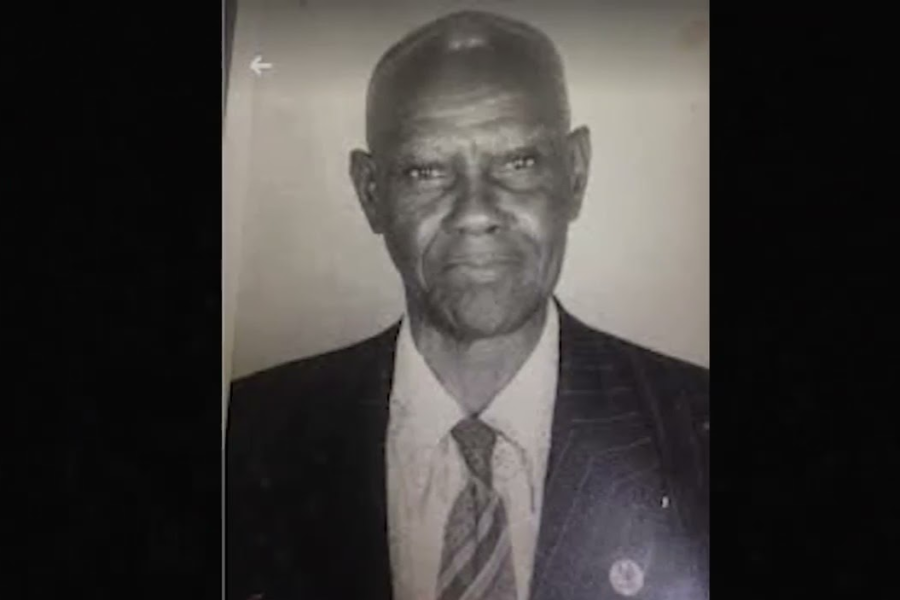
By Mark DaCosta- In the annals of our nation’s history, Hubert Nathaniel Critchlow stands as a pivotal figure, often referred to as the father of trade unionism in the Caribbean. His relentless fight for workers’ rights has left an indelible mark on labour relations and the quest for political autonomy in our country.
Central to this discussion is the concept of trade unionism, an important movement that advocates for the collective rights of workers to negotiate fair wages, safe working conditions, and other crucial benefits. Critchlow’s legacy serves as a testament to the power of organised labour and its critical role in shaping a just society.
Born on December 18, 1884, in Georgetown, British Guiana, Critchlow emerged from humble beginnings. His father emigrated from Barbados, and his mother hailed from Essequibo, making their household a microcosm of the mosaic of our nation. With only a limited education, Critchlow left school at the tender age of 14 to support his family, taking on various jobs, including a stevedore at the bustling Georgetown docks. It was here that he first confronted the harsh realities of colonial exploitation — long hours of grueling work for meagre pay, with no legal protections for the labour force.
Critchlow’s journey toward activism began in 1905 during a significant strike at the docks, where his natural charisma positioned him as a voice for his fellow workers. As tensions escalated between the labourers and colonial authorities, Critchlow felt an urgent need for a more structured approach to their struggles. By 1919, he formalised this need by establishing the British Guiana Labour Union (BGLU), which became the first registered trade union in the British Caribbean. This groundbreaking move came at a time when trade unions had little recognition or protection under colonial law, illustrating his bravery and vision.
His efforts were not merely reactionary; they were driven by a profound sense of justice and a dedication to worker dignity. Critchlow understood that labour was more than just a means of survival; it encapsulated the very essence of humanity. He witnessed firsthand the plight of individuals working exhausting hours just to scrape by and thus dedicated his life to improving their plight.
Critchlow also recognised the deep-seated racial divisions within colonial society, advocating for unity among workers across ethnic lines. He believed that the challenge of colonialism could only be met through solidarity, bringing together all workers irrespective of their backgrounds to fight for common goals.
Beyond the immediate concerns of wages and working conditions, Critchlow also championed for political change. He was a strong advocate for universal adult suffrage, understanding that without a voice in political matters, economic gains would be fleeting. For him, the fight for rights in the workplace was intertwined with the struggle for representation in the government. Critchlow knew that real change required not just better labour laws, but a comprehensive overhaul of the political landscape — the workers needed a seat at the table where the laws that governed their lives were made.
His influence stretched far beyond our shores. In the 1920s and 30s, Critchlow traveled to the United Kingdom and Europe, where he represented West Indian labour on an international stage. His visit to the Soviet Union in 1932, which garnered much controversy, illustrated his unwavering commitment to worker interests, leading authorities and media to label him a “Bolshevik.” Despite facing persecution and being ostracised, Critchlow remained steadfast in his convictions, using his platform to advocate for the dire living conditions faced by Caribbean workers.
Critchlow’s passing in 1958 did not mark the end of his influence; rather, it solidified his status as a transformative figure in our nation’s narrative. The benefits that workers in our country enjoy today — such as the eight-hour workday, rights to sick leave, overtime pay, and the right to strike — owe much to his groundwork. As a catalyst for independence, Critchlow laid the foundation for future political movements that ultimately led to our nation’s liberation against colonial rule in 1966. His techniques of mass mobilisation inspired leaders such as Forbes Burnham and Cheddi Jagan, who built upon his legacy to further the cause of independence.
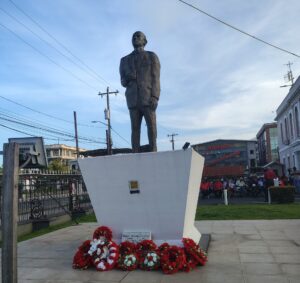
Today, a statue of Critchlow stands in the compound of the Parliament building in Georgetown, a tribute to his unyielding spirit and relentless fight for justice. Yet, as we celebrate his contributions, it is crucial to reflect on the current state of workers’ rights in our country. The ruling People’s Progressive Party (PPP) has often faltered in its promises to protect the very workers that Critchlow fought for. Their policies have, at times, neglected the foundational principles of Critchlow’s vision, prioritising political gain over the rights of the labour force.
The story of Hubert Nathaniel Critchlow is a vivid reminder that progress is not granted but must be demanded and fought for. A society cannot thrive without its workers, and Critchlow’s life underscores the importance of collective effort in securing justice and rights for all. His legacy challenges us to stand vigilant, ensuring that the dignity of our nation’s workforce remains at the forefront of political discourse and action. We must strive to carry forward the torch he lit, advocating for the interests of those who labour tirelessly for the betterment of our country.