Dear Editor,
𝙁𝙤𝙧𝙚𝙞𝙜𝙣 𝙢𝙞𝙣𝙞𝙣𝙜 𝙜𝙞𝙖𝙣𝙩𝙨 𝙖𝙧𝙚 𝙛𝙡𝙞𝙥𝙥𝙞𝙣𝙜 𝙂𝙪𝙮𝙖𝙣𝙖’𝙨 𝙜𝙤𝙡𝙙 𝙬𝙚𝙖𝙡𝙩𝙝 𝙞𝙣𝙩𝙤 𝙗𝙞𝙡𝙡𝙞𝙤𝙣𝙨, 𝙬𝙝𝙞𝙡𝙚 𝙩𝙝𝙚 𝙎𝙩𝙖𝙩𝙚 𝙚𝙖𝙧𝙣𝙨 𝙣𝙤𝙩𝙝𝙞𝙣𝙜 𝙛𝙧𝙤𝙢 𝙩𝙝𝙚 𝙩𝙧𝙖𝙣𝙨𝙛𝙚𝙧𝙨. 𝙄𝙣 𝙩𝙝𝙞𝙨 𝙝𝙖𝙧𝙙‑𝙝𝙞𝙩𝙩𝙞𝙣𝙜 𝙚𝙙𝙞𝙩𝙤𝙧𝙞𝙖𝙡, 𝙬𝙚 𝙩𝙧𝙖𝙘𝙚 𝙝𝙤𝙬 𝘾𝙖𝙣𝙖𝙙𝙖’𝙨 𝙂 𝙈𝙞𝙣𝙞𝙣𝙜 𝙑𝙚𝙣𝙩𝙪𝙧𝙚𝙨 𝙘𝙤𝙣𝙨𝙤𝙡𝙞𝙙𝙖𝙩𝙚𝙙 𝙩𝙬𝙤 𝙢𝙚𝙜𝙖 𝙜𝙤𝙡𝙙 𝙥𝙧𝙤𝙟𝙚𝙘𝙩𝙨 𝙬𝙤𝙧𝙩𝙝 𝙤𝙫𝙚𝙧 𝙐𝙎$30 𝙗𝙞𝙡𝙡𝙞𝙤𝙣—𝙖𝙣𝙙 𝙚𝙭𝙥𝙤𝙨𝙚 𝙩𝙝𝙚 𝙜𝙤𝙫𝙚𝙧𝙣𝙢𝙚𝙣𝙩’𝙨 𝙛𝙖𝙞𝙡𝙪𝙧𝙚 𝙩𝙤 𝙞𝙢𝙥𝙤𝙨𝙚 𝙚𝙫𝙚𝙣 𝙖 𝙗𝙖𝙨𝙞𝙘 𝙩𝙧𝙖𝙣𝙨𝙛𝙚𝙧 𝙩𝙖𝙭. 𝙊𝙩𝙝𝙚𝙧 𝙣𝙖𝙩𝙞𝙤𝙣𝙨 𝙝𝙖𝙫𝙚 𝙖𝙡𝙧𝙚𝙖𝙙𝙮 𝙘𝙡𝙤𝙨𝙚𝙙 𝙩𝙝𝙞𝙨 𝙡𝙤𝙤𝙥𝙝𝙤𝙡𝙚. 𝙎𝙤 𝙬𝙝𝙮 𝙞𝙨 𝙂𝙪𝙮𝙖𝙣𝙖 𝙨𝙩𝙞𝙡𝙡 𝙥𝙧𝙚𝙩𝙚𝙣𝙙𝙞𝙣𝙜
When Canadian miner G Mining Ventures (GMIN) announced its latest takeover of G2 Goldfields, it confirmed two things. First, Guyana’s nascent gold belt is positioning itself as a world-class mineral district. And second, once again, the biggest windfall from that promise will flow not to Guyana, but to Canadian investors.
The scale of the deal is staggering. With a US$2.2 billion buyout of G2, following a US$638 million merger with Reunion Gold Corp., GMIN now controls over 7 million ounces of Guyanese gold across a consolidated block in Region Seven. By the company’s own estimates, production could exceed 500,000 ounces annually, and at gold prices above US$4,500 per ounce, the resource could carry a market value exceeding US$30 billion.
𝙔𝙚𝙩 𝙂𝙪𝙮𝙖𝙣𝙖’𝙨 𝙨𝙝𝙖𝙧𝙚 𝙤𝙛 𝙩𝙝𝙞𝙨 𝙢𝙪𝙡𝙩𝙞𝙗𝙞𝙡𝙡𝙞𝙤𝙣-𝙙𝙤𝙡𝙡𝙖𝙧 𝙘𝙤𝙧𝙥𝙤𝙧𝙖𝙩𝙚 𝙧𝙚𝙨𝙝𝙪𝙛𝙛𝙡𝙚? 𝙕𝙚𝙧𝙤.
𝗧𝗵𝗲 𝗚𝗿𝗲𝗮𝘁 𝗚𝗶𝘃𝗲𝗮𝘄𝗮𝘆 𝗶𝗻 𝗣𝗹𝗮𝗶𝗻 𝗦𝗶𝗴𝗵𝘁
These transactions between foreign companies are perfectly legal under Guyana’s outdated mining policy — but they reveal a catastrophic failure of national stewardship. Because the assets were transferred through corporate share sales abroad, no transfer tax, capital gains assessment, or relicensing fee was triggered in Guyana. What should be a taxable transfer of national property becomes a paper shuffle in Canadian stock markets, invisible to our tax system.
Vice President Bharrat Jagdeo’s dismissive claim that “flipping cannot be prevented” only compounds the insult. He knows this is not true. It’s not that flipping can’t be regulated — it’s that the government won’t regulate it. And as a result, every ounce of gold under those concessions is effectively mortgaged to foreign traders before a shovel even hits the ground.
𝗛𝗼𝘄 𝗢𝘁𝗵𝗲𝗿 𝗖𝗼𝘂𝗻𝘁𝗿𝗶𝗲𝘀 𝗖𝗹𝗼𝘀𝗲𝗱 𝘁𝗵𝗲 𝗟𝗼𝗼𝗽𝗵𝗼𝗹𝗲
Guyana’s refusal to modernize its mining legislation contrasts sharply with the reforms embraced by other developing-resource states.
- Tanzania amended its Mining Act in 2017 to mandate state review and taxation of all changes in ownership of mineral rights, whether direct or indirect. No permit can change hands without ministerial approval and a transfer fee paid into the treasury.
- Ghana, once plagued by “license flipping” in the Obuasi region, introduced a capital gains tax on mining share transfers and required any transaction altering control of a concession to be disclosed to the Ghana Revenue Authority. Even if deals occur on foreign stock exchanges, Ghana treats them as taxable local events affecting national assets.
- Zambia and Namibia have similar mechanisms, allowing the state to capture value through transfer duties or reassessment clauses when multinational mergers alter control of local mines.
- Even Suriname, right next door, includes “beneficial ownership” provisions in its mineral agreements, giving the government the right to renegotiate or levy fees if controlling interests shift.
These examples debunk the Vice President’s claim outright. It’s not a question of possibility or legality — it’s a question of political will. Other nations have done precisely what Guyana refuses to do: make the ownership of resources conditional on national consent and taxation.
𝗡𝗼𝗻-𝗧𝗿𝗮𝗻𝘀𝗳𝗲𝗿𝗮𝗯𝗹𝗲 𝗣𝗲𝗿𝗺𝗶𝘁𝘀: 𝗧𝗵𝗲 𝗠𝗶𝘀𝘀𝗶𝗻𝗴 𝗦𝗵𝗶𝗲𝗹𝗱
The simplest reform lies in rewriting the very permits that underpin every mining operation. Each mineral right or prospecting license should carry a non-transferability clause: no sale, merger, or share restructuring that results in a change of control may occur without official authorization. That authorization would automatically trigger a transfer tax or reassessment, ensuring the State earns its share when the value of its subsoil wealth appreciates.
This is not anti-investor policy. It’s sound resource governance. Investors remain free to sell — but they must contribute to the public purse when they profit off public property. The logic mirrors Guyana’s oil regime where the government mandates signing bonuses and project-specific agreements before exploration rights change hands. There’s no reason mining should operate as a tax-free casino next door.
𝗪𝗵𝗮𝘁 𝗚𝘂𝘆𝗮𝗻𝗮 𝗟𝗼𝘀𝗲𝘀 𝗘𝘃𝗲𝗿𝘆 𝗧𝗶𝗺𝗲
By refusing to act, Guyana is not just forgoing hypothetical revenue — it is conceding control over the strategic tempo of its own extractive future. Each corporate “flip” consolidates control of national assets in the hands of financial markets abroad. The gold in the ground remains physically ours, but economically, it has already been extracted — monetized through offshore valuation long before the first shipment leaves Bartica.
GMIN touts its savings from “synergies” — more than C$1 billion saved through shared infrastructure and combined operations. Yet the very concept of synergy here is a corporate euphemism for offshoring efficiency and onshoring nothing. To date, not a single cent of those “synergies” has translated into a measurable national benefit or added fiscal return.
𝗧𝗶𝗺𝗲 𝗳𝗼𝗿 𝘁𝗵𝗲 𝗦𝘁𝗮𝘁𝗲 𝘁𝗼 𝗪𝗮𝗸𝗲 𝗨𝗽
No responsible government should allow its mining wealth to be flipped, merged, or carved up without a mechanism to capture value. The reforms required are neither complicated nor radical:
- Make all mineral permits non-transferable except through ministerial approval.
- Treat any corporate transaction that alters control of a permit-holder as a taxable event under the Income Tax or Excise framework.
- Require public disclosure of beneficial ownership changes and revaluation of mineral assets whenever mergers occur.
Guyana has entered an era where foreign investors view its subsoil not as ground to mine but as stock to trade. Until the State asserts its right to tax and regulate those movements, the country will stay locked in the role of spectator — watching billions change hands while pretending it cannot intervene.
The argument that “we can’t prevent flipping” has become a convenient mask for governmental indifference. But it is not laws that are lacking — it is leadership. If we continue to accept this passivity, the gold wealth of this nation will keep financing foreign balance sheets while Guyana inherits only the environmental clean-up and the illusion of progress.
𝙄𝙩 𝙞𝙨 𝙩𝙞𝙢𝙚 𝙩𝙤 𝙨𝙩𝙤𝙥 𝙥𝙧𝙚𝙩𝙚𝙣𝙙𝙞𝙣𝙜 𝙩𝙝𝙖𝙩 𝙛𝙤𝙧𝙚𝙞𝙜𝙣 𝙘𝙤𝙣𝙩𝙧𝙤𝙡 𝙞𝙨 𝙛𝙖𝙩𝙚. 𝙒𝙞𝙩𝙝 𝙘𝙡𝙚𝙖𝙧 𝙥𝙤𝙡𝙞𝙘𝙮 𝙖𝙣𝙙 𝙘𝙤𝙪𝙧𝙖𝙜𝙚, 𝙂𝙪𝙮𝙖𝙣𝙖 𝙘𝙖𝙣 𝙚𝙣𝙨𝙪𝙧𝙚 𝙩𝙝𝙖𝙩 𝙚𝙫𝙚𝙧𝙮 𝙨𝙥𝙚𝙘𝙪𝙡𝙖𝙩𝙞𝙫𝙚 𝙩𝙧𝙖𝙙𝙚 𝙞𝙣 𝙞𝙩𝙨 𝙜𝙤𝙡𝙙 𝙘𝙖𝙧𝙧𝙞𝙚𝙨 𝙖 𝙣𝙖𝙩𝙞𝙤𝙣𝙖𝙡 𝙙𝙞𝙫𝙞𝙙𝙚𝙣𝙙. 𝘼𝙣𝙮𝙩𝙝𝙞𝙣𝙜 𝙡𝙚𝙨𝙨 𝙞𝙨 𝙨𝙪𝙧𝙧𝙚𝙣𝙙𝙚𝙧 𝙙𝙞𝙨𝙜𝙪𝙞𝙨𝙚𝙙 𝙖𝙨 𝙞𝙣𝙫𝙚𝙨𝙩𝙢𝙚𝙣𝙩.
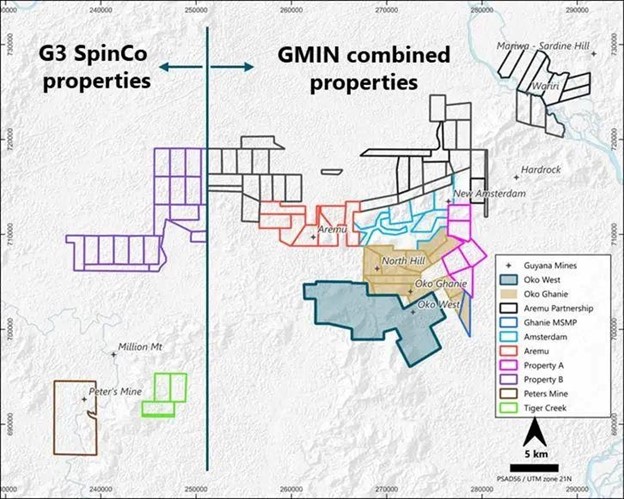
Map showing the Oko West and Oko-Ghanie and other mining properties.
Sincerely
Hemdutt Kumar