The Guyana government is rolling out a multi-year strategy aimed at improving mathematics performance across the education system, with a strong emphasis on teacher training and early literacy and numeracy assessments.
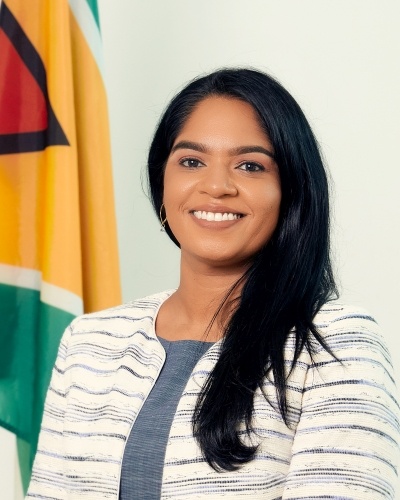
Minister of Education Sonia Parag said the plan, to be implemented over the next five years, is designed to deliver sustained improvements in student outcomes while strengthening preparation for key examinations such as the National Grade Six Assessment (NGSA) and the Caribbean Secondary Education Certificate (CSEC).
A central component of the strategy is improving how mathematics is taught, including a review of training at the Cyril Potter College of Education.
“We need to look and see what they’re being taught, how they’re being taught and how that is going to translate into the classroom. Delivery is important,” Parag said in a recent interview.
The initiative also places renewed focus on foundational skills. The Ministry of Education will introduce its first nationwide literacy assessment programme for Grades Two and Four in 2026, with the goal of ensuring all pupils are literate by Grade Four. A numeracy assessment is set to follow in 2027.
Parag said the measures build on the Mathematics Intervention Programme launched in 2024 for Grades 10 and 11 students, which has already shown modest gains. She noted that the programme contributed to a 32 percent pass rate in 2025, a five-percentage-point improvement.
The intervention includes targeted teacher support through Math Monitors, distribution of past exam papers and scientific calculators, and expanded access to schools in hinterland regions.
“Regions One, Seven, Eight and Nine gained about 18 Math monitors from the programme,” Parag said, adding that students in remote areas are also benefiting from improved access to digital tools, including smart boards.
The government has also introduced additional initiatives such as the Guyana Digital School, launched in December 2025, which provides free online access to NGSA and CSEC lessons, and “Maths Tents,” an outreach programme offering targeted in-person instruction.
The Maths Tents bring together students from multiple schools and focus on areas identified as challenging through assessment data, including fractions, consumer arithmetic, and construction-related mathematics.
Parag said the sessions are led by specially selected educators rather than students’ regular teachers, aiming to provide new approaches to explaining concepts while reducing exam anxiety.
The government says continued investment in these programmes is expected to significantly improve mathematics outcomes over the next five years.