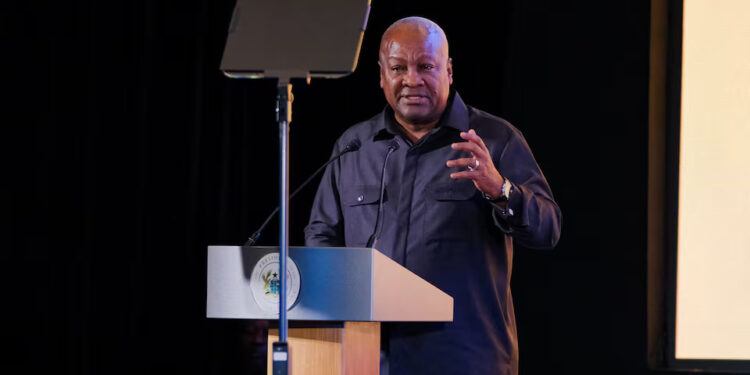
‘The ancient poison of racism is alive and kicking in every community, society, country and region of the world……The antidote is unity and action.‘- UN Secretary-General António Guterres
The International Day for the Elimination of Racial Discrimination, observed annually on 21 March, commemorates the Sharpeville Massacre in 1960, when police in Sharpeville opened fire on a peaceful protest against apartheid pass laws, killing 69 people.
Established by the United Nations General Assembly to raise awareness and encourage global action against racism, the observance reflects broader international efforts that have led to important progress, including the dismantling of apartheid in South Africa and the strengthening of global commitments to equality and non-discrimination, principles also affirmed in the Universal Declaration of Human Rights.
In 1979, the General Assembly further strengthened international efforts by launching a programme of activities during the Decade for Action to Combat Racism and Racial Discrimination, encouraging Member States to organize a week of solidarity with peoples fighting racism beginning on 21 March each year.
The International Convention on the Elimination of All Forms of Racial Discrimination (ICERD): Progress and Achievements in the Fight Against Racism
The International Convention on the Elimination of All Forms of Racial Discrimination (ICERD) is one of the most important international agreements dedicated to combating racism and promoting equality worldwide. Adopted by the United Nations General Assembly on 21 December 1965 through Resolution 2106 (XX), the Convention established a global framework to eliminate racial discrimination and ensure equal treatment for all individuals regardless of race, color, descent, or national or ethnic origin. It calls on States to condemn and address racism through laws, policies, and international cooperation that promote equality, understanding, and social justice.
Over time, an international framework has developed to address racism, with ICERD serving as a central pillar and being ratified by the vast majority of countries, reflecting a broad global commitment to equality and non-discrimination. At the heart of these efforts is the principle affirmed by the United Nations that all human beings are born free and equal in dignity and rights, a concept also reflected in the Universal Declaration of Human Rights.
The international community has repeatedly emphasized that doctrines of racial superiority are scientifically false, morally unacceptable, socially unjust, and dangerous, and that States have a responsibility to eliminate racial discrimination in both public and private spheres by adopting laws, policies, and measures that promote equality and address conditions that perpetuate discrimination.
The Durban Declaration and Programme of Action
The Durban Declaration and Programme of Action (DDPA), adopted at the World Conference against Racism (2001), serves as a global blueprint for advancing racial justice and equality. It outlines comprehensive measures to combat racism, racial discrimination, xenophobia, and related intolerance, while recognizing historical injustices such as enslavement and colonialism as root causes of many present-day inequalities.
Over the years, the framework has contributed to important progress, including the adoption and reform of laws prohibiting racial discrimination, the development of national and regional action plans, the establishment of equality bodies, and international initiatives such as the International Decade for People of African Descent.
Subsequent international meetings and reviews have assessed progress and reaffirmed the global commitment to combating discrimination and protecting victims of racism.
International Decades for People of African Descent
Additional initiatives, such as the International Decade for People of African Descent (2015–2024) and the Second Decade (2025 to 2034), have helped raise awareness and promote policies focused on recognition, justice, and development for communities historically affected by racial discrimination.
International efforts and global continuing commitment
The principles established by the International Convention on the Elimination of All Forms of Racial Discrimination continue to guide international policies and actions aimed at building inclusive societies where diversity is respected and equality is upheld. Through stronger legal protections, education, dialogue, and cooperation among governments, international organizations, and civil society, the global community continues working toward a world free from racial discrimination and intolerance.
Despite these achievements, racism continues to affect communities, politics, media, sport, and the digital environment across the world, with rising racist rhetoric, discrimination against migrants and minority groups, and persistent inequalities rooted in historical power imbalances. Conflicts and crises in several regions, including Myanmar, the Occupied Palestinian Territory, and Sudan, also demonstrate how discrimination and dehumanization can fuel instability and injustice.
Addressing these challenges requires sustained commitment from governments, businesses, media, civil society, and international organizations such as the United Nations Human Rights Office to implement anti-discrimination laws, strengthen accountability, collect and analyse data, reform education, support victims, and ensure meaningful participation of affected communities in decision-making.
Inspired by the legacy of global civil rights leaders such as Desmond Tutu, Marielle Franco, Claudette Colvin, and Jesse Jackson, the international community continues to work toward dismantling systemic racism and building societies founded on dignity, equality, and justice for all.