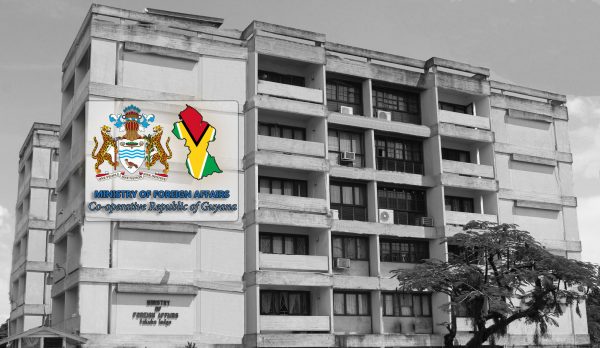
By Mark DaCosta- Sixty years have passed since our nation took a significant step towards defining its territorial integrity and securing its future through the signing of the Geneva Agreement. This landmark treaty, which laid the groundwork for addressing the longstanding border issue with Venezuela, underscores the enduring commitment of our country to resolve conflicts through peaceful legal channels rather than militaristic confrontations.
Signed in Geneva on 17th February 1966, just months before Guyana gained independence, the Agreement involved three key signatories: the United Kingdom, our then-predecessor British Guiana, and Venezuela. This unique participation ensured that the new state – Guyana – would be an integral party in any future negotiations regarding its borders. It was a pragmatic response to Venezuela’s bold claim against the 1899 Arbitral Award, which had solidly and finally demarcated the boundary between the nations.
The Geneva Agreement is not simply an act of papers and signatures; it embodies a framework for resolving disputes that emerged from Venezuela’s abrupt change of heart in the early 1960s. For over sixty years, Venezuela had acknowledged the validity of the Arbitral Award but shifted its stance in 1962, labelling the Award as “null and void.” In light of this sudden reversal, the Agreement aimed to establish a systematic approach for resolving the controversy surrounding our borders.
Central to the Geneva Agreement is the formation of a Mixed Commission tasked with negotiating a peaceful resolution to the territorial controversy. Articles I to IV of the Agreement highlight procedural mechanisms to ensure systematic progress. However, if the Commission fails to reach consensus within a specified timeframe, the Agreement compels the parties to seek further assistance, notably through the United Nations Secretary-General.
Notably, Article IV lays out the standard of settlement, highlighting various means of resolution outlined in the UN Charter, including judicial settlement. This provision has once again come to the forefront as our nation has taken the matter to the International Court of Justice (ICJ) following a failure to resolve the issue through diplomatic dialogue.
The agreement also includes a protective clause aimed at maintaining the status quo, preventing either party from taking unilateral actions that could exacerbate claims to territorial sovereignty during the negotiation process. This safeguard fortifies our rights while the legal discourse continues, ensuring that any practical resolution does not compromise our territorial integrity.
In recent years, our government’s commitment to the judicial process has been unwavering. Since engaging the ICJ in 2018 to affirm the legal validity of the 1899 Arbitral Award, our nation has remained devoted to the principles of international law while advocating for a peaceful resolution. The court has already dismissed objections raised by Venezuela regarding its jurisdiction, reaffirming its authority to adjudicate the matter.
“Guyana will continue to defend its sovereignty and territorial integrity through lawful and peaceful means,” states the Ministry of Foreign Affairs, reiterating our nation’s steadfast dedication to the judicial process. As we remember the importance of the Geneva Agreement, it is crucial to acknowledge the strategic framework it offers for an amicable resolution, while also asserting that “the Geneva Agreement does not extinguish the 1899 Arbitral Award, nor does it confer any right for Venezuela to determine the status of our Essequibo region unilaterally.”
Our nation remains vigilant against misrepresentations from official Venezuelan sources that attempt to distort our valid claims. The Ministry of Foreign Affairs courageously calls for Venezuela to recommit to the principles of international law and respect the judicial process currently unfolding at the ICJ. The message is clear: our country’s sovereignty is not up for debate, nor will it be compromised by unfounded claims stemming from political manoeuvring in Caracas.
Despite the challenging geopolitical landscape, our resolve remains unshaken. With the international community increasingly recognising the legitimacy of our position, there is hope for a definitive resolution that will solidify our boundaries for future generations. As time passes, we are reminded of our responsibility to protect our nation’s heritage and assert our rights on the world stage.
In commemorating this pivotal moment in our history, the government of our country calls upon all citizens to unite in the pursuit of peace and respect for the rule of law. The signing of the Geneva Agreement was not merely a diplomatic gesture but a pivotal commitment to future generations, underlining the importance of defending our sovereignty with courage and conviction.
As we move forward, it is essential for our leaders to uphold the spirit of the Geneva Agreement and engage with the ongoing legal processes in a transparent and accountable manner. The resolution of this territorial controversy will serve as a testament not only to our national integrity but to our commitment to justice and diplomacy in the face of historical challenges. Let us not waver in our pursuit of a peaceful and prosperous future, affirming that the rightful course of action will always lie within the contours of international law.