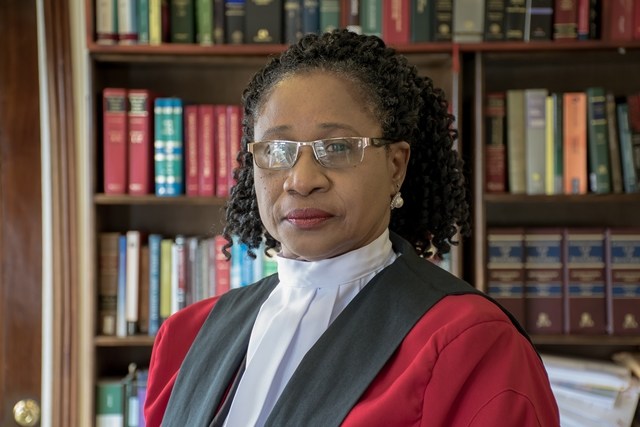
President of the Guyana Teachers’ Union (GTU) and A Partnership for National Unity (APNU) Member of Parliament, Coretta McDonald, has issued a strong rebuttal to Education Minister Sonia Parag’s announcement that the Ministry of Education will resume teacher appraisals and introduce “school report cards” as part of a new accountability framework.
In a letter published in Village Voice News on Tuesday, McDonald challenged the Minister’s claims, arguing that accountability “cannot be reduced to a rhetorical device or a performance metric imposed selectively,” but must instead be grounded in “moral, legal, and institutional discipline.”
Minister Parag, speaking last Friday on the Starting Point podcast, said the Ministry plans to restart teachers’ appraisals this year, with full implementation in 2026. She explained that the appraisals would assess teachers’ performance and attendance, provide rewards and promotion opportunities, and form part of a broader framework that includes school report cards aimed at improving the quality of education.
McDonald rejected the approach, contending that the Ministry lacks the moral and legal standing to enforce accountability while unresolved issues remain, including compliance with court rulings on the reinstatement of union dues. “A public authority that struggles to demonstrate consistent obedience to judicial authority lacks the moral and institutional standing to posture as an enforcer of accountability over others,” she wrote.
She also criticised plans to reintroduce teacher appraisals, noting that a previous appraisal exercise was “initiated, abruptly suspended, never completed, never evaluated, and never accounted for.” Recycling such a policy, she argued, “does not constitute reform.”
Addressing claims of heavy investment in education, McDonald said expenditure has been conflated with outcomes, pointing to newly built or rehabilitated schools that developed defects shortly after completion. These, she said, are failures of procurement oversight and contractor accountability, not teaching performance.
McDonald further highlighted breaches of official student–teacher ratio standards, unequal conditions among schools, safety concerns on school compounds, student hunger, and the lack of support for children with learning disabilities. Evaluating schools and teachers under such conditions, she argued, is “the evaluation of results divorced from the conditions that make success possible.”
In concluding her rebuttal, McDonald stated that “accountability must be earned before it is enforced,” warning that without lawful conduct, completed policies, enforced standards, equitable resourcing and respect for teachers, school report cards would reveal more about government shortcomings than educational quality.