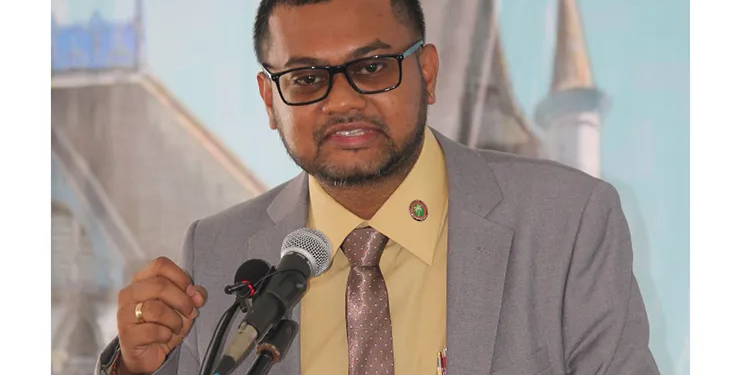
The political confrontation over the People’s Progressive Party’s (PPP) unfulfilled promise of a Christmas cash grant has intensified, with the We Invest in Nationhood (WIN) party accusing President Irfaan Ali of belittling ordinary Guyanese while retreating from a key campaign pledge made ahead of the General and Regional Elections. WIN leader Azruddin Mohamed continues to spotlight the administration’s silence, stressing that with just three weeks left before Christmas, the government has yet to make any announcement.
During the 2025 election campaign, the PPP pledged to provide every Guyanese adult with a $200,000 Christmas cash grant, a promise aimed directly at easing household burdens. Mohamed reminded the public: “On August 26, President Ali assured the people of Guyana that ‘We will have a beautiful Christmas,’ indicating that a cash grant would be provided for the holiday season. On October 2, Vice-President Jagdeo stated that ‘whatever the President said on the campaign trail will be done.’ However, no announcement has been made to date.”
In recent days, President Ali has attempted to shift expectations, telling Stabroek News that the government is instead preparing broader programmes: “Our government has always delivered. I have said that there are a series of initiatives that I’ll be announcing. And whilst you may restrict your thoughts to just a cash bonus, this government has a very elaborate agenda for the upliftment of your life.” The comment has been interpreted by citizens as an attempt to move away from the direct cash promise without explicitly acknowledging its abandonment.
Tensions escalated after President Ali, at an oil and gas awards dinner at the Marriott Hotel, joked that he “might have to say cash grant” to excite the audience—described by the president himself as “fancy people.” The room erupted in laughter, a moment Mohamed called deeply offensive.
“The address given by President Irfaan at the oil and gas awards dinner at the Marriott Hotel hurt me to my core when Irfaan said you really don’t know Guyanese people. Instead of development, I might have to say cash grant,” Mohamed said, calling the remarks a “cruel and degrading mockery of Guyanese.”
The WIN leader accused the president of forgetting the struggles of the population—more than half of whom live in poverty—and of portraying citizens as beggars rather than rightful beneficiaries of national wealth. “You [President Ali] are the one who lied to them about a cash grant and tricked them into voting for the PPP. You walked into poor communities hugging the people while thinking less of them and then you go back to your fancy people and make fun of the poor people,” he argued.
Mohamed also invoked global precedents, noting that oil-producing regions such as Alaska, Norway, Kuwait, the UAE, Qatar, and Saudi Arabia provide direct annual payments to their citizens. “Sharing resource wealth with citizens is standard practice in resource-rich nations,” he said, arguing that the PPP prefers to portray Guyanese as seeking handouts rather than asserting their rights as owners of the nation’s patrimony.
He warned that: “All Guyanese deserve to be treated with dignity. Respect is not for the rich alone. Power belongs to the people and no one can mock their suffering without consequences, especially the president who is there to serve the people.”
WIN has for weeks pressed the government to honour its campaign commitment and deliver the promised Christmas grant. With rising living costs, deepening economic pressures, and growing public frustration, the dispute has become a defining political battle—one that raises serious questions about credibility, fairness, and who truly benefits from Guyana’s rapidly expanding oil wealth.