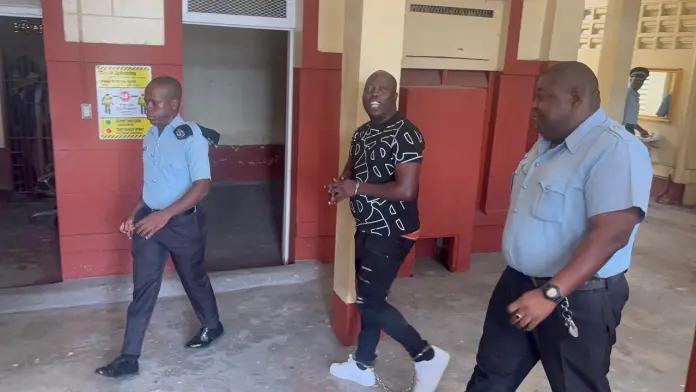
Five of the six criminal charges against Georgetown businessman Bradley “Doggie” Sampson, 36, have been withdrawn, raising concerns about police investigations, prosecutorial decisions, and the reliance on social media as evidence in serious criminal cases.
Sampson was first charged in July following a confrontation at the Square of the Revolution, reportedly over payments to individuals involved in a political march organised by We Invest in Nationhood (WIN) party.
Central to the dispute was Genista Fordyce, who alleged she was assaulted by Sampson during a heated argument. A video of the exchange circulated widely online, showing an intense verbal confrontation, but legal experts questioned whether it showed a crime or was being treated as a substitute for proper investigative work.
Originally, Sampson faced six charges including possession of a firearm without a licence, unlawful carrying of a firearm in public, unlawful wounding of Fordyce, threatening behaviour, disorderly behaviour, and obscene language. Bail ranged from $10,000 to $150,000 depending on the charge. Now, only the disorderly behaviour charge remains.
Prosecutors cited insufficient evidence for the firearm-related charges, while other counts including unlawful wounding, threatening behaviour, and obscene language had already been dismissed. Sampson is next due in court on December 5.
The case has raised critical questions about how multiple gun charges were filed when no firearm was recovered, why serious charges were pursued without ballistic testing or expert testimony, and whether prosecutors should continue when the complainant is absent or unwilling to proceed.
Defence attorney Jevon Cox stressed that no firearm was recovered, no ballistic testing or expert testimony was conducted, and police relied solely on social media footage. Cox also highlighted procedural gaps, noting that Fordyce had not attended court, no medical certificate supported the alleged wounding, and she reportedly told police she no longer wished to proceed.
Observers say the case highlights broader concerns about Guyana’s justice system, including the premature filing of charges, reliance on social media clips instead of proper evidence, and whether ordinary citizens face similar risks when prosecutions are pursued without sufficient investigative groundwork. The consequences are especially serious for firearm-related allegations, which demand meticulous legal scrutiny.
With only disorderly behaviour remaining, Sampson’s legal exposure has diminished, but the larger questions remain. How was this case constructed, aggressively pursued, and then largely abandoned? The Sampson case may ultimately reveal more about the standards of investigation and prosecution in Guyana than about any single individual.